
Servicers Know First: Building a Better Default Data Feed
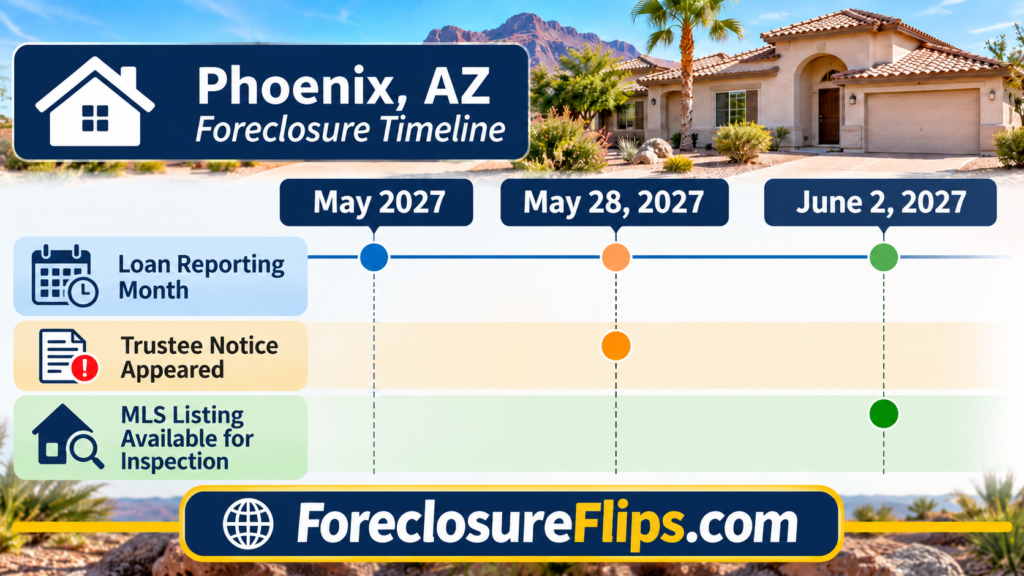
A mortgage servicer can see that an installment is overdue months before a foreclosure notice reaches the county recorder. As a buyer, you can use some of that lead time to choose where to look. Start with payment trends across a region, narrow your search with local trustee records, then use the multiple listing service (MLS) to find homes you can inspect or buy.
The catch is timing. A loan file you receive in November may describe payments made in June. Meanwhile, an agent may know this morning that a seller has put a house back on the market. A useful default data feed tells you what each source knew, when you could have known it and which decision you can make today.
Key Takeaways
- Use mortgage servicer data to spot a change in payment performance across the area the source covers. Keep the loan count beside the rate.
- Track trustee notices by property and proceeding. Three postponements can generate three new records for the same house.
- Use listing history to decide where to spend time this week. An active listing with inspection access is more useful to a financed buyer than a distant auction date.
Build Your Investing Knowledge One Email at a Time
Foreclosure investing rewards preparation. Join our 2X week newsletter for straightforward guidance on pre-foreclosures, short sales, BRRRR, flipping, and other strategies investors use to evaluate distressed property opportunities.
How much earlier does a servicer know?
Imagine that a homeowner misses the September payment, makes a partial payment in October and catches up in November. The servicer can follow the account through all three events. You could search the county foreclosure records every week and never see that loan. That difference explains why a rise in overdue payments can be real even when public filings barely move.
For many residential mortgages, the CFPB’s foreclosure filing rule generally requires the servicer to wait until the loan is more than 120 days delinquent before making the first notice or filing required by law. Exceptions apply, and the local procedure determines which document starts the public process. Passing 120 days doesn’t put a property on the auction calendar.
Your own lead time begins when you receive usable information. Freddie Mac’s single-family loan-level dataset makes the distinction concrete. As of November 22, 2026, its public data page listed monthly performance through June 30, 2026. That release lets you study how often loans moved from early delinquency into deeper arrears. For a decision about this week’s listings, you still need fresher local records.
Build a monthly view of loans falling further behind
Of the loans that were 30 days late last month, how many reached 60 or more days late this month? That share is a roll rate. It helps you distinguish borrowers who caught up after a rough month from those who fell another payment behind.
Use a loan-level source licensed for your intended use. You’ll need a stable loan identifier, a reporting month, a delinquency status, an exit reason where available and a geographic field. Match consecutive months using the loan identifier. If the source supplies origination and performance files separately, attach the geography from the origination file once per loan. Count each loan once in each month you measure.
Keep the geography as broad as the source requires. A metropolitan area can include several counties, and a three-digit ZIP prefix can cover many neighborhoods. Label the signal at that level. When you want to investigate individual subdivisions, switch to public notices you can place on a map and listing data you’re authorized to use.
Try the numbers before you flag an area
Suppose 100 loans were 30 days late in April. By May, 35 are current, 40 remain 30 days late, 20 are at least 60 days late and five have no May observation. What share can you confirm moved further behind?
You can verify 20 of the original 100, or 20%. Among the 95 with a known May status, the share is 21.1%. Write down which denominator you used and keep the five unknowns visible. Calling those five cures would make the market look healthier without adding any evidence.
Track one more figure alongside the roll rate: how many loans entered the 30-day-late group in the first place. If that number grows for three months while the roll rate holds steady, more households may still reach 60 days late. If the group shrinks sharply, a higher roll rate can coincide with fewer households falling further behind.
Compare several months using the same definitions. If a provider added a servicer, dropped a loan product or changed the areas it covers, repeat the calculation for segments you can compare consistently. A jump from four loans to eight deserves a look at the underlying counts before it earns a spot on your acquisition calendar.
Read the trustee history one property at a time
Once a region merits attention, pick two or three neighborhoods where you can price the housing stock. Pull notices from the recorder or trustee responsible for that area. In a judicial foreclosure market, use the relevant court docket and official sale administrator. Confirm the local document names and sale procedure with that office.
For each notice, save the parcel and unit, proceeding or trustee reference, document type, recording date, scheduled sale date and date you first observed it. Preserve each event. Your watchlist should show the latest verified status while letting you see how many times the date moved.
Suppose a trustee advertises a January 12 sale, moves it to February 9 and later cancels it. Your records should show one proceeding, two scheduled dates and zero completed auctions. If the notice disappears from a website before you confirm the cancellation, mark the outcome unknown. Guessing that the house sold will distort your estimate of how much auction supply the neighborhood produces.
The same discipline applies to boundaries. A subdivision with twice as many houses as its neighbor can generate twice as many notices at the same underlying rate. Count distinct properties over the same period and use a common denominator, such as homes with a new notice per 1,000 homes of the type you buy.
Let MLS activity decide which neighborhood gets a visit
Ask your agent for a saved search or use a feed your MLS agreement permits. Choose a property type, price band and set of boundaries you can keep consistent. Capture the listing identifier, parcel or full address with unit, status-change date, original and current asking prices, and closing price when available. A fresh listing number on a familiar address is a reason to check the history.
Consider two illustrative subdivisions in the same regional loan-data area. Each has 500 detached houses in your price band. Your monthly loan report shows more borrowers falling further behind across the region. You have one morning for property research. Where would you go?
| Evidence available this week | Orchard Park | Mill Creek |
|---|---|---|
| Distinct homes with a new trustee notice in 60 days | 6 | 6 |
| Those homes currently listed for sale | 0 | 3 |
| Listed homes with a recent asking-price cut | 0 | 2 |
| Listed homes available for inspection | 0 | 2 |
Visit Mill Creek first if your purchase requires an inspection. Both subdivisions have 12 newly noticed properties per 1,000 homes over the period. Only Mill Creek offers two addresses where you can get inside. Ask the listing agents whether the homes are still available and whether a scheduled sale affects either seller’s timetable.
Orchard Park can stay on the watchlist. Its six notices may eventually suit an auction buyer. For now, you’d learn more by walking one Mill Creek house and pricing its roof than by assigning a repair allowance to six houses you can’t enter. A price cut tells you that a seller revised the asking price. Recent comparable closings tell you whether the revised price is competitive.
Test whether your feed beats the auction sites
Give every record two dates: when the underlying event happened and when you first saw it. Run the loan comparison when new performance data arrive. Review trustee changes weekly and use listing alerts for time-sensitive status changes. Before committing funds, check the sale status directly with the official administrator.
On December 1, save the neighborhoods you selected and the evidence available that day. Choose a similar area you didn’t flag. Over the next 90 days, count new filings, homes that became available for inspection and properties for which you could make a supportable offer. Use the same boundaries and property types on both sides.
For an address that later appears on an auction site, compare the first day you saw an actionable listing or notice with the first day you observed it on that site. A six-week lead that produced a showing has value. A six-week lead calculated from a backdated record you downloaded yesterday existed only in hindsight.
Questions about using mortgage servicer data
Can I match an anonymous delinquent loan to an MLS listing?
Keep the loan comparison at its disclosed geographic level. Match a listing to an independently documented public proceeding using the parcel, unit and case details. That gives you a verifiable property history without attributing a private payment record to a homeowner.
Which date should I use when a provider revises last month’s figures?
Keep both versions and their release dates. Use the revised figures for your latest market assessment. When you evaluate an earlier buying decision, use the version you had on the day you made it.
What if MLS price cuts rise but trustee notices stay flat?
Review comparable closings, new listings and time on market. Sellers may have started too high, or buyers may have more homes to choose from. Either explanation can justify researching prices. You’d need additional evidence to attribute those cuts to mortgage distress.
When is a paid feed worth the cost?
Ask for a dated sample covering your market, its reporting delay and the uses its license permits. During a trial, count additional inspections or viable offers you found before your existing sources would have surfaced them. If the service delivers the same addresses a day earlier but changes none of your buying decisions, you already have the feed you need.
You might also like:
 Foreclosure Investing for Beginners: Complete Step-by-Step Guide
 How to Find Foreclosure Properties Before They Hit the Market
 Pre-Foreclosure Leads for Investors: Where to Find the Best Deals
 Foreclosure Investing: How to Buy, Analyze, and Profit From Foreclosed Homes
 Riverside–San Bernardino Foreclosure Market 2026
 Foreclosure Starts vs Completed Foreclosures for Investors