Buffalo Foreclosure Market 2026
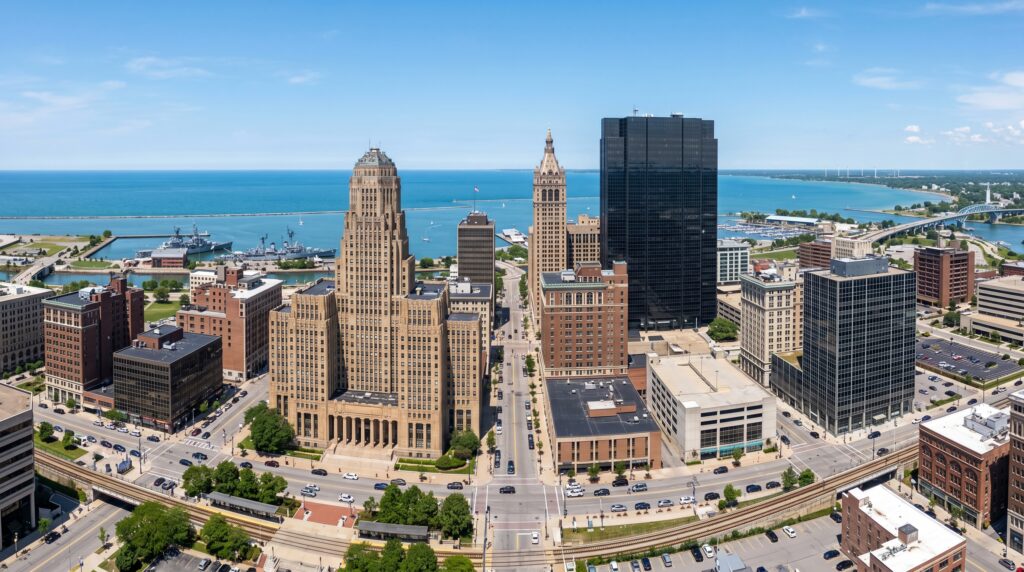
The Buffalo foreclosure market gives New York investors a very different set of opportunities than the New York City metro. Acquisition prices are lower, entry points are more approachable, and some properties can support rental or value-add strategies without the same capital burden found downstate.
The tradeoff is that Buffalo’s lower price point does not eliminate risk. It changes where the risk sits.
In Buffalo, the hardest part of foreclosure investing is often not finding a low-priced property. It is proving that the property can be repaired, rented, resold, insured, and carried without overrunning the neighborhood’s value ceiling.
Older housing stock, winter damage, code violations, tax exposure, vacant-property issues, and judicial foreclosure timing can all change the real cost of acquisition.
A Buffalo foreclosure deal should be evaluated from the inside out: court status, title, taxes, condition, occupancy, municipal issues, and exit demand first; purchase price second.
Stay Ahead of the Next Deal
Markets move quickly, and good foreclosure opportunities often require fast analysis. Subscribe to our twice-weekly newsletter for investor-focused tips, tools, and market insights designed to help you make better decisions.
The Current Foreclosure Signal for Buffalo Investors
New York remains a meaningful foreclosure-start state, although its foreclosure process is much slower than many nonjudicial states.
ATTOM’s Q1 2026 U.S. Foreclosure Market Report reported 118,727 U.S. properties with foreclosure filings during the quarter, up 26% from the prior year.
New York recorded 3,886 foreclosure starts in Q1 2026, and statewide foreclosure timelines were among the longest in the country, averaging 1,911 days for properties completed in the quarter.
That matters for Buffalo because foreclosure activity may stay visible in the legal pipeline for a long time before it reaches sale or lender ownership.
Investors can use that time to research cases and properties, but a long timeline also creates uncertainty. Some cases are delayed. Some sales are cancelled. Some properties deteriorate while the legal process continues.
| 2026 Signal | Current Reading | Investor Use |
|---|---|---|
| New York foreclosure starts | 3,886 in Q1 2026 | Statewide pipeline remains meaningful |
| New York Q1 foreclosure rate | 1 in every 1,304 housing units | Distress exists, but varies sharply by market |
| New York average foreclosure timeline | 1,911 days in Q1 2026 | Long case timelines require case tracking |
| National REOs | Up 45% year over year in Q1 2026 | Lender-owned inventory should be monitored |
| Buffalo thesis | Lower basis, older inventory, judicial-process friction | Best suited for investors who can verify condition and local exit demand |
ATTOM’s April 2026 foreclosure update showed 42,430 U.S. properties with foreclosure filings, up 18% from April 2025. New York ranked 26th by state foreclosure rate in April, with 2,037 properties carrying foreclosure filings.
The useful takeaway is that Buffalo sits inside an active but slow-moving New York foreclosure environment. That can benefit investors who are patient and detail-oriented. It is less helpful for investors who expect a fast auction cycle or quick title control.
Buffalo’s Resale Market Is Affordable, But Not Weak
Buffalo’s resale data creates an important distinction for foreclosure investors. List prices have softened, but closed-sale data still shows competition for well-priced homes.
Realtor.com’s May 2026 housing report showed the Buffalo-Cheektowaga metro with a median list price of $265,000, down 11.6% year over year. Active listings were up 17.3%, new listings were up 19.9%, median list price per square foot was down 5.8%, median time on market increased by one day, and only 6.9% of active listings had price reductions.
That is a useful signal. Sellers appear to be pricing more realistically at the listing stage rather than relying heavily on later reductions. Inventory is also expanding, giving buyers more options. For foreclosure investors, that means a finished property must be priced to compete against a broader selection of active listings.
Redfin’s Buffalo housing market data tells a slightly different story from the closed-sale side. Over the three months ending April 2026, Buffalo’s median sale price was about $205,000, up 7.8% year over year. Homes sold after an average of 36 days, compared with 24 days a year earlier, while the number of homes sold declined by about 9.7%.
| Buffalo Market Signal | Latest Reading | Investor Use |
|---|---|---|
| Metro median list price | $265,000 in May 2026 | Broader asking-price context |
| Median list price change | Down 11.6% year over year | Sellers are adjusting pricing expectations |
| Active listings | Up 17.3% year over year | Buyers have more inventory to compare |
| City median sale price | About $205,000 over three months ending April 2026 | Useful resale-value anchor |
| Average days on market | 36 days, up from 24 | Model longer holding periods |
| Homes sold | Down about 9.7% year over year | Buyer depth should be tested by neighborhood |
The practical interpretation is that Buffalo is still competitive for the right properties, but the margin for overpricing is narrower. A foreclosure investor should not assume that affordability alone guarantees demand. The house still has to match what local buyers or tenants can afford, finance, and maintain.
Erie County Research Should Come Before ARV
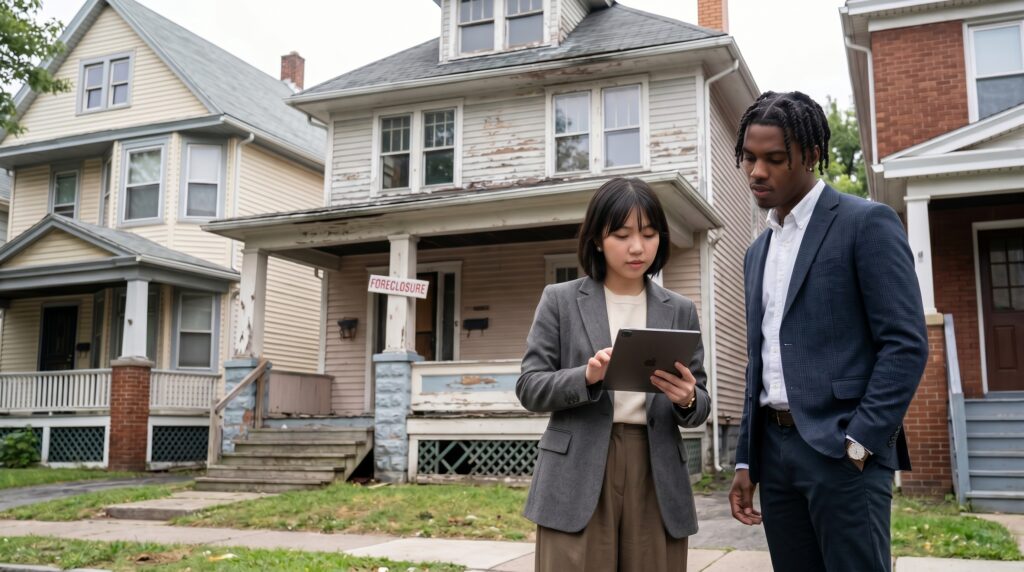
Most Buffalo foreclosure research should begin with Erie County records and the city property file. A low purchase price is not useful if the title, taxes, violations, or property condition create costs that the investor did not price.
The Erie County Clerk states that it is the official registrar of deeds, mortgages, mortgage assignments, mortgage satisfactions, judgments, and liens. Its land records page should be part of the investor’s first review, because mortgage position, lien status, prior transfers, and recorded interests can change the real risk of a foreclosure purchase.
Erie County Real Property Tax Services also provides a public property search for parcel-level information. The county’s property search resource is useful for checking assessment and tax information before a bid or offer is made.
City of Buffalo
Inside the city, property-condition review is especially important. Buffalo has many older homes, and older inventory often requires deeper inspection than the exterior suggests.
Roofs, foundations, basements, boilers, furnaces, electrical panels, plumbing, sewer laterals, porches, masonry, windows, insulation, and water intrusion can all affect the budget.
The City of Buffalo provides public data for code violations, permits, inspections, rental registry information, assessment records, and related property information through its Permits and Inspections data resources. Investors should check these records before treating a foreclosure discount as real.
East Side Buffalo
East Side properties may show lower acquisition prices and more visible distress, but investors need to be strict about block-level demand, vacancy, security, repair burden, and rental execution. A low basis may help, but it does not solve weak tenant demand or heavy deferred maintenance.
Some East Side properties may work as long-term rentals or targeted value-add rehabs. Others may be too repair-heavy for the local resale or rental ceiling. Investors should compare immediate-area closed sales and active rental comps, not citywide averages.
North Buffalo, Hertel, and University-Area Pockets
North Buffalo and selected nearby areas can have stronger buyer and tenant demand. That can support resale-oriented renovation or stable rental strategies, but discounts may be thinner. Properties that look distressed may still attract competition if the location is strong.
The risk in stronger areas is paying too much for a property that still needs major system work. A foreclosure in a better pocket is still a foreclosure; it needs the same title, tax, condition, and occupancy review.
West Side, Elmwood, and Allentown
West Side, Elmwood, and Allentown-area opportunities can be attractive because of walkability, historic housing, rental demand, and buyer interest. These areas also require careful attention to older building systems, historic character, parking limitations, code issues, and renovation expectations.
A two-family or small multifamily property in these areas may have strong potential, but unit legality, rent roll, mechanical systems, and required repairs must be reviewed before projecting returns.
South Buffalo, Kaisertown, and Riverside
South Buffalo, Kaisertown, Riverside, and other neighborhood markets can support rentals, owner-occupant resale, and value-add projects when the property is bought correctly. The analysis should focus on immediate comps, school or employment access, property taxes, flood or water issues where relevant, and whether the finished property fits local demand.
Amherst, Cheektowaga, Tonawanda, and Suburban Erie County
The Buffalo foreclosure market is not limited to the city. Amherst, Cheektowaga, Tonawanda, Lackawanna, West Seneca, Hamburg, Orchard Park, and other suburbs can offer different risk profiles. Suburban properties may have stronger owner-occupant demand, but cleaner assets can attract more competition and leave less discount.
| Area | Possible Investor Angle | Main Item to Verify |
|---|---|---|
| East Side Buffalo | Lower-basis rentals and selected rehabs | Block condition, vacancy, security, repair ceiling |
| North Buffalo / Hertel | Resale and rental demand | Thin discounts and major systems work |
| West Side / Elmwood / Allentown | Walkable rentals, two-family properties, historic rehabs | Unit legality, parking, code issues, old systems |
| South Buffalo / Kaisertown | Moderate-basis rentals and resale projects | Immediate comps, taxes, basement and water issues |
| Riverside / Black Rock | Value-add rentals and selected flips | Flood/water exposure, buyer depth, condition |
| Amherst / Cheektowaga / Tonawanda | Suburban resale and rentals | Competition, taxes, school demand, repair scope |
New York’s Judicial Process Slows the Foreclosure Path
New York is a judicial foreclosure state. The lender must sue in Supreme Court, obtain a judgment, and then proceed to sale through the court process. New York State Homes and Community Renewal’s foreclosure process overview explains that foreclosure begins when the lawsuit is filed and that a judgment allows the property to be sold at auction.
For investors, this creates a longer diligence window than fast nonjudicial states, but it also creates more procedural friction. Case status, settlement conferences, motions, referee appointments, judgments, auction notices, sale cancellations, and post-sale steps all matter.
The Erie County Sheriff’s Office maintains a scheduled sheriff’s sales page, and the current listing illustrates why investors should verify sale status regularly. Several listed sales are marked cancelled or changed, while others remain scheduled.
That means Buffalo foreclosure investors need a case-tracking process, not just an auction-date calendar.
Learn the Strategies Behind Smarter Foreclosure Investing
Get practical foreclosure investing content delivered twice a week, including deal analysis tips, strategy breakdowns, useful tools, and new resources from Foreclosure Flips. Sign up to keep learning and spotting better opportunities.
Mortgage Foreclosures and Tax Foreclosures Are Not the Same
Buffalo investors should distinguish mortgage foreclosure from tax foreclosure. A mortgage foreclosure is tied to a lender enforcing a mortgage through court. A tax foreclosure or in-rem process is tied to unpaid taxes or municipal charges.
The City of Buffalo’s Assessment and Taxation Department states that its Tax Office handles property tax and sewer rent bills, delinquent notices, court-ordered payment plans, and administration of the city’s annual in-rem foreclosure auction.
The city’s Assessment and Taxation Department is therefore relevant for investors researching tax exposure and municipal collection risk.
Do not underwrite a tax foreclosure like a mortgage foreclosure. Title, redemption, sale procedure, municipal charges, and post-sale obligations can differ materially.
Acquisition Strategies That Fit Buffalo

Court-Stage Pre-Foreclosures
Buffalo’s slower judicial process may give investors time to research a case before sale. This can be useful when the owner still has equity, the property has a solvable problem, and the investor can close before the case advances.
The strongest court-stage opportunities usually involve a specific issue: deferred repairs, inherited property, landlord fatigue, vacancy, tax arrears, tenant problems, relocation, or an owner who cannot complete a conventional sale.
The investor’s job is to confirm whether the title, payoff, taxes, condition, and exit value leave enough room.
Sheriff Sales
Sheriff sales can create opportunities, but the risk profile is different from a standard purchase. Sale dates may change, property access may be limited, and the investor must verify title, taxes, liens, occupancy, and condition before bidding.
The bid should be calculated from a conservative exit value.
For a flip, use recent closed comps from the immediate area. For a rental, use achievable rent, not top-end asking rent. Then subtract repairs, taxes, insurance, utilities, code work, title risk, possession costs, holding time, resale costs, and required profit.
REO Properties
REO properties may appeal to investors who want a more conventional acquisition path than sheriff sales. The lender has already taken title, which may allow more standard inspection and negotiation.
In Buffalo, a good REO candidate may be a property with dated finishes, poor photos, stale pricing, manageable repairs, or limited retail appeal. A weak REO candidate is one that still needs major systems work but is priced close to local retail value.
Discounted Owner Sales
Some of the best Buffalo opportunities may come from owners who are not yet at the auction stage. Vacant houses, inherited properties, failed rentals, fire-damaged homes, code problems, water damage, and unpaid taxes can create motivation even when the owner has equity.
These deals can offer more control than auctions because the investor may be able to inspect, negotiate, review title, and close through a standard process.
Rentals, Two-Family Homes, and BRRRR
Buffalo can support rentals and small multifamily strategies, but investors should be careful with older housing systems and winter carrying costs. Two-family homes can be attractive when both units are legal, utilities are properly configured, and the rent roll supports the all-in basis.
A BRRRR deal should include conservative rent, vacancy, taxes, insurance, snow removal, repairs, property management, turnover, capital reserves, and refinance assumptions. If the refinance only works with an optimistic appraisal, the acquisition basis is not low enough.
Local Risks That Can Change the Deal
| Risk | Why It Matters | Investor Response |
|---|---|---|
| Old mechanical systems | Boilers, furnaces, electrical, plumbing, and sewer lines can be expensive | Inspect systems before setting price or bid limits |
| Winter damage | Vacant houses can suffer frozen pipes, roof leaks, and moisture problems | Budget for winterization, utilities, water damage, and emergency repairs |
| Code violations | Violations can delay resale or rental use | Check Buffalo code and permit datasets before committing |
| Property taxes and city charges | Taxes, sewer rent, and municipal charges affect true basis | Review city and county tax records early |
| Sheriff-sale cancellations | Sale timing may change during the court process | Verify the current sale status before relying on auction dates |
| Neighborhood-level liquidity | Demand can change block by block | Use immediate-area closed sales and rental comps |
Buffalo’s main underwriting trap is assuming that an affordable purchase price creates a margin of safety. It only does that when the repair scope, taxes, code status, and exit demand are already priced into the basis.
How to Research Buffalo Foreclosure Deals
For court-stage opportunities, start with the foreclosure case, then review Erie County land records, mortgage history, liens, tax status, and ownership. Use city property resources to review assessment, code, permit, and rental-registration data where applicable.
For sheriff-sale candidates, confirm the sale date, cancellation status, referee or sheriff information, judgment, title position, taxes, liens, occupancy, repair risk, and immediate-neighborhood comps before bidding. Do not rely on the judgment amount or assessed value as the investment value.
For REO properties, compare the lender’s asking price against closed sales, active competition, property condition, market time, code issues, and systems work. A bank-owned property is useful only if the price reflects the total cost of stabilization.
For rentals, confirm legal unit count, rent comps, utility structure, tax burden, insurance, management cost, vacancy, repairs, and winter maintenance. A two-family foreclosure should be analyzed as an operating asset, not only as a discounted building.
Where Buffalo Fits in the New York Foreclosure Strategy
Buffalo should be treated as New York’s lower-basis, records-heavy foreclosure market. It does not have the high acquisition costs of the New York City metro, and it does not require the same downstate compliance framework. But it does require close attention to older housing stock, municipal charges, code issues, tax exposure, and neighborhood-specific demand.
Compared with the New York City metro, Buffalo offers lower entry prices and more accessible rental math, but thinner dollar spreads and more repair sensitivity. Compared with Rochester, Buffalo may offer a larger metro profile and strong affordability appeal, but both markets require disciplined inspection and local rent analysis. Compared with smaller upstate markets, Buffalo offers more depth, but not enough to ignore block-level risk.
Investors comparing Buffalo with other parts of the state should use the broader New York foreclosure market page as the statewide reference point. For national context, the hub on states with the most foreclosure opportunities can help compare New York against other foreclosure-heavy states.
If you are actively screening inventory, you can compare active foreclosure listings. For rehab-heavy properties, run the numbers carefully before committing capital.
FAQ
What Erie County records should a Buffalo investor check first?
Start with Erie County land records for deeds, mortgages, assignments, satisfactions, judgments, and liens. Then check property-tax information through Erie County Real Property Tax Services and city assessment records if the property is inside Buffalo. The title and tax file should be reviewed before estimating profit.
Why do Buffalo foreclosure investors need to watch sheriff-sale cancellations?
New York foreclosure cases can change direction before sale. Erie County’s scheduled sheriff’s sales list commonly shows cancelled or changed sales. Investors should verify sale status close to the auction date and avoid spending capital based on an outdated calendar.
How should investors handle older Buffalo two-family homes?
Confirm legal unit count, utility separation, rent history, code status, mechanical systems, roof condition, basement moisture, and winterization history. A two-family can be attractive, but only if both units are legal and the rent supports repairs, taxes, insurance, management, vacancy, and reserves.
What winter-related issues can affect a vacant Buffalo foreclosure?
Frozen pipes, failed boilers, roof leaks, ice damage, basement moisture, mold, and utility shutoffs can all affect vacant properties. Investors should budget for winterization, reactivation of utilities, plumbing repairs, and water-damage inspection before assuming the rehab is cosmetic.
How is a Buffalo tax foreclosure different from a mortgage foreclosure?
A mortgage foreclosure is lender-driven and moves through New York’s judicial foreclosure process. A tax foreclosure or in-rem proceeding is tied to unpaid taxes or municipal charges and can involve different sale procedures, title issues, and post-sale obligations. Investors should research them separately.
Which Buffalo neighborhoods require the most block-level underwriting?
East Side, Riverside, Black Rock, South Buffalo, and older West Side pockets require careful block-level review because demand, condition, vacancy, and resale ceiling can shift quickly. North Buffalo and stronger walkable areas may have better liquidity, but discounts can be thinner and repair expectations higher.
Want to know what properties in Buffalo banks are about to list?
Learn how to find deeply discounted properties. Get instant access to pre-foreclosures, REOs, and short sales updated daily!