
Tax Delinquency vs Mortgage Foreclosure for Investors

Understanding tax delinquency vs foreclosure helps investors separate two very different types of distressed-property opportunities. A homeowner who is behind on mortgage payments is not in the same situation as an owner who has unpaid property taxes.
Both can lead to investor opportunities, but the process, timeline, risks, and profit model are different.
Mortgage foreclosure usually begins with loan default. Tax delinquency begins when property taxes go unpaid. From there, the path can lead to tax liens, tax certificates, tax deed sales, mortgage foreclosure auctions, REO listings, or pre-foreclosure negotiations.
For investors, the opportunity is not simply “distress.” The opportunity depends on what type of distress exists, who has the legal claim, whether or not there are HOA liens, and how the property can eventually be acquired or monetized.
Build Your Investing Knowledge One Email at a Time
Foreclosure investing rewards preparation. Join our 2X week newsletter for straightforward guidance on pre-foreclosures, short sales, BRRRR, flipping, and other strategies investors use to evaluate distressed property opportunities.
What Is Tax Delinquency?
Tax delinquency occurs when a property owner fails to pay required property taxes. Property taxes are usually assessed by local governments and used to fund schools, public safety, infrastructure, and municipal services. When those taxes are not paid, the government may add penalties, interest, fees, advertising costs, and eventually a tax lien against the property.
Unlike a mortgage, which is a private loan secured by real estate, property tax obligations are tied to the taxing authority’s power to collect revenue. That gives unpaid taxes a different priority and enforcement structure than a missed mortgage payment.
Tax Delinquency Matters to Investors
Tax delinquency can signal financial distress before a mortgage foreclosure appears. An owner may still be current on the mortgage but behind on taxes. Another owner may have no mortgage at all but still risk losing the property through the tax sale process.
For investors, this can create several potential angles:
- Direct outreach to a tax-delinquent owner.
- Tax lien certificate investing.
- Tax deed auction bidding.
- Acquiring properties before they reach tax sale.
- Tracking tax-delinquent lists as distressed-owner leads.
The key is to understand which process applies in the county where the property is located.
What Is Mortgage Foreclosure?
Mortgage foreclosure occurs when a borrower defaults on a mortgage loan and the lender enforces its security interest in the property. The lender’s goal is usually to recover the unpaid loan balance by foreclosing and selling the property.
Mortgage foreclosure may create opportunities through pre-foreclosure outreach, sheriff sales, trustee sales, courthouse auctions, bank-owned REO properties, or post-foreclosure resale opportunities.
The Core Difference
The simplest distinction is this: mortgage foreclosure is driven by unpaid debt to a lender, while tax delinquency is driven by unpaid property taxes owed to a government authority.
That difference changes the investor’s strategy. In a mortgage foreclosure, you are usually analyzing loan default, equity, liens, auction procedures, redemption rights, and lender behavior. In tax delinquency, you are analyzing unpaid taxes, statutory interest, redemption rules, tax sale procedures, and whether the process leads to a lien investment or a deed acquisition.
Tax Liens vs Tax Deeds
Tax delinquency does not always mean an investor can buy the property. In some jurisdictions, investors buy tax lien certificates. In others, they bid on tax deeds. Some states use variations of both.
Tax Lien Certificates
With a tax lien certificate, the investor typically pays the delinquent tax amount and receives the right to collect repayment with interest, subject to local rules. The investor does not automatically own the property. Instead, the property owner usually has a redemption period during which they can pay the taxes, interest, and fees.
County tax sale rules can be very specific. For example, Miami-Dade County explains that a tax certificate represents a lien on unpaid real estate taxes and may include taxes, non-ad valorem assessments, penalties, advertising costs, and fees.
For investors, the potential profit is often the interest or penalty structure, not immediate ownership. If the owner redeems, the investor may earn a return. If the owner does not redeem, the investor may eventually have a path toward foreclosure or a tax deed application, depending on state law.
Tax Deeds
With a tax deed sale, the property itself may be sold to satisfy delinquent property taxes. The winning bidder may receive a tax deed, but that does not always mean clean, marketable title.
Broward County’s tax deed guidance states that a tax deed carries no warranties and does not guarantee clear title, which is why investors should underwrite title risk before assuming a tax deed purchase is ready for resale.
This is a major difference from simply buying a listed property through a traditional closing. A tax deed buyer may still need title work, quiet title action, possession work, insurance review, municipal lien research, and resale planning.
How Tax Delinquency Creates Investor Opportunities
Pre-Sale Owner Outreach
Some investors use tax delinquency lists to identify owners who may be motivated before a property reaches tax sale. This can be useful when the property has equity but the owner is struggling with taxes, maintenance, probate issues, or income disruption.
The investor angle is similar to pre-foreclosure investing: solve a problem before the public auction process compresses the opportunity. That may involve buying the property directly, negotiating seller financing, helping resolve tax balances at closing, or structuring a transaction that gives the owner a cleaner exit.
Tax Lien Investing
Tax lien investing may appeal to investors who want a debt-like strategy rather than an immediate rehab project. The return depends on statutory interest, auction bidding rules, redemption timing, competition, and the quality of the underlying property.
This strategy is not passive in the way some beginners expect. You still need to research the property, the lien amount, other liens, assessed value, environmental risk, title issues, and the redemption process. A high interest rate does not help if the underlying property is worthless, inaccessible, contaminated, or legally difficult to enforce against.
Tax Deed Investing
Tax deed investing is closer to acquisition investing. The investor may be trying to obtain the property at a discount, then clear title, secure possession, repair the property, rent it, flip it, or resell it to another investor.
The opportunity can be real, but the risk is often higher than the opening bid suggests. A tax deed property may have municipal violations, occupied-property issues, demolition risk, title defects, IRS liens, association balances, or improvement problems that were not obvious during auction research.
Stay Ahead of the Next Deal
Markets move quickly, and good foreclosure opportunities often require fast analysis. Subscribe to our twice-weekly newsletter for investor-focused tips, tools, and market insights designed to help you make better decisions.
How Mortgage Foreclosure Creates Investor Opportunities
Mortgage foreclosure opportunities usually fall into three categories: before the foreclosure sale, at the foreclosure auction, and after the lender takes ownership.
Pre-Foreclosure Deals
In pre-foreclosure, the owner still controls the property. Investors may negotiate directly with the owner, subject to state law, equity position, lender payoff, and homeowner-protection rules. If there is enough equity, a direct purchase may solve the owner’s problem and give the investor a cleaner acquisition than an auction.
Foreclosure Auction Deals
At auction, investors bid based on ARV, repair costs, title risk, liens, redemption rights, and possession expectations. Mortgage foreclosure auctions can be competitive, fast-moving, and cash-heavy. The winning bidder may need funds immediately or within a short deadline.
REO and Post-Foreclosure Deals
If the lender takes the property back, it may later become an REO listing. These deals are often more conventional than courthouse auctions, but the discount may be smaller because the property has passed through more of the risk filter.
Key Risks Investors Should Compare
Timeline
Tax lien investing may require waiting through a redemption period before any enforcement step is possible. Tax deed investing may be faster in terms of acquisition but slower in terms of title cleanup. Mortgage foreclosure can vary widely by state, court process, sale confirmation, and redemption rules.
Title
Title risk exists in both categories, but it shows up differently. A mortgage foreclosure may wipe out some junior interests while leaving certain taxes, municipal liens, or association claims.
A tax deed may transfer ownership but still require curative title work before resale. Industry summaries of tax sale structures reinforce the difference between lien sales and deed sales and why investors should not treat them as the same strategy.
Profit Model
Mortgage foreclosure investors often seek equity capture, flip profit, rental cash flow, or wholesale spread. Tax lien investors usually seek statutory interest or eventual enforcement rights. Tax deed investors usually seek discounted acquisition, but must price in title, possession, and property-condition risk.
The Investor Takeaway
The difference between tax delinquency vs foreclosure is not just terminology. Tax delinquency can lead to tax liens, tax certificates, tax deeds, or direct owner outreach. Mortgage foreclosure can lead to pre-foreclosure deals, auction purchases, REO properties, and distressed resale opportunities.
Investors should start by identifying the type of distress, the controlling legal process, and the likely exit strategy. Then the numbers should be adjusted for redemption rules, title risk, possession, liens, repairs, and holding costs.
A tax-delinquent property and a mortgage-foreclosure property may both look distressed. But they are not the same deal. The investor who understands the difference is better positioned to bid carefully, negotiate intelligently, and protect profit before committing capital.
Wondering Where the Savviest Investors Find Their Best Deals?
Access the largest database of foreclosure properties nationwide and discover below-market deals before other investors. Start your search today!
You might also like:
 How to Buy a Bankruptcy House as an Investor
 Housing Affordability Crisis and Foreclosure Investing
 Occupied Foreclosure Properties: What Investors Need to Know
 How HOA Liens Can Change a Foreclosure Deal
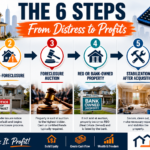 The Investor Foreclosure Funnel Explained in 6 Steps
 Auction Houses vs Online Foreclosure Auctions