
Best Markets for Foreclosure Investing in 2026

Foreclosure investing in 2026 is not just about finding the cities with the highest number of distressed properties. The best markets for foreclosure investing are the markets where distress, deal flow, local demand, resale liquidity, and risk can be evaluated together.
That distinction matters. A market with rising foreclosure filings may create more leads, but that does not automatically make it a strong investment market. Investors still need to know whether buyers are active, whether rents support the numbers, whether repair costs are manageable, whether local employment is stable, and whether exit strategies are realistic.
As of May 5, 2026, foreclosure activity has clearly moved higher from the unusually low levels seen after the pandemic-era intervention period. According to ATTOM’s Q1 2026 U.S. Foreclosure Market Report, 118,727 U.S. properties had foreclosure filings in the first quarter of 2026, up 26% from one year earlier. ATTOM also reported 82,631 foreclosure starts during the quarter, up 20% year over year, while bank repossessions increased 45% year over year.
At the same time, this is not a repeat of the 2008 foreclosure crisis. Many homeowners still have meaningful equity, underwriting standards have been tighter, and housing supply remains constrained in many parts of the country. ATTOM’s March 2026 state-level foreclosure report described the increase as part of a broader normalization trend rather than a systemic collapse.
For investors, that creates a very specific opportunity. There may be more distressed sellers, more pre-foreclosure leads, and more foreclosure auction activity, but the best opportunities will likely come from disciplined local market selection rather than broad speculation.
Get Foreclosure Investing Insights Twice a Week
Subscribe to the Foreclosure Flips newsletter for practical ideas on finding deals, analyzing opportunities, and understanding foreclosure-related investing strategies. We send concise updates twice a week so you can stay informed without adding more noise to your inbox.
How We Selected the Best Foreclosure Markets for 2026
This list was created using five practical screens. The goal is not to chase distress for its own sake. The goal is to identify markets where foreclosure-related opportunities may exist and where investors have a reasonable chance to complete a profitable exit.
1. Foreclosure Pressure
The first screen is foreclosure pressure. This includes foreclosure filings, foreclosure starts, scheduled auctions, and completed bank repossessions.
Foreclosure pressure matters because it indicates where financial stress is showing up in the housing market. Rising foreclosure starts can create more opportunities for pre-foreclosure outreach, short sale conversations, foreclosure auction research, and REO acquisition.
For this screen, the primary source is ATTOM foreclosure data, including its Q1 2026 foreclosure report and March 2026 state-level foreclosure analysis. ATTOM identified elevated foreclosure rates in states such as South Carolina, Indiana, Florida, Illinois, and New Jersey in March 2026.
2. Deal Volume
A smaller market can have a high foreclosure rate but still produce limited deal flow. A large market may have a lower rate but far more total foreclosure starts.
That is why deal volume is a separate screen. Investors need enough potential leads to justify consistent marketing, property research, title work, contractor relationships, and local networking. A market with only a handful of filings may be interesting statistically but too thin operationally.
ATTOM reported that the states with the greatest number of foreclosure starts in Q1 2026 included Texas, Florida, California, Georgia, and New York. At the metro level, New York, Houston, Chicago, Atlanta, and Dallas were among the markets with the highest foreclosure-start counts.
3. Exit Liquidity
Foreclosure investors make money when they can exit. That may mean reselling to an owner-occupant, refinancing into a rental, selling to another investor, or completing a wholesale assignment. In each case, market liquidity matters.
For exit liquidity, investors should review active inventory, new listings, median days on market, price reductions, and buyer demand. Realtor.com’s March 2026 housing data showed that active listings were up 8.1% year over year, median list prices were down 2.2% year over year, and median days on market were four days longer than one year earlier. Those national figures suggest a market that is loosening, but not uniformly across every metro.
Sources such as the Realtor.com Research data center and the Redfin Data Center are useful for checking whether a specific metro still has enough buyer activity to support a resale strategy.
4. Price Discipline
A foreclosure discount does not matter if prices are falling faster than the investor can renovate, rent, refinance, or resell.
This screen looks at price stability. Investors should review recent price trends, median sale prices, list-price reductions, and repeat-sales indexes. The FHFA House Price Index is useful because it is a repeat-sales index that measures price changes on the same properties over time. FHFA’s public HPI datasets include data for all states and hundreds of U.S. cities.
Price discipline does not mean only investing in markets with rapid appreciation. In some foreclosure markets, flat or slightly declining prices may actually create better negotiating leverage. But investors need to underwrite conservatively, especially in markets where sellers are still anchored to peak-era pricing.
5. Local Risk Controls
The final screen is local risk. This includes employment trends, building permits, vacancy, insurance costs, taxes, crime pockets, permitting friction, and neighborhood-level blight.
The Bureau of Labor Statistics metropolitan employment and unemployment release is useful for labor-market screening. In its February 2026 metro report, BLS reported that unemployment rates were higher year over year in 236 of 387 metropolitan areas.
Supply and vacancy are also important. The U.S. Census Building Permits Survey provides permitting data by metropolitan area, county, and permit-issuing place, which can help investors identify markets with heavy new supply. The HUD USPS Vacancy Data can help investors evaluate neighborhood vacancy pressure because it tracks addresses that postal workers identify as vacant for 90 days or longer.
What Makes a Good Foreclosure Market in 2026?
A good foreclosure market in 2026 is not necessarily the cheapest market. It is also not automatically the market with the highest foreclosure rate.
The best foreclosure markets usually have four characteristics:
- Enough distress to create motivated-seller opportunities.
- Enough transaction volume to support consistent deal sourcing.
- Enough buyer or renter demand to support a realistic exit.
- Local risks are understandable and can be priced into the deal.
For example, a Florida market may have strong foreclosure activity and investor demand, but the numbers may be affected by insurance premiums, storm risk, HOA fees, and repair costs. A Midwest market may have more affordable entry prices and better cash-flow potential, but investors may need to pay closer attention to neighborhood selection, local population trends, older housing stock, and code compliance.
That is why foreclosure investors should treat market selection as the first layer of due diligence, not the final decision. The market may point you toward opportunity, but the individual property still has to work.
13 of the Best Markets for Foreclosure Investing in 2026
The following markets are not presented as guarantees. They are markets that deserve investor attention based on a combination of foreclosure activity, deal flow, affordability, liquidity, and practical investment potential as of May 5, 2026.
Lakeland, Florida

Lakeland stands out because ATTOM ranked it as one of the worst foreclosure-rate metros in the country in Q1 2026 among metropolitan areas with at least 200,000 people. That level of foreclosure pressure makes Lakeland a market worth watching for pre-foreclosure leads, auction research, and distressed single-family opportunities.
Lakeland also benefits from its location between Tampa and Orlando. That corridor has attracted population growth, logistics activity, commuting households, and investor attention. For foreclosure investors, this creates potential exit flexibility. A property may appeal to a local owner-occupant, a rental investor, or a buyer priced out of larger nearby metros.
The main caution is that Florida investing has become more complicated. Insurance costs, storm exposure, property taxes, and repair pricing can materially affect the numbers. Investors should be careful with older roofs, deferred maintenance, flood-zone exposure, and properties with unresolved permitting issues. In Lakeland, the opportunity is not simply buying anything distressed. The opportunity is finding properties where the discount is large enough to absorb Florida-specific ownership costs.
Jacksonville, Florida
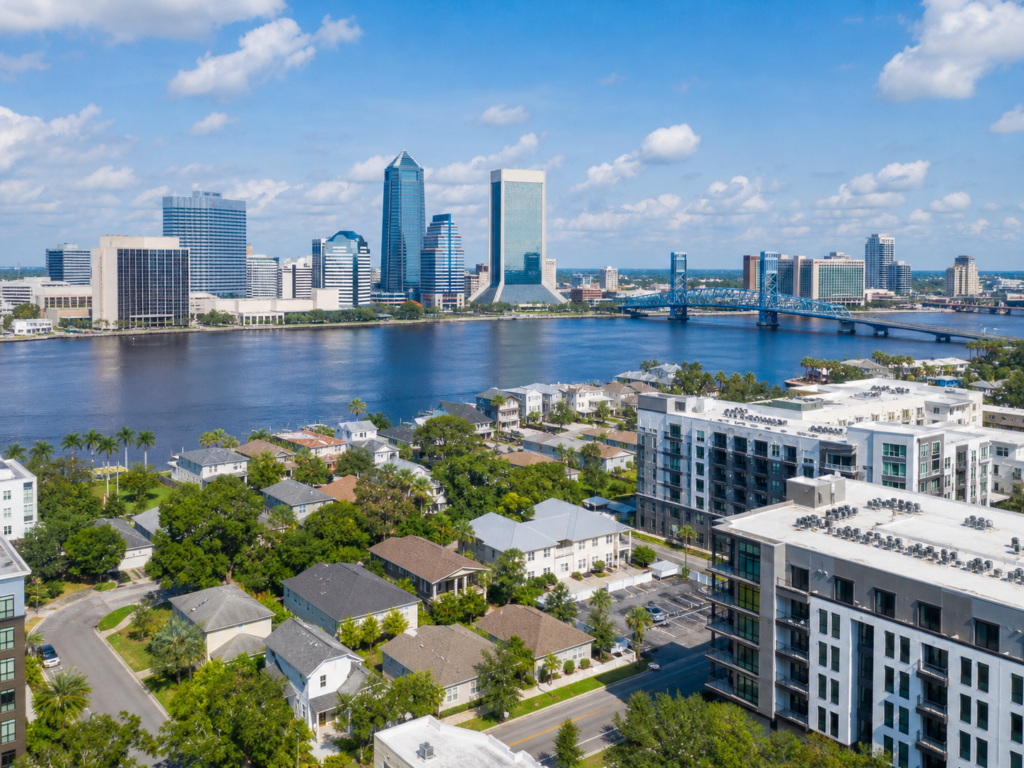
Jacksonville is one of the more practical foreclosure markets for investors because it combines scale, affordability relative to many coastal Florida markets, and foreclosure activity. ATTOM identified Jacksonville as one of the large metros with elevated foreclosure-rate rankings in Q1 2026.
The market gives investors several possible strategies. Some neighborhoods may fit buy-and-hold rental investing. Others may support cosmetic flips for owner-occupant resale. Jacksonville also has enough geographic spread that investors can specialize by submarket instead of trying to understand the entire metro at once.
The risk is neighborhood variation. Jacksonville is not a single uniform market. Two properties with similar square footage and similar list prices can have very different rental demand, resale buyer depth, school-zone appeal, insurance costs, and crime perception. Investors should rely heavily on comparable sales, rent comps, days-on-market data, and property condition analysis before assuming that a foreclosure discount is meaningful.
Orlando, Florida

Orlando remains a strong market to evaluate because it has large-metro liquidity, population demand, and measurable foreclosure pressure. ATTOM included Orlando among large metros with elevated foreclosure-rate rankings in Q1 2026.
For investors, Orlando’s advantage is exit optionality. Depending on the property and location, an investor may be able to resell to an owner-occupant, hold as a long-term rental, or target workforce housing demand. The metro has a large employment base tied to tourism, services, healthcare, logistics, education, and related industries.
The concern is that Orlando is also highly competitive. Many investors already track distressed opportunities there. Insurance, HOA restrictions, short-term rental regulation, property taxes, and higher acquisition prices can reduce margins. Orlando may be attractive, but it requires disciplined underwriting. Investors should be cautious about assuming appreciation will cover mistakes.
Columbia, South Carolina

Columbia made ATTOM’s Q1 2026 list of metros with the highest foreclosure rates, which makes it one of the more important Southeast markets to evaluate. South Carolina also ranked among the states with elevated foreclosure rates in ATTOM’s March 2026 state-level report.
Columbia may appeal to foreclosure investors because it has a mix of affordability, government employment, university-related demand, healthcare employment, and rental housing needs. Compared with many larger Sun Belt markets, entry prices may be more accessible, which can make the market more practical for newer investors or investors focused on moderate rehab projects.
The caution is that investors need to be selective. Lower acquisition prices do not automatically mean better deals. Older housing stock, deferred maintenance, title issues, and neighborhood-level demand differences can change the risk profile quickly. Investors should pay close attention to school zones, employment corridors, rental comps, and whether renovated homes are actually selling within a reasonable timeframe.
Fayetteville, North Carolina

Fayetteville also appeared on ATTOM’s Q1 2026 list of metros with elevated foreclosure rates. That makes it a useful market for investors looking for distressed single-family opportunities outside the most expensive coastal metros.
The market’s investment case is tied partly to affordability and partly to local rental demand. Fayetteville has a large military presence, which can support recurring housing demand, but investors should still analyze turnover, tenant profile, property condition, and neighborhood stability carefully.
The risk is that military-adjacent markets can be uneven. Some areas may have steady rental demand, while others may have older properties, lower appreciation, or more maintenance-intensive housing stock. Investors should not underwrite Fayetteville as if every property will have the same exit. This is a market where street-level analysis matters.
Macon, Georgia

Macon was another metro ATTOM identified among the highest foreclosure-rate markets in Q1 2026. Georgia also ranked among the states with the greatest number of foreclosure starts during the quarter, giving the state both rate and volume relevance.
For investors, Macon may offer lower acquisition costs than many larger metros. That can create opportunities for rental investors, BRRRR investors, and experienced rehabbers who understand older properties. The lower price point may also allow investors to build in more conservative margins if they avoid over-improving.
The main caution is liquidity. Lower-cost markets can look attractive on paper, but resale demand may be thinner than in larger metros. Investors should be careful with properties that require heavy structural work, properties in areas with high vacancy, and deals where the projected ARV is based on too few comparable sales. Macon may be a good research market, but it requires conservative exit assumptions.
Atlanta, Georgia

Atlanta is a different type of foreclosure market. It is not included because it has the highest foreclosure rate. It is included because ATTOM reported that Georgia had one of the largest numbers of foreclosure starts in Q1 2026, and Atlanta was among the metros with the highest total foreclosure-start counts.
For investors, Atlanta’s strength is scale. The metro has large transaction volume, extensive suburban submarkets, institutional and local investor activity, and multiple exit strategies. Depending on location, a foreclosure-related property may support a flip, rental, BRRRR project, or wholesale transaction.
The challenge is competition and submarket complexity. Atlanta has areas with strong demand and areas where the investment risk is much higher. Investors should avoid treating “Atlanta” as one market. A foreclosure lead in an outer suburb, an older urban neighborhood, and a commuter-heavy exurban location may each require a different strategy. Accurate comps and repair estimates are critical.
Learn the Strategies Behind Smarter Foreclosure Investing
Get practical foreclosure investing content delivered twice a week, including deal analysis tips, strategy breakdowns, useful tools, and new resources from Foreclosure Flips. Sign up to keep learning and spotting better opportunities.
Cleveland, Ohio
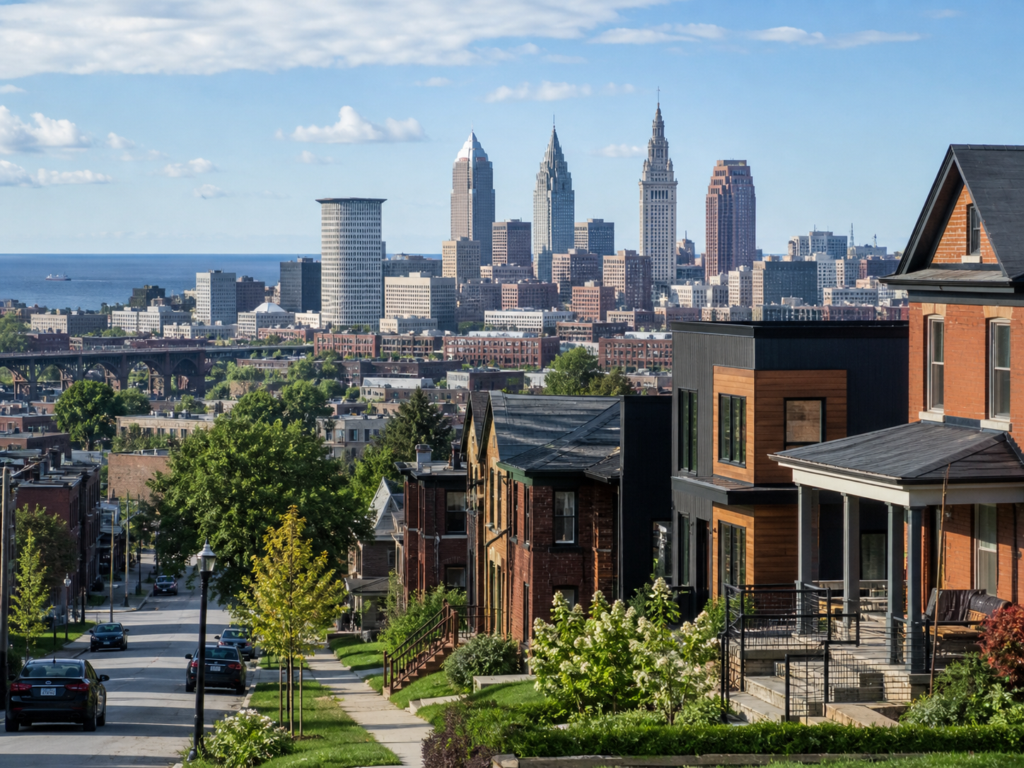
Cleveland deserves attention because ATTOM identified it as one of the large metros with elevated foreclosure-rate rankings in Q1 2026. It also has a long history of investor interest because of its relatively low entry prices and rental-stock depth.
The appeal for foreclosure investors is affordability. Compared with many Sun Belt and coastal metros, Cleveland may allow investors to acquire properties at lower absolute prices. That can be useful for cash-flow strategies, small multifamily research, and value-add single-family rentals.
The risk is neighborhood selection. Cleveland can be highly block-specific. Some areas may support stable rental demand and resale activity, while others may have high vacancy, older housing stock, code issues, or weak buyer liquidity. HUD’s USPS vacancy data can be especially useful in markets like this because vacancy risk can vary sharply by neighborhood.
Indianapolis, Indiana
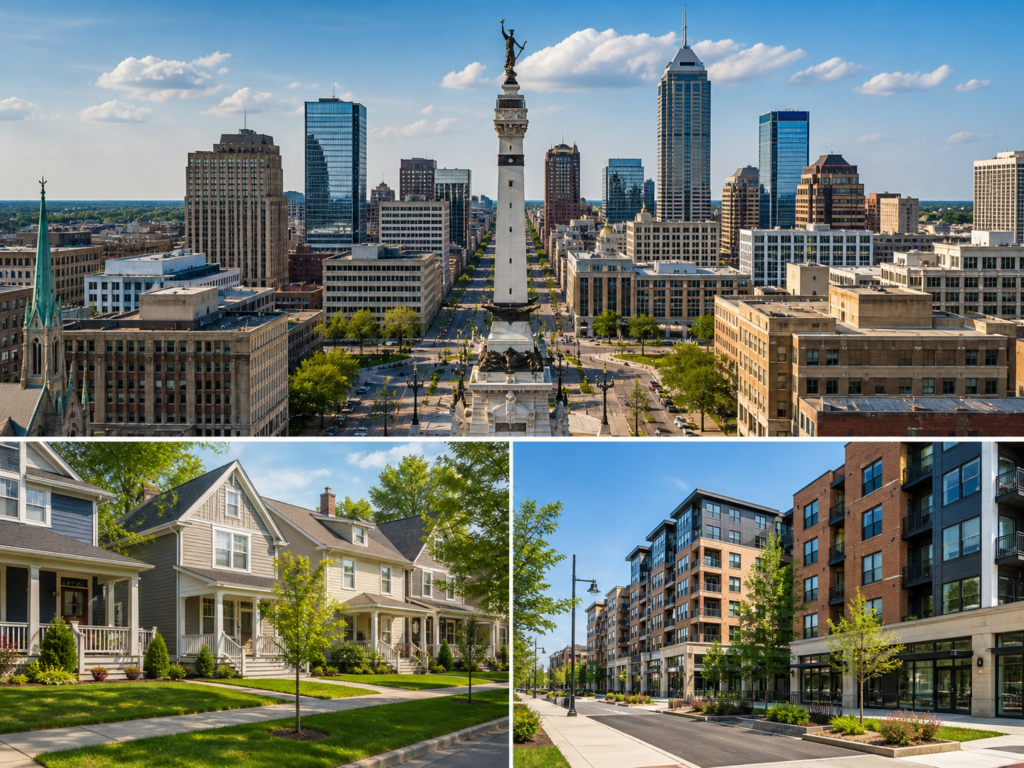
Indianapolis is worth evaluating because Indiana ranked among the states with elevated foreclosure rates in ATTOM’s Q1 and March 2026 foreclosure reporting, and Indianapolis was listed among large metros with elevated foreclosure-rate rankings.
The market has several features that may appeal to investors. It is a large Midwest metro with relatively affordable housing compared with many coastal markets, a diversified employment base, and a history of investor activity in single-family rentals. For foreclosure investors, this can create opportunities in both rental and resale strategies.
The caution is that affordability can attract competition. A deal that appears inexpensive may still be overpriced relative to its rent, repair needs, or resale potential. Investors should pay attention to property taxes, age of mechanical systems, foundation issues, neighborhood-level crime perception, and whether renovated comps are recent and truly comparable.
Chicago, Illinois

Chicago is included because Illinois showed elevated foreclosure activity, and ATTOM reported that Chicago was among the metros with the greatest number of foreclosure starts in Q1 2026.
Chicago offers deal volume, deep housing stock, and multiple property types. Investors may find single-family homes, small multifamily buildings, condos, and REO opportunities. The metro also has enough population and transaction depth to support different strategies if the investor understands the local submarket.
However, Chicago is not a simple foreclosure market. Taxes, permitting, inspections, local regulation, judicial foreclosure timelines, building condition, tenant rules, and neighborhood variation can all affect profitability. Investors should be especially careful with small multifamily properties that appear cheap but require major capital improvements or have rent-collection challenges. Chicago can be an opportunity market, but it is better suited to investors who are prepared for operational complexity.
Houston, Texas

Houston is one of the most important foreclosure markets to watch because Texas had the greatest number of foreclosure starts in Q1 2026, and Houston was among the metros with the highest foreclosure-start counts.
Houston’s appeal is scale. It has a large housing stock, significant employment base, large investor community, and many submarkets. For investors who know how to analyze local comps and repair costs, that scale can create consistent deal flow.
The risks are also clear. Houston investors need to account for flood risk, insurance, property taxes, foundation issues, older mechanical systems, and neighborhood-specific demand. Because Texas markets can move quickly, investors should avoid relying on stale comps. A foreclosure discount only matters if the ARV, repair budget, holding period, and exit demand are realistic.
Dallas, Texas

Dallas is another volume-driven foreclosure market. Texas led the country in foreclosure starts in Q1 2026, and Dallas ranked among the metros with the greatest total foreclosure-start counts.
Dallas offers strong transaction depth and a large base of buyers, renters, contractors, lenders, and investors. That ecosystem can be useful for foreclosure investing because investors often need fast due diligence, fast repair execution, and a clear exit strategy.
The challenge is pricing. Dallas has become more expensive over the past cycle, and investor competition can compress margins. Some areas may still have strong demand, while others may be sensitive to affordability pressure. Investors should pay close attention to list-price reductions, days on market, and whether entry-level buyers can still qualify at current mortgage rates.
Punta Gorda, Florida
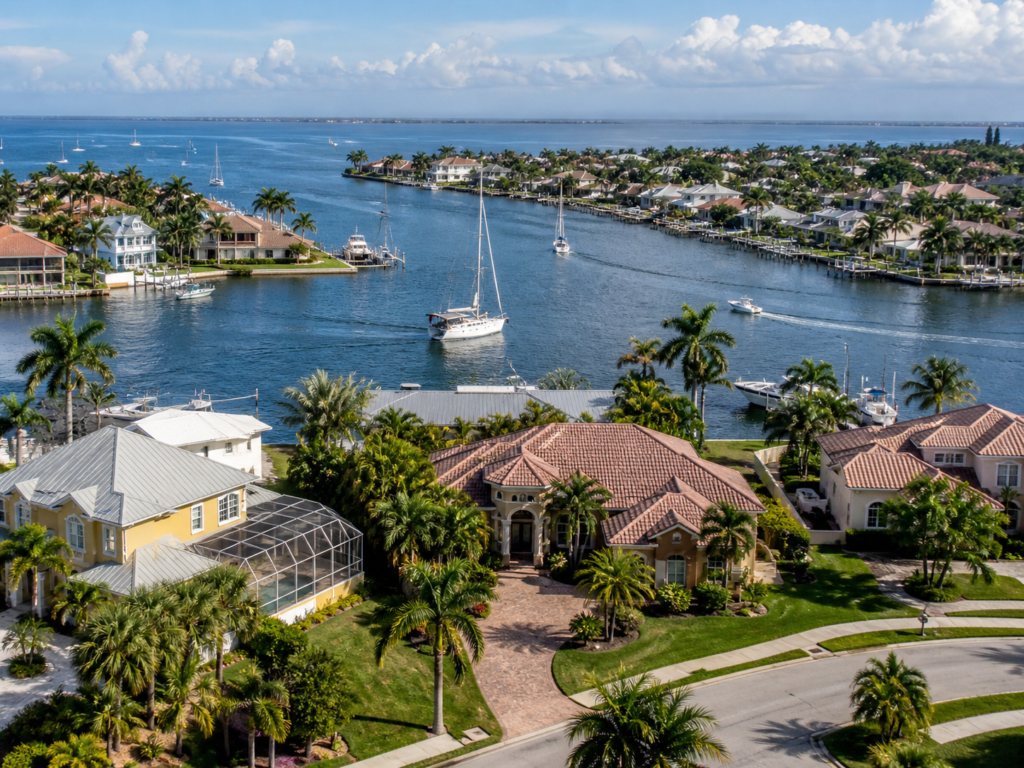
Punta Gorda deserves mention because ATTOM ranked it among the highest foreclosure-rate metros in Q1 2026. On foreclosure pressure alone, it is clearly a market to watch.
However, this is also a market where investors should be cautious. Southwest Florida has faced significant insurance, storm, repair-cost, and affordability pressures. A distressed property may look attractive until the investor fully prices roof condition, flood exposure, wind mitigation, insurance availability, HOA rules, and contractor costs.
For that reason, Punta Gorda may be better framed as a watchlist market rather than a universal recommendation. Experienced Florida investors may find opportunities, especially if they understand insurance and storm-related due diligence. Newer investors should be careful and should avoid assuming that a high foreclosure rate automatically means a high-margin deal.
Markets Worth Watching But Not Automatically Ranking Higher
Some markets may produce significant foreclosure volume but are not necessarily practical for the average foreclosure investor.
New York is the clearest example. ATTOM reported that New York had one of the highest metro-level foreclosure-start counts in Q1 2026. That volume matters, but New York also has higher acquisition costs, more legal complexity, and regulatory friction that may make it less accessible for many investors.
California is another example. The state had one of the largest numbers of foreclosure starts in Q1 2026, but many California markets remain expensive, highly regulated, and difficult for smaller investors to enter. That does not mean there are no opportunities. It means the market requires a different level of capital, expertise, and risk tolerance.
New Jersey also deserves monitoring because ATTOM’s March 2026 report ranked it among the states with elevated foreclosure rates. However, judicial foreclosure procedures, property taxes, and local market variation can make deal execution more complicated.
How Investors Should Use This List
This article should be used as a starting point, not as a buy list.
A foreclosure market can look attractive at the metro level while still producing poor deals at the property level. The reverse is also true. A market may not rank at the top nationally, but a specific submarket may offer strong opportunities because of local distress, landlord demand, employer growth, or limited entry-level inventory.
Before pursuing a foreclosure, investors should confirm:
- The property’s current legal status
- The unpaid loan balance and lien position
- Whether there are tax liens, HOA liens, judgments, or municipal violations
- The realistic repair budget
- The after-repair value based on recent comparable sales
- The likely holding period
- The insurance cost
- The property tax impact after purchase
- The resale or rental exit strategy
This is especially important in 2026 because rising ownership costs appear to be part of the foreclosure story. The Wall Street Journal recently reported that higher homeownership costs, including taxes, insurance, and HOA expenses, are contributing to foreclosure pressure even though many owners still have equity.
That creates both opportunity and risk. Investors may find more motivated sellers, but they also inherit the same local cost pressures that contributed to distress in the first place.
Best Strategies by Market Type
Different foreclosure markets favor different strategies.
In larger, liquid metros such as Atlanta, Houston, Dallas, Jacksonville, Orlando, Chicago, and Indianapolis, investors may have more flexibility. These markets may support flipping, wholesaling, rental acquisitions, BRRRR projects, and selective auction purchases, depending on the submarket and property type.
In smaller or more affordable metros such as Macon, Columbia, Fayetteville, and parts of Cleveland, investors may need to be more conservative. Cash-flow potential may be appealing, but resale liquidity and neighborhood selection become more important. These markets may work better for investors who understand rental operations and who can avoid overleveraging.
In Florida coastal or storm-exposed markets such as Punta Gorda, investors should treat insurance, flood risk, roof age, and repair pricing as core underwriting items, not afterthoughts. A property is not a good deal simply because the purchase price is discounted.
Data Sources Investors Should Check Before Choosing a Market
A serious foreclosure investor should build a small research checklist and update it regularly.
Start with foreclosure activity. ATTOM’s foreclosure reports are useful for identifying where filings, starts, auctions, and REOs are increasing. Then compare that with mortgage stress data from ICE, which tracks delinquency and foreclosure trends across the mortgage market. ICE’s January 2026 First Look reported that FHA loans were driving an increase in serious delinquencies and active foreclosures after loss-mitigation guideline changes.
Next, review housing-market liquidity. Realtor.com and Redfin can help investors evaluate active listings, price cuts, days on market, sale prices, and inventory trends. Realtor.com’s March 2026 data showed a national market with more inventory and softer list prices than one year earlier, but investors should always check metro-level data before making decisions.
Then review local price direction. FHFA’s House Price Index can help investors understand broader price movement, while MLS comps and local sale records should be used to validate property-level ARV.
Finally, review local risk. BLS employment data, Census building permits, Census vacancy data, HUD USPS vacancy data, insurance quotes, property tax records, and local code enforcement research can all help investors avoid markets or neighborhoods where the apparent discount is hiding deeper problems.
Final Thoughts
The best markets for foreclosure investing in 2026 are not simply the markets with the most distress. They are the markets where distress can be converted into a realistic investment opportunity.
Lakeland, Jacksonville, Orlando, Columbia, Fayetteville, Macon, Atlanta, Cleveland, Indianapolis, Chicago, Houston, Dallas, and Punta Gorda all deserve attention based on current foreclosure activity and market conditions. But each market requires a different strategy.
Florida markets may offer foreclosure pressure and buyer demand, but insurance and storm risk must be priced carefully. Texas markets may offer volume and liquidity, but property taxes, flood exposure, and fast-changing comps matter. Midwest markets may offer affordability and rental potential, but neighborhood selection and vacancy risk are critical. Southeast markets may offer growth and distress opportunities, but investors still need to verify local demand, repair costs, and resale depth.
For investors, the core lesson is simple: use foreclosure data to find where opportunity may be increasing, but use local due diligence to decide whether a specific deal is worth pursuing.
The market can point you in the right direction. The numbers decide whether the property is actually a deal.
Are You Looking for Deal-Minded Buyers?
Connect with readers actively researching foreclosure investing, property analysis, and distressed real estate opportunities. Start Advertising
You might also like:
 Treasury Yields and Distressed Housing Deals
 Buying REO Properties: Essential Guide for Investors
 REO Property Negotiation Tips for Real Estate Investors
 Selling REO Properties for Maximum Profit: Investor Guide
 Foreclosure Investing: How to Buy, Analyze, and Profit From Foreclosed Homes
 Foreclosure Investing for Beginners: Complete Step-by-Step Guide