
How House Flipping Deal Analysis Software: How to Run Better Deals
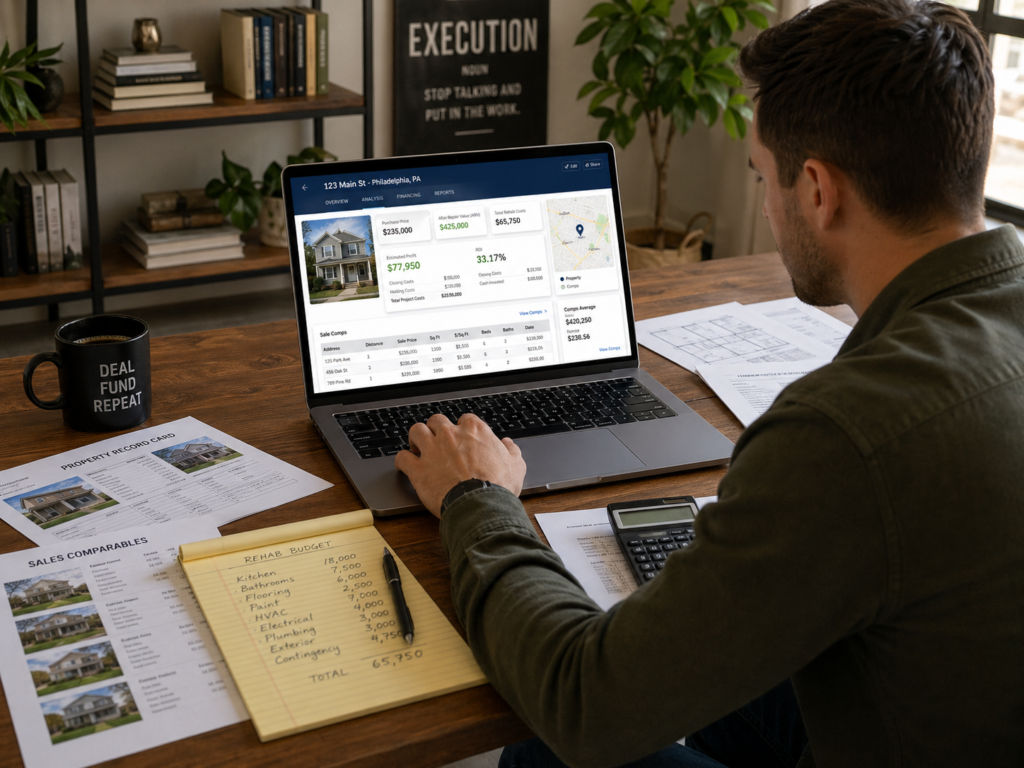
Flipping houses is not just about finding ugly properties and making them look better. The real money is made before the purchase, during the analysis phase, and throughout the project management process.
The same is true for investors flipping contracts. A wholesale deal is only valuable if the numbers are credible, the seller information is accurate, the buyer can quickly understand the opportunity, and the projected spread makes sense.
That is why serious investors need more than a spreadsheet and a few saved property websites. They need a structured system for moving from lead research to offer analysis, lender presentation, rehab budgeting, project tracking, and post-project review.
The right house flipping deal analysis software can function as an all-in-one deal navigator. It helps investors evaluate opportunities faster, present deals more professionally, and avoid guessing on the numbers that determine whether a project succeeds or fails.
Learn the Strategies Behind Smarter Foreclosure Investing
Get practical foreclosure investing content delivered twice a week, including deal analysis tips, strategy breakdowns, useful tools, and new resources from Foreclosure Flips. Sign up to keep learning and spotting better opportunities.
Why Better Deal Analysis Matters Before You Make an Offer
Most bad flip projects do not become bad projects at the end. They usually become bad projects at the beginning.
The investor overestimates the after-repair value. The rehab budget is too light. Holding costs are ignored. The seller’s mortgage history is not reviewed carefully. The property’s ownership structure is misunderstood. Or the investor fails to account for time, financing, contingencies, and resale friction.
A disciplined investor looks at the deal from multiple angles before making an offer. That means reviewing the property, the seller, the title and ownership context, mortgage history, comparable sales, estimated repairs, funding needs, and exit strategy.
For valuation, comparable sales are especially important. Fannie Mae’s appraisal guidance notes that the sales comparison approach relies on closed comparable sales to support an opinion of market value.
Investors are not appraisers, but the principle still applies: the projected ARV should be supported by relevant, recent, and similar sales, not optimism or seller expectations. Fannie Mae’s comparable sales guidance is a useful reference point for understanding why good comps matter.
Start with Seller and Property Intelligence
Before estimating profit, an investor needs to know what they are actually dealing with.
Good house flipping deal analysis software should help organize basic property research, including owner information, mailing address, property characteristics, sale history, mortgage history, and related ownership data.
Owner Info and Mailing Address
For off-market investors, this is critical. A lead is not useful unless the investor can identify the owner and reach the right person.
Owner data and mailing address information can support direct mail, skip tracing, seller outreach, and follow-up campaigns. This is especially important for pre-foreclosures, absentee owners, inherited properties, tired landlords, and owners with multiple properties.
Property Characteristics
Property characteristics help determine whether the deal fits the investor’s strategy. These may include:
Property type, square footage, lot size, year built, bedroom and bathroom count, construction type, prior sale date, and other available public-record details.
These details matter because a 1,200-square-foot starter home, a 2,800-square-foot luxury renovation, and a small multifamily property are not the same kind of deal. Each has a different buyer pool, repair profile, holding cost risk, and resale timeline.
Mortgage and Sale History
Mortgage and sale history can help an investor understand the seller’s position. While public records do not tell the whole story, they may indicate when the property was purchased, how much debt may exist, whether the seller refinanced, and whether there is enough potential equity to support a workable offer.
This is useful for both house flippers and wholesalers. A seller with limited equity may require a different approach than a seller who owns the property free and clear. A property with multiple liens, recent refinancing, or unclear ownership may require more caution before time and money are spent pursuing the deal.
Look Beyond One Property: Review What Else the Seller Owns
One overlooked advantage of better property research is the ability to see whether the seller owns other properties.
This can create additional opportunities. A tired landlord may be willing to sell more than one property. An estate may include multiple assets. An investor who initially calls about one house may discover a small portfolio. A seller who does not want to sell the first property may be open to discussing another.
For wholesalers, this can turn one lead into multiple assignment opportunities. For flippers, it can reveal a pipeline of future projects. For buy-and-hold investors, it may uncover a portfolio acquisition opportunity.
The key is not just having the data. The key is having the data organized in a way that makes action easier.
Use Sales Comps to Estimate ARV More Accurately
The after-repair value, or ARV, is one of the most important numbers in any flip analysis.
If the ARV is too high, the investor may overpay. If the ARV is too low, the investor may walk away from a deal that actually works. Either mistake can be expensive.
A strong ARV estimate should consider similar properties that recently sold in the same market. Investors should pay attention to location, size, bedroom and bathroom count, condition, age, lot characteristics, garage or parking, finished basement space, and major upgrades.
Comparable sales are not just a formality. Fannie Mae’s sales comparison guidance also addresses the need to consider prior sales history and comparable market data when developing a supported valuation analysis. Fannie Mae’s sales comparison approach guidance reinforces why valuation should be tied to evidence rather than assumptions.
For investors, the practical lesson is simple: never let the seller’s asking price, a wholesaler’s flyer, or a contractor’s enthusiasm determine the ARV. Use comps.
Stay Ahead of the Next Deal
Markets move quickly, and good foreclosure opportunities often require fast analysis. Subscribe to our twice-weekly newsletter for investor-focused tips, tools, and market insights designed to help you make better decisions.
Turn the Deal into a Professional Lender Proposal
Finding the deal is only part of the process. Most investors also need funding.
Private lenders, hard money lenders, and capital partners want to see that the investor understands the numbers. They are not just funding a property. They are funding a plan.
A strong lender proposal should explain the purchase price, estimated ARV, rehab budget, scope of work, timeline, exit strategy, projected profit, and investor contribution. It should also present risks clearly.
This is where software can create a major advantage. A tool such as Rehab Valuator can help investors move from rough deal notes to a more polished, lender-ready presentation. That does not guarantee funding, but it can make the investor look more organized and credible.
For newer investors, this is especially valuable. Many beginners lose credibility because their numbers are scattered across texts, spreadsheets, screenshots, and handwritten notes. A lender proposal forces the investor to present the deal as a business case.
Build a Rehab Budget Before the Project Controls You

A rehab budget is not just a list of repairs. It is the financial control center of the project.
Investors should estimate major categories such as initial clean out costs, demolition, roofing, exterior work, windows, HVAC, electrical, plumbing, framing, drywall, flooring, cabinets, countertops, bathrooms, paint, landscaping, permits, labor, materials, cleanup, staging, and contingency.
The budget should also reflect the investor’s actual strategy. A rental-grade BRRRR rehab is different from a retail flip. A light cosmetic renovation is different from a full repositioning. A luxury resale project is different from an entry-level starter home.
HUD’s homebuying resources emphasize the importance of inspections and understanding property condition before purchase. Investors operate differently from retail buyers, but the same general principle applies: property condition should be evaluated before committing capital. HUD’s buying-a-home resources provide useful context on inspection and offer discipline.
A rehab budget should also include a contingency. Older houses, distressed properties, and foreclosure-related opportunities often reveal problems after work begins. The investor who leaves no margin has no room for surprises.
Manage the Project in Real Time
A profitable flip can become unprofitable during execution.
Delays, change orders, missed inspections, contractor issues, material cost increases, and scope creep can all damage the final return. That is why investors need real-time project tracking, not just a pre-purchase estimate.
The project plan should connect the original budget to actual expenses. If flooring was budgeted at one amount and comes in higher, the investor needs to see that immediately. If the project is running two weeks behind schedule, the investor needs to understand the impact on carrying costs and resale timing.
This is one reason the 14-Day $1 Trial of Premium can be useful for investors who want to test whether a more structured system improves their workflow. Instead of waiting until the end of the project to find out what went wrong, investors can track the project as it moves.
Good project management does not eliminate risk. It makes risk visible sooner.
Create After-Project Reporting and Learn from the Numbers
One of the biggest differences between casual flippers and serious investors is what happens after the sale.
Casual investors move on to the next deal. Serious investors review the project.
After-project reporting helps answer important questions:
Did the actual rehab cost match the original budget? Which categories ran over? Was the ARV accurate? Did the property sell for the expected price? Were holding costs higher than projected? Did financing costs reduce the profit more than expected? Was the timeline realistic? Which contractors performed well? Which assumptions need to change on the next deal?
This is not just accounting. It is operational improvement.
The IRS also emphasizes the importance of recordkeeping for real estate income, expenses, repairs, maintenance, and related costs. While tax reporting is separate from project analysis, the broader lesson is that investors need clean records if they want to understand performance and support financial decisions. IRS guidance on rental real estate income, deductions, and recordkeeping is a useful authority source on the importance of tracking costs.
A detailed after-project report can help an investor become sharper on future offers. If every project reveals that plumbing, electrical, and holding costs are consistently underestimated, the investor can adjust future budgets before the next mistake happens.
Why an All-in-One Deal Navigator Beats a Patchwork System
Many investors start with a patchwork system. They use one site for owner records, another for comps, a spreadsheet for analysis, a PDF template for lenders, a notebook for contractor notes, and a folder full of receipts.
That may work for one small project. It becomes harder as deal volume increases.
The advantage of an all-in-one deal navigator is workflow continuity. The investor can research the property, estimate ARV, build the offer, create the lender package, budget the rehab, track the project, and review the final results in one structured process.
For investors who want more guidance, training, and accountability, the Inner Circle Mentorship may also be worth reviewing. Software is useful, but investors often benefit from seeing how experienced operators think through deals, funding, budgeting, and execution.
The Bottom Line
House flipping is a numbers business before it is a renovation business.
The investor who controls the data, the budget, the funding presentation, and the project timeline has a better chance of making disciplined decisions. The investor who guesses on ARV, underestimates repairs, and tracks costs loosely is operating with unnecessary risk.
For house flippers and contract flippers, the right software can help bring order to the entire process. Owner information, mailing address, property characteristics, mortgage history, seller-owned properties, sales comps, lender proposals, rehab budgets, real-time project management, and after-project reporting all matter.
A strong deal does not begin when the contractor starts work. It begins when the investor first analyzes the opportunity.
That is why a true deal analysis system should do more than calculate profit. It should help investors navigate the deal from start to finish.
Are You Looking for Deal-Minded Buyers?
Connect with readers actively researching foreclosure investing, property analysis, and distressed real estate opportunities. Start Advertising
You might also like:
 House Flipping Market Analysis: How to Choose Profitable Areas
 Flip Property Exit Strategies: Maximizing Profit and Minimizing Risk
 Wholesale Exit Strategy for Flip Properties for Investors
 House Flipping: How to Find, Analyze, Renovate, and Sell a Profitable Flip
 Top House Flipping Markets for 2026
 Finding Contractors for House Flips: The Investor’s Playbook