
The Investor Foreclosure Funnel Explained in 6 Steps
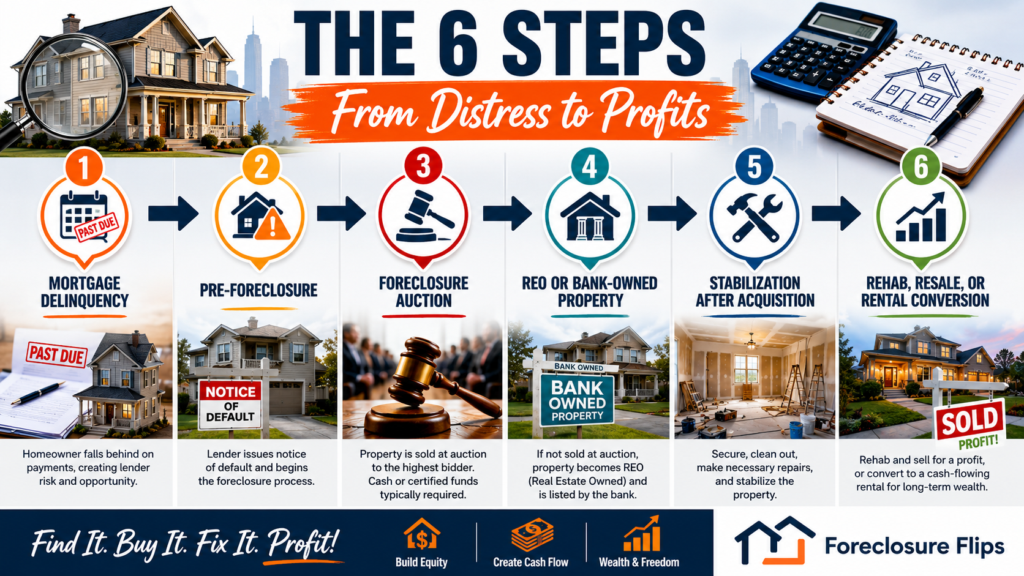
The foreclosure funnel helps you understand how a distressed property moves from early mortgage trouble to possible investor acquisition. A property does not become an auction opportunity overnight. It usually moves through a series of stages: missed payments, pre-foreclosure, public sale, REO ownership, resale, or rental conversion.
For investors, the stage matters. A homeowner who recently missed payments may still have control of the property and several options available. A property scheduled for auction may require fast funding and limited due diligence. A bank-owned REO may offer a cleaner purchase process but less discount. Each stage creates a different type of opportunity.
The goal is not to chase every distressed lead. The goal is to understand where the property sits in the funnel, what problems still need to be solved, and whether the numbers support your strategy.
Get Foreclosure Investing Insights Twice a Week
Subscribe to the Foreclosure Flips newsletter for practical ideas on finding deals, analyzing opportunities, and understanding foreclosure-related investing strategies. We send concise updates twice a week so you can stay informed without adding more noise to your inbox.
What Is the Foreclosure Funnel?
The foreclosure funnel is a practical way to organize distressed-property opportunities by stage. At the top of the funnel, the owner may only be delinquent. In the middle, the property may be in pre-foreclosure or headed to auction. At the bottom, the property may become REO, get resold to an investor, or be converted into a rental after rehab.
This framework helps you avoid treating every distressed property the same way. Early-stage opportunities often require direct seller communication and payoff analysis. Auction opportunities require bid discipline and immediate capital. REO opportunities may require patience, offer strategy, and renovation planning.
Step 1: Mortgage Delinquency
Mortgage delinquency begins when the borrower falls behind on payments. At this point, the property may not yet appear on public foreclosure lists, and the owner may still have several ways to resolve the situation.
The owner might reinstate the loan, negotiate a repayment plan, pursue a loan modification, sell the property, or refinance if enough equity exists. For investors, this is an early-warning stage, not necessarily a buy signal.
Experian’s overview of the pre-foreclosure process helps distinguish early payment trouble from later foreclosure activity. That distinction matters because a property can be financially distressed before it becomes a formal foreclosure opportunity.
What You Should Watch
At this stage, you are looking for equity, motivation, and timing. A property with strong equity and a seller who wants a clean exit may create a direct-purchase opportunity. A property with little equity, multiple liens, or no seller cooperation may not be worth pursuing.
Your outreach also needs to be careful. Owners facing delinquency are under pressure. A professional approach should focus on whether you can offer a real solution, not simply whether you can buy at a discount.
Step 2: Pre-Foreclosure
Pre-foreclosure is where the property becomes more visible. Depending on the state, this stage may involve a notice of default, lis pendens, foreclosure complaint, trustee notice, or scheduled sale activity.
This can be one of the most useful stages in the foreclosure funnel because the owner may still have authority to sell before the auction. If there is enough equity, you may be able to negotiate a deal that helps the owner avoid a completed foreclosure while giving you a value-add investment opportunity.
Why Pre-Foreclosure Requires Careful Math
A pre-foreclosure deal is not just about the purchase price. You need to confirm the mortgage payoff, missed payments, late fees, legal costs, property taxes, HOA balances, municipal liens, and any junior liens.
You also need to know the foreclosure timeline. If the sale date is close, you may have limited time to inspect, secure financing, clear title, and close. If the property is in a judicial foreclosure state, the process may be slower but more procedurally complex.
Step 3: Foreclosure Auction
If the owner does not resolve the default, the property may move to foreclosure auction. This is the stage many new investors focus on first, but it is often one of the riskiest points in the funnel.
Auction purchases can involve limited property access, short payment deadlines, title uncertainty, occupancy risk, and competitive bidding. Some auctions require full payment quickly, and some properties are sold as-is with little or no inspection opportunity.
Local procedures matter. For example, the Miami-Dade Clerk’s foreclosure resources explain how county-level foreclosure auction procedures can control registration, sale review, deposits, certificates, and related steps.
How to Approach the Auction Stage
Your maximum bid should be set before auction day. Start with after repair value, then subtract repairs, title risk, liens, holding costs, financing costs, resale costs, and required profit.
Do not bid because the property feels cheap. Bid only if the numbers still work after conservative assumptions. If you cannot inspect the interior, confirm possession, or verify title issues, your bid should reflect that uncertainty.
Learn the Strategies Behind Smarter Foreclosure Investing
Get practical foreclosure investing content delivered twice a week, including deal analysis tips, strategy breakdowns, useful tools, and new resources from Foreclosure Flips. Sign up to keep learning and spotting better opportunities.
Step 4: REO or Bank-Owned Property
If the property does not sell to a third-party buyer at auction, the lender may take ownership. The property then becomes real estate owned, or REO.
REO properties often move through a more familiar sales process than courthouse auctions. They may be listed through an agent, asset manager, or institutional platform. Fannie Mae’s HomePath marketplace is one example of how bank-owned or agency-owned properties may be presented to buyers after foreclosure.
Why REO Can Be Easier but Less Discounted
REO deals may offer better access, clearer contract procedures, and more conventional closing timelines. That can reduce some of the uncertainty found at auction.
The tradeoff is pricing. Once the property is listed, more buyers can see it. The lender or asset manager may already have a broker price opinion, condition review, identification of code violations, and pricing strategy. You may get a cleaner process, but the discount may be smaller.
For investors, REO works best when the property is stale, condition-challenged, mispriced, or overlooked by retail buyers.
Step 5: Stabilization After Acquisition
Once you acquire a foreclosure property, the funnel shifts from sourcing to execution. This is where the deal can either become profitable or start leaking money.
Your first steps should focus on control and protection. Confirm legal possession, secure the property, activate appropriate insurance, document condition, inspect utilities, and determine whether anyone is occupying the home.
If the property is vacant, you may need to change locks where legally permitted, board broken windows, handle lawn care, prevent water damage, and set up temporary security. If the property is occupied, you need to follow the correct legal process instead of attempting self-help removal.
Why Stabilization Affects Profit
Every delay has a cost. Loan interest, taxes, insurance, utilities, maintenance, HOA dues, and security expenses continue while the property sits. A strong purchase price can be weakened by slow execution.
This is also when your repair budget becomes more accurate. A pre-auction estimate may have been based on exterior observation or limited data. Once you can inspect the interior, update the scope of work before contractors begin.
Step 6: Rehab, Resale, or Rental Conversion
The final stage of the foreclosure funnel is the exit. Some properties are fixed and resold. Some are wholesaled to another investor. Others are converted into rentals or held as part of a BRRRR-style strategy.
Your exit should match the property, the neighborhood, and your capital structure. A high-end flip finish may not make sense in a workforce rental market. A rental-grade rehab may not support top resale value in a retail buyer neighborhood.
Resale Strategy
If your exit is resale, focus on buyer expectations and timing. The rehab should solve functional problems first: roof, HVAC, plumbing, electrical, safety, moisture, and layout issues. Cosmetic work matters, but it should not consume money needed for core repairs.
Your resale budget should include commissions, closing costs, staging, photography, utilities, insurance, taxes, and possible price reductions.
Rental Conversion Strategy
If your exit is rental conversion, focus on durability and compliance. You may need landlord registration, rental inspections, utility setup, smoke and carbon monoxide detectors, code compliance, insurance changes, and a realistic rent estimate.
The property does not need to be overbuilt, but it does need to be safe, functional, and tenant-ready.
How to Use the Foreclosure Funnel
The main value of the foreclosure funnel is strategy alignment. A property in early delinquency may call for seller outreach. A pre-foreclosure deal may require payoff analysis and fast closing. An auction deal requires strict bid discipline. An REO deal may require offer timing and repair analysis. A rental conversion requires operational planning.
You can also track the same property through multiple stages. A deal that does not work in pre-foreclosure may become interesting at auction. A property that is overbid at auction may later return as REO. A stale REO listing may become attractive after price reductions.
Wondering Where the Savviest Investors Find Their Best Deals?
Access the largest database of foreclosure properties nationwide and discover below-market deals before other investors. Start your search today!