
Pre-Foreclosures
Shadow Inventory in Real Estate What Investors Should Watch
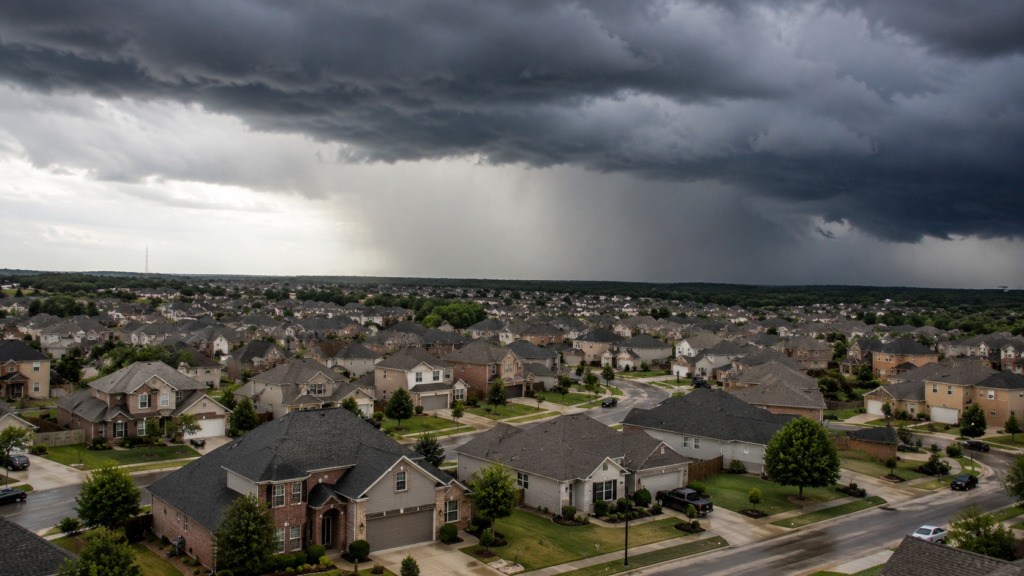
Shadow inventory real estate trends can give you an early view of future foreclosure supply before those properties become visible listings. For investors, this matters because the deals you see today may not reflect the full amount of distressed property that could reach the market later. Shadow inventory is not always easy to measure. It…
Read MoreSeller Financing for Distressed Property Investors

Seller financing distressed property deals can help you structure acquisitions when a seller needs speed, certainty, income, or a cleaner exit. Instead of the buyer using a traditional lender for the full purchase price, the seller agrees to receive part of the payment over time. That can be useful when a property needs repairs, the…
Read MoreInvesting in Chapter 7 vs Chapter 13 Real Estate Bankruptcy
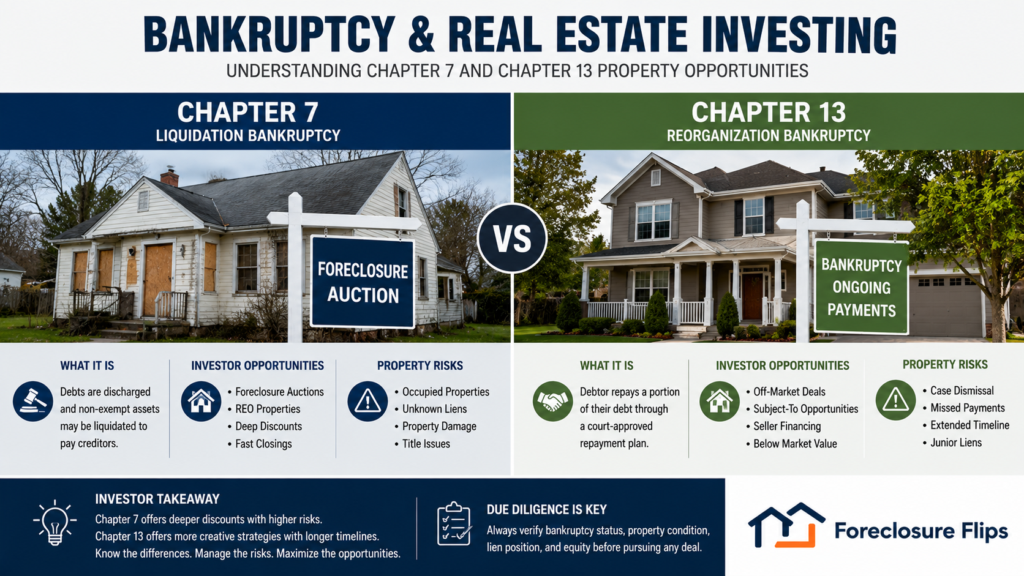
Understanding Chapter 7 vs Chapter 13 real estate issues can help you avoid misreading a foreclosure opportunity. When a property owner files bankruptcy, the foreclosure timeline may pause, the sale may be delayed, and the property may not be available as quickly as you expected. For investors, the bankruptcy chapter matters because it can affect…
Read MoreHow Bankruptcy Can Delay an Investment Foreclosure Deal

A bankruptcy foreclosure delay can disrupt a deal you expected to reach auction, closing, or possession on a predictable timeline. If the property owner files bankruptcy before the foreclosure sale is complete, the lender may be forced to pause foreclosure activity while the bankruptcy court process plays out. For you as an investor, that delay…
Read MoreHow to Buy a Bankruptcy House as an Investor
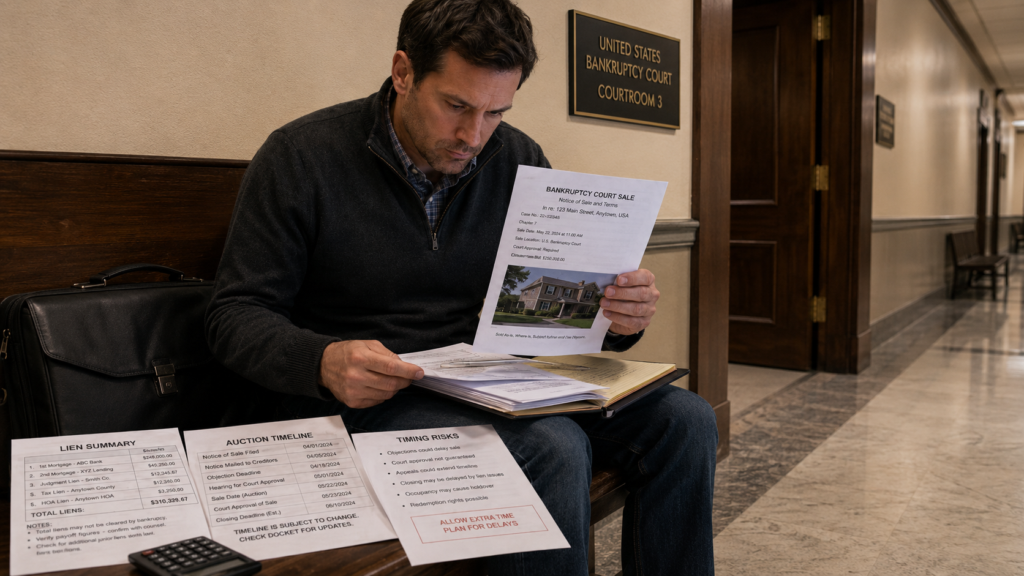
Bankruptcy house investing can create opportunities for real estate investors, but it is not the same as buying a standard foreclosure, REO property, or off-market distressed home. When a property is involved in bankruptcy, the sale may be controlled by a trustee, a debtor, a lender, the bankruptcy court, or some combination of those parties.…
Read MoreAuction Houses vs Online Foreclosure Auctions

Online foreclosure auctions have made distressed-property bidding more accessible, but easier access does not automatically make the deal safer. You may be able to bid from your laptop instead of standing at a courthouse, but you still need to understand deposits, buyer premiums, title risk, due diligence limits, closing rules, and payment deadlines. As an…
Read MoreTax Delinquency vs Mortgage Foreclosure for Investors

Understanding tax delinquency vs foreclosure helps investors separate two very different types of distressed-property opportunities. A homeowner who is behind on mortgage payments is not in the same situation as an owner who has unpaid property taxes. Both can lead to investor opportunities, but the process, timeline, risks, and profit model are different. Mortgage foreclosure…
Read MoreMulti-Family Foreclosures How to Analyze the Deal

Multifamily foreclosure investing can be attractive because one acquisition may give you multiple rental units, several income streams, and a value-add opportunity in a single deal. But a multifamily foreclosure is not just a bigger version of a single-family foreclosure. You’re not only buying a building. You’re buying an income-producing asset with leases, tenants, expenses,…
Read MoreHow HOA Liens Can Change a Foreclosure Deal

HOA liens foreclosure risk is easy to overlook when investors focus only on the auction price, repair budget, and resale value. But if the property is in a homeowners association, unpaid dues, special assessments, transfer fees, collection costs, and association rules can change the economics of the deal. A foreclosure discount is only useful if…
Read More