
Top Pre-Foreclosure Markets for 2026

Pre-foreclosure investing is different from buying at auction or purchasing bank-owned properties. The opportunity begins earlier, when a homeowner has missed payments, received a notice of default, entered a lis pendens process, or is facing a foreclosure timeline but has not yet lost the property.
That distinction matters in 2026. The best pre-foreclosure markets are not simply the places with the most completed foreclosures. They are the markets where early mortgage stress is building, homeowners may still have time and equity to make decisions, and investors can potentially create solutions before the property reaches auction.
According to the Consumer Financial Protection Bureau’s mortgage performance data, 30–89 day mortgage delinquency is an early-stage delinquency measure and can be an early indicator of overall mortgage-market health. That is one of the most important concepts for pre-foreclosure investors. By the time a property is already auction-bound, competition may be higher, legal options may be narrower, and the homeowner may have fewer alternatives.
At the same time, the broader delinquency environment has become more relevant. The Mortgage Bankers Association’s Q4 2025 National Delinquency Survey reported that the delinquency rate for one-to-four-unit residential mortgage loans increased to 4.26% at the end of 2025. That does not mean every delinquent borrower will end up in foreclosure. It does mean that investors focused on pre-foreclosure opportunities need to pay attention to early-stage distress, loan type, affordability pressure, and local foreclosure timelines.
This list focuses on markets where pre-foreclosure activity may be especially relevant in 2026 because of delinquency trends, foreclosure starts, affordability pressure, housing-cost increases, and public-record opportunity. The goal is not to identify distressed homeowners as targets. The goal is to identify markets where investors who understand compliance, ethics, negotiation, and homeowner alternatives may find legitimate acquisition opportunities before properties reach the courthouse steps.
How We Selected the Top Pre-Foreclosure Markets for 2026
A good pre-foreclosure market needs more than a high foreclosure rate. Investors need a market where there is enough early-stage distress to create opportunity, but also enough equity, resale demand, rental demand, or buyer liquidity to make a solution possible.
We screened for five core factors.
1. Early-stage mortgage delinquency
Pre-foreclosure starts with missed payments. The CFPB’s 30–89 day delinquency metric is useful because it captures borrowers who have missed one or two payments, before the loan becomes seriously delinquent. That makes it a better early warning signal than completed foreclosure sales alone. The CFPB explains that 30–89 day mortgage delinquency can serve as an early indicator of mortgage-market health.
For investors, this matters because the best pre-foreclosure opportunities often occur before a homeowner has exhausted all options. A borrower who is one or two payments behind may still have equity, time, and alternatives. A borrower who is close to auction may have fewer choices and may be dealing with additional legal, tax, HOA, or title complications.
2. Serious delinquency and foreclosure starts
Early-stage distress matters, but investors also need to know whether loans are progressing into more serious distress. The FHFA Foreclosure Prevention, Refinance, and Federal Property Manager’s Report reported that the serious delinquency rate for Fannie Mae and Freddie Mac loans increased to 0.59% at the end of January 2026. FHFA also reported that foreclosure starts declined in January 2026, while third-party and foreclosure sales rose.
That mixed signal is important. Pre-foreclosure investors should not assume that every delinquency becomes a foreclosure. Loss mitigation, loan modifications, repayment plans, reinstatements, short sales, and home sales can all resolve the situation before foreclosure is completed.
3. Foreclosure filing activity
Foreclosure filings remain an important market screen because they show where distress is already moving into the legal process. According to ATTOM’s Q1 2026 U.S. Foreclosure Market Report, 118,727 U.S. properties had foreclosure filings in the first quarter of 2026, up 6% from the prior quarter and up 26% from a year earlier.
That increase does not mean the market is returning to the foreclosure crisis conditions of 2008. The current distress environment is more tied to affordability pressure, higher insurance costs, property taxes, HOA dues, and recent high-rate purchases. But for pre-foreclosure investors, rising filings can create a larger pipeline of homeowners who may need to consider selling, refinancing, reinstating, modifying, or negotiating another resolution.
4. State foreclosure process and investor timing
Pre-foreclosure opportunities look different in judicial and nonjudicial foreclosure states. In judicial states, the process usually moves through the courts and may create a longer public-record timeline. In nonjudicial states, the process may move faster through notices, trustees, and statutory sale timelines.
This matters because investors need enough time to research the property, verify title, evaluate liens, contact the homeowner appropriately, inspect condition if possible, and structure a compliant offer. A market with high distress but very short timelines may be harder for pre-foreclosure outreach unless the investor has strong local systems.
5. Equity and exit options
Pre-foreclosure investing only works when there is a realistic solution. That might be a direct purchase, a listing referral, a short sale, a reinstatement strategy, or another exit. But if the property has no equity, unclear title, excessive liens, or unrealistic resale value, the investor may not be able to create a workable outcome.
For that reason, this list favors markets where distress is meaningful but where properties may still have resale, rental, or equity value. The best pre-foreclosure markets are not always the most distressed. They are markets where the distress pipeline and the exit strategy can meet.
The Top Pre-Foreclosure Markets for 2026
1. Lakeland, Florida

Lakeland earns the top spot because it sits at the intersection of several important pre-foreclosure themes: Florida distress, affordability pressure, population growth, insurance-cost stress, and a housing market that has cooled from its pandemic-era pace.
ATTOM’s 2025 year-end foreclosure report identified Lakeland as one of the metros with the highest foreclosure rates in 2025. That makes it highly relevant for investors looking at the pre-foreclosure pipeline rather than only completed auctions.
The pre-foreclosure opportunity in Lakeland is tied to homeowners who bought during the high-price, high-rate period and are now dealing with higher monthly costs than expected. Florida homeowners may also face insurance and property-tax pressure, which can turn a manageable mortgage into a financial problem even when the loan itself was originally affordable.
Investors should be careful here. Lakeland is not simply a distressed market. It also has real housing demand because of its location between Tampa and Orlando. That means some homeowners may have equity and options. A pre-foreclosure investor’s role should be to evaluate whether a purchase, listing, short sale, or other resolution makes sense before the property moves further through the foreclosure process.
2. Columbia, South Carolina

Columbia is another market that stands out because of foreclosure-rate signals and its practical investor profile. ATTOM’s 2025 year-end foreclosure report listed Columbia among the metros with the worst foreclosure rates for the year, making it an important market to watch for 2026 pre-foreclosure activity.
Columbia has several features that can support pre-foreclosure investing. It is a state capital, has a major university presence, includes military-related demand, and offers more attainable housing prices than many larger Southeast metros. That gives investors multiple possible exits, including resale, rental, and long-term hold strategies.
The opportunity is likely to be strongest in properties where the homeowner still has some equity but is dealing with missed payments, job disruption, tax pressure, repair issues, or an unaffordable payment. Investors should pay close attention to liens, municipal issues, and the condition of older homes.
The main caution is that South Carolina is a judicial foreclosure state, which can create a different timeline and legal process from nonjudicial markets. Investors should understand local rules, avoid making legal claims to homeowners, and work with qualified professionals when structuring transactions.
3. Cleveland, Ohio
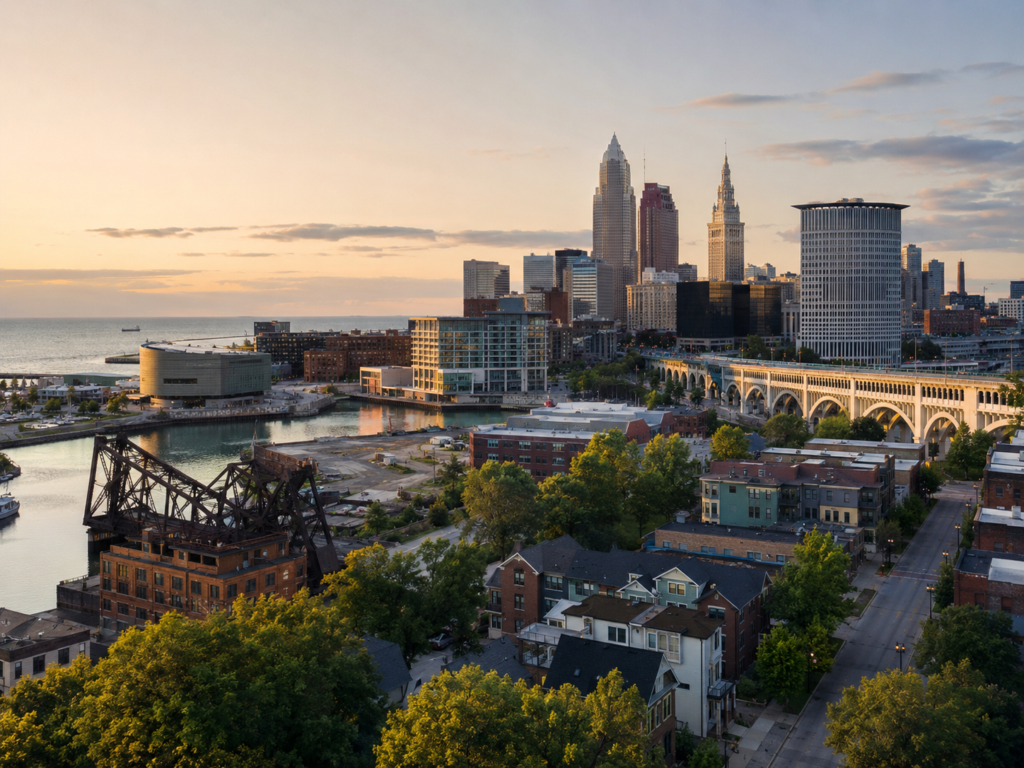
Cleveland belongs on this list because it appears in both foreclosure and value-add investing screens. ATTOM identified Cleveland as one of the metros with the highest foreclosure rates in 2025, and the market also has older housing stock, relatively low acquisition prices, and multiple possible investor exits.
For pre-foreclosure investors, Cleveland’s appeal is that distressed properties may still have practical use as rentals, flips, or owner-occupant resale opportunities after resolution. The city’s lower price points can make it easier to structure a purchase, but investors must not confuse low price with low risk.
Many Cleveland properties are older and may carry deferred maintenance, code issues, tax delinquencies, or title complications. Those issues can be common in pre-foreclosure situations because homeowners under financial stress may also fall behind on repairs. Investors should budget inspections carefully and verify whether the property has unpaid taxes, utility liens, municipal violations, or other encumbrances.
The opportunity is real, but Cleveland requires submarket discipline. A property that looks attractive on a spreadsheet may be hard to resell or rent if it is in the wrong pocket. Investors should focus on neighborhoods with recent comparable sales, tenant demand, and enough liquidity to support their intended exit.
4. Jacksonville, Florida
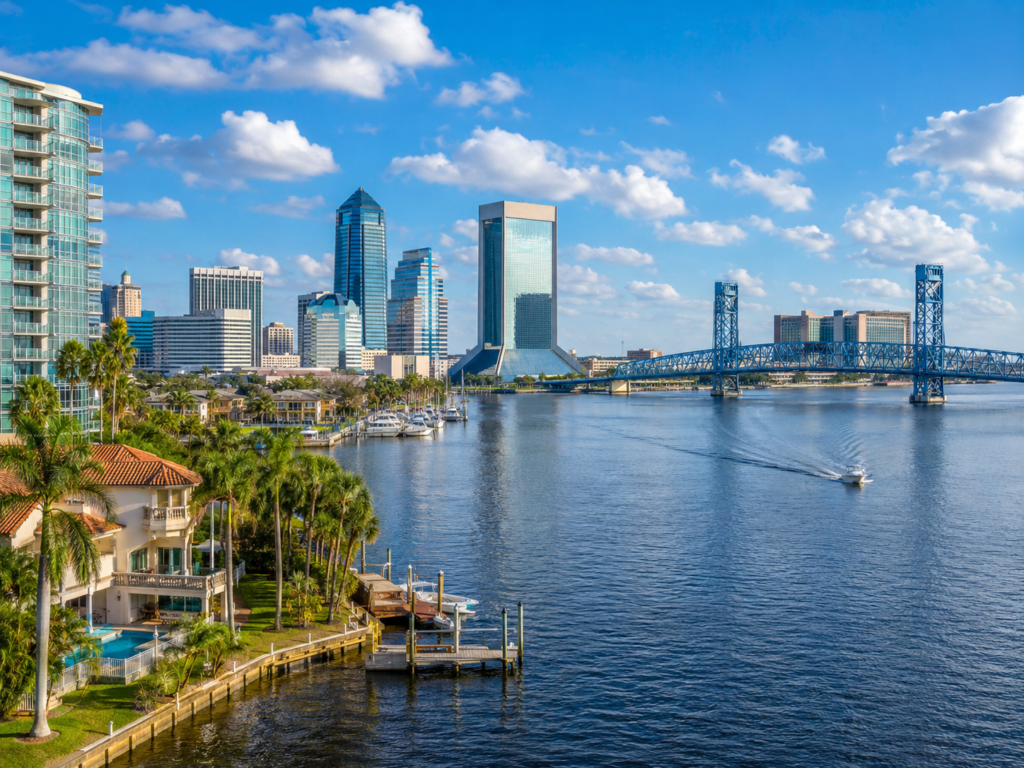
Jacksonville is one of the more important Florida markets for pre-foreclosure investors in 2026 because it combines scale, affordability stress, and a large stock of single-family homes. Florida was among the states with the highest foreclosure rates in ATTOM’s 2025 year-end report, and the state continues to face housing-cost pressures that can push homeowners toward distress.
Jacksonville’s size matters. A larger metro can provide more public-record volume, more neighborhood variation, and more exit strategies. Investors may find opportunities in entry-level homes, older properties needing repairs, suburban homes owned by stretched borrowers, or properties where insurance and taxes have made ownership more expensive.
The key in Jacksonville is not to treat the entire metro as one market. Coastal, suburban, urban, and outer-county properties can behave very differently. Insurance cost, flood risk, roof age, HOA rules, and property taxes should be reviewed early. Those factors may be part of the homeowner’s financial distress and may also affect the investor’s numbers.
Jacksonville is best for investors who can combine pre-foreclosure outreach with strong deal analysis. The market may produce leads, but not every lead is a good acquisition.
5. Chicago, Illinois

Chicago is a major pre-foreclosure market because of its size, public-record depth, and judicial foreclosure process. Illinois has repeatedly appeared in foreclosure activity screens, and Chicago’s large housing stock creates meaningful lead volume for investors who understand the local process.
The opportunity in Chicago is not limited to single-family homes. Depending on the neighborhood, investors may see distressed condos, two-flats, small multifamily properties, and older single-family homes. This gives pre-foreclosure investors multiple potential strategies, including buy-and-hold rentals, resale, owner-occupant renovation, or small multifamily stabilization.
The caution is complexity. Chicago properties may involve unpaid taxes, municipal violations, HOA assessments, condo association issues, tenant occupancy, older mechanical systems, and neighborhood-specific resale differences. The foreclosure timeline may create more visibility, but that does not make the transaction simple.
Chicago is best for experienced investors or local operators who understand title, court records, neighborhood-level demand, and post-acquisition renovation requirements. For newer investors, it can be a strong market to study, but it is not a market for casual underwriting.
6. Philadelphia, Pennsylvania

Philadelphia has many of the ingredients that make a market relevant for pre-foreclosure investing: older housing stock, rowhomes, public-record visibility, affordability pressure, and highly localized neighborhood dynamics.
Pre-foreclosure opportunities in Philadelphia may involve homeowners who have equity but cannot keep up with payments, taxes, repairs, or other ownership costs. In some cases, the property may need significant work that the homeowner cannot afford. In others, the owner may simply need a fast sale before the foreclosure process advances further.
The opportunity is strongest where there is a clear buyer or rental exit after acquisition. Some neighborhoods support renovation and resale. Others may be better suited for long-term rental. Still others may be too risky unless the purchase price is extremely conservative.
Philadelphia also requires attention to title and municipal issues. Older properties can have estate problems, unpaid taxes, utility balances, permits, and code concerns. Investors should not rely only on the foreclosure status. They need to understand the full property file before making an offer.
7. Houston, Texas

Houston is a large, fast-moving, nonjudicial foreclosure market where pre-foreclosure investors may find meaningful volume, but the process can move quickly. Texas foreclosure timelines differ sharply from many judicial states, which makes speed and preparation especially important.
Houston’s appeal comes from scale, housing variety, and continued long-term demand. The metro has a wide range of single-family properties, suburban neighborhoods, investor-owned rentals, and older homes that may need repairs. It also has homeowners dealing with payment pressure, insurance costs, property taxes, storm-related repairs, and changing household finances.
The risk is that investors may not have much time once a property is far along in the foreclosure process. That makes early lead generation important. Investors should monitor notices, public records, tax delinquencies, probate issues, code problems, and other distress indicators before the sale date is imminent.
Houston also requires careful property-level diligence. Flood risk, roof condition, foundation issues, insurance costs, HOA liens, and MUD taxes can all affect the deal. A property may appear to have equity until those costs are fully reviewed.
8. Dallas-Fort Worth, Texas

Dallas-Fort Worth is another major Texas market where pre-foreclosure investing can be relevant because of scale, homeowner-cost pressure, and public-record activity. Like Houston, it is a nonjudicial foreclosure environment where timing matters.
DFW has more affluent submarkets, working-class suburbs, older neighborhoods, and rapidly developed outer areas. That variety creates different types of pre-foreclosure leads. Some homeowners may have strong equity but need liquidity. Others may have bought recently with little equity and may need a different resolution, such as a listing, short sale, or negotiated exit.
The opportunity for investors is strongest where there is enough equity and enough buyer demand to solve the homeowner’s problem before foreclosure. DFW’s broad employment base and large buyer pool can support resale exits, but acquisition prices must be carefully underwritten.
The caution is competition. Many investors already monitor Texas foreclosure and pre-foreclosure records. Investors who rely only on obvious public lists may face crowded outreach. Better opportunities may come from combining public-record data with relationship-based sourcing, probate research, tax delinquency monitoring, and local agent referrals.
9. Atlanta, Georgia

Atlanta remains a relevant pre-foreclosure market because of its size, investor activity, suburban sprawl, and affordability pressure. The metro has many homeowners who bought into a rapidly rising market and may now face higher carrying costs, slower appreciation, or financial stress.
Pre-foreclosure opportunities in Atlanta can vary widely by county and submarket. Some properties may have strong equity and appeal to owner-occupant buyers. Others may be in investor-heavy neighborhoods where resale demand is thinner or where rental strategy matters more than flipping. That makes exit planning critical.
Atlanta’s strength is that it offers multiple investor exits: resale, rental, renovation, and in some cases portfolio acquisition. The market has long-term demand drivers, including logistics, film, healthcare, education, corporate employment, and population growth.
The risk is that many properties already have sophisticated investor attention. Investors should be careful with acquisition price and repair budget, especially in areas where renovated comps have softened or buyer affordability is strained. Pre-foreclosure leads are only valuable if the post-acquisition numbers work.
10. Las Vegas, Nevada

Las Vegas is a useful pre-foreclosure market because it combines affordability sensitivity, investor activity, and housing-cycle volatility. Nevada was among the states with elevated foreclosure activity in recent ATTOM reporting, and Las Vegas has historically been a market where distress can emerge quickly when household finances tighten.
The opportunity in Las Vegas is tied to homeowners who may be payment-stressed, especially recent buyers who purchased at higher prices or higher interest rates. Some may still have equity, but less flexibility than they expected. Others may be facing HOA, tax, insurance, or job-related pressure.
Las Vegas can offer strong resale and rental demand, but it is also sensitive to pricing. Investors should be careful not to assume that every distressed property is a bargain. The market can shift quickly, and resale comps should be recent.
This market is best for investors who understand timing, buyer affordability, HOA issues, and neighborhood-level demand. Pre-foreclosure opportunities may exist, but the underwriting should be conservative.
Quick Comparison of the Top Pre-Foreclosure Markets for 2026
| Market | Best Fit | Primary Strength | Main Risk |
|---|---|---|---|
| Lakeland, FL | Florida distress investors | Foreclosure-rate signal and regional demand | Insurance, taxes, and price softness |
| Columbia, SC | Judicial-process investors | Elevated foreclosure-rate signal | Legal-process complexity |
| Cleveland, OH | Value-add investors | Older housing and lower price points | Code, title, and submarket risk |
| Jacksonville, FL | Scale-focused investors | Large metro with affordability pressure | Flood, insurance, and HOA issues |
| Chicago, IL | Experienced local operators | Large public-record pipeline | Taxes, liens, and municipal complexity |
| Philadelphia, PA | Rowhome and urban investors | Older stock and public-record visibility | Title and property-condition issues |
| Houston, TX | Fast-moving operators | High-volume nonjudicial market | Short timelines and flood risk |
| Dallas-Fort Worth, TX | Equity-focused investors | Large buyer pool and housing scale | Heavy competition |
| Atlanta, GA | Suburban distress investors | Multiple exit strategies | Investor competition and uneven comps |
| Las Vegas, NV | Cycle-aware investors | Payment stress and investor activity | Market volatility and HOA issues |
Markets That Did Not Make the List
Some markets may have foreclosure activity but did not make this pre-foreclosure list because the opportunity is less clear for early-stage investor outreach.
Some high-cost coastal markets may show homeowner stress, but they can be difficult for pre-foreclosure investors because equity, legal complexity, transfer taxes, tenant protections, and resale price points make transactions harder to structure. Other markets may have rising foreclosure filings but limited investor exits because resale demand is thin or rental yields are weak.
This list also intentionally differs from a pure foreclosure-auction market list. Auction markets reward speed, cash, title expertise, and bidding discipline. Pre-foreclosure markets reward earlier outreach, negotiation, compliance, homeowner education, and flexible exit planning.
What Investors Should Look For in a 2026 Pre-Foreclosure Deal
A strong pre-foreclosure market only matters if the individual deal has a workable solution. Investors should evaluate each lead carefully and avoid assuming that distress equals opportunity.
Verify the homeowner’s actual situation
A missed payment, notice of default, or lis pendens filing does not tell the whole story. The homeowner may already be working with the servicer, applying for loss mitigation, selling the property, disputing the debt, or dealing with a temporary hardship.
Investors should approach homeowners respectfully and avoid making assumptions. Pre-foreclosure is a sensitive situation, and the homeowner may have options besides selling.
Understand loss mitigation alternatives
Not every pre-foreclosure lead should become an investor acquisition. HUD explains that homeowners may have foreclosure-avoidance options, including repayment plans, loan modifications, pre-foreclosure sales, and other forms of loss mitigation depending on the loan and circumstances. Investors should understand that context and avoid presenting a sale as the homeowner’s only option.
Check equity before making an offer
Equity determines which solutions are realistic. A homeowner with substantial equity may be able to sell conventionally, reinstate, refinance, or negotiate a sale. A homeowner with little or no equity may need a short sale or another servicer-approved solution.
Investors should estimate value conservatively, then subtract mortgage balances, liens, taxes, HOA dues, closing costs, repairs, and any required payoff amounts.
Review title and liens early
Pre-foreclosure properties often have more than one problem. There may be unpaid taxes, HOA liens, second mortgages, judgments, municipal fines, mechanic’s liens, probate issues, or divorce-related complications. These issues can determine whether a transaction is possible.
Know the foreclosure timeline
Timing is critical. A lead that appears attractive may be too close to auction to solve unless the investor already has financing, title support, legal guidance, and a clear transaction structure. Judicial and nonjudicial states require different workflows.
Avoid predatory tactics
Pre-foreclosure investing requires a higher ethical standard than ordinary deal sourcing. Investors should not pressure homeowners, misrepresent foreclosure timelines, pretend to be legal advisors, or hide alternatives. The strongest long-term operators are those who build compliant, transparent processes and solve problems honestly.
How to Use This List
This list should be used as a market-research starting point. It does not mean every pre-foreclosure lead in these cities is a good deal. It also does not mean investors should ignore other markets where they have local knowledge.
Before pursuing pre-foreclosure opportunities in any market, investors should verify:
- Current public-record lead volume
- Judicial or nonjudicial foreclosure process
- Notice of default, lis pendens, or trustee-sale rules
- Homeowner equity position
- Mortgage balance and lien status
- Property tax delinquency
- HOA or condo association balances
- Repair condition
- Local resale and rental demand
- Title issues
- Legal and compliance requirements
- Realistic homeowner alternatives
The best pre-foreclosure investors are not simply chasing distressed addresses. They are identifying situations where a homeowner still has time, the property has a workable exit, and the transaction can be structured in a compliant way.
Final Takeaway
The top pre-foreclosure markets for 2026 are the markets where early distress, public-record visibility, and investor exit strategies intersect. Lakeland, Columbia, Cleveland, Jacksonville, Chicago, Philadelphia, Houston, Dallas-Fort Worth, Atlanta, and Las Vegas each offer a different version of that opportunity.
Some are judicial foreclosure markets where public records and court timelines may create a longer runway. Others are faster-moving nonjudicial markets where investors need better systems and earlier lead generation. Some offer lower price points and value-add potential. Others offer larger buyer pools and more exit options.
The common thread is that pre-foreclosure investing in 2026 requires more than finding distressed homeowners. Investors need to understand delinquency trends, foreclosure timelines, title risk, local property values, homeowner alternatives, and compliance.
The best opportunities will likely go to investors who can move early, analyze carefully, and create legitimate solutions before foreclosure becomes unavoidable.
Does Your Business Help Investors Find Better Deals?
Showcase tools, funding, software, education, or services built for real estate investors. View Advertising Options
You might also like:
 How to Find More Deals From One Property Owner
 Pre-Foreclosure Leads in an Affordability Crisis
 How to Buy a Pre-Foreclosure Home: Investor Guide
 Pre-Foreclosure vs Foreclosure: What Investors Need to Know
 Housing Affordability Crisis and Foreclosure Investing
 Notice of Default and Lis Pendens: How Investors Find Early Foreclosure Opportunities