
How to Build a Better Duplex Budget

Building a duplex can be a strong real estate investment strategy, especially when the land basis is low. If an investor already owns a rental property and can carve off an unused side yard, the economics may become much more attractive than buying a separate infill lot at full market price.
But even when the land is “free,” the project is not simple.
A duplex construction budget has more moving parts than a basic cosmetic rehab. The investor may be working with a general contractor, but also collecting separate bids from subcontractors and suppliers. That can create a useful check on pricing, but it also introduces a new problem: how do you compare all of this information accurately?
One contractor may quote labor and materials together.
Another may exclude materials. A supplier may price fixtures, but not delivery. A subcontractor may include rough-in labor, but not permit coordination. The GC may include overhead, supervision, and profit, while individual subs may only quote their specific trade.
Without the right system, the numbers can become difficult to compare. With the right software tools, the investor can organize the bids, normalize the categories, and make better decisions before the project starts.
Learn the Strategies Behind Smarter Foreclosure Investing
Get practical foreclosure investing content delivered twice a week, including deal analysis tips, strategy breakdowns, useful tools, and new resources from Foreclosure Flips. Sign up to keep learning and spotting better opportunities.
Why Duplex Budgeting Requires More Discipline
A duplex is not just “two small houses.” It is a construction project with multiple systems, multiple rental units, and a final value that depends on both market demand and income potential.
The budget needs to account for the structure itself, but also for utility connections, site work, parking, access, drainage, landscaping, finishes, appliances, permits, insurance, financing, and contingency.
The National Association of Home Builders reported that construction costs accounted for 64.4% of the average price of a new home in its 2024 cost study, showing how significant the construction-cost portion of a new build can be.
That does not mean every duplex will follow the same cost structure, but it does reinforce why construction budgeting deserves careful attention. NAHB’s construction cost survey is a useful benchmark for understanding the major components of new-home costs.
For an investor, the practical takeaway is straightforward: small estimating mistakes can have a large effect on final returns.
Start with the Site Plan and Scope
Before comparing bids, the investor needs a clear project scope.
In this example, the duplex is being built on land created by carving off the side yard of an existing rental property. That can be a smart way to unlock value from underused land, but it also requires careful planning.
The site plan should clarify where the new duplex will sit, how it will be accessed, where parking will go, how utilities will connect, and whether any setbacks, easements, drainage issues, or zoning requirements affect the buildable area.
Important site-related budget categories
The first budgeting mistake is often underestimating the land-development side of the project. Even when the land itself has no new purchase cost, the project may still require:
Site clearing, grading, utility taps, sewer or septic work, water service, storm water management, driveway or parking improvements, sidewalk work, fencing, landscaping, surveying, engineering, plan review, and permits.
These items can materially affect the project budget. Free land reduces the acquisition cost, but it does not eliminate the cost of making the site buildable.
Use a Standard Budget Structure
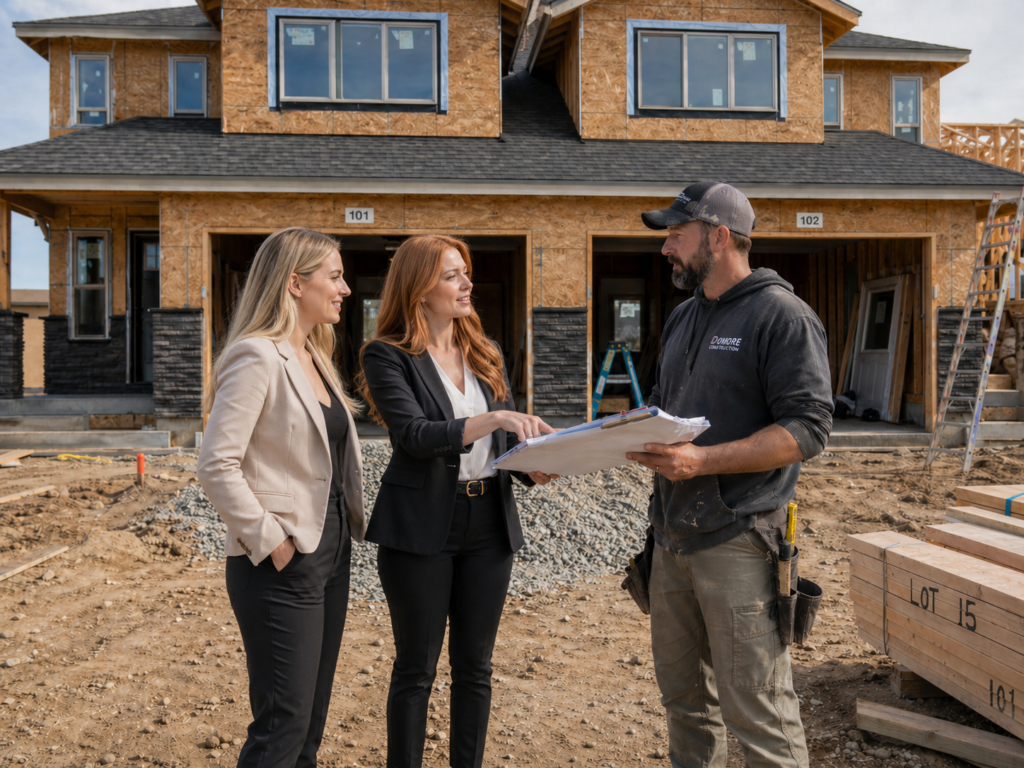
When collecting bids from a GC, subcontractors, and suppliers, the investor should avoid comparing one lump-sum number against another.
The better approach is to build a standard budget structure first, then place each bid into the same categories.
HUD’s construction guidance discusses the importance of cost breakdowns by construction elements and bid packages, including categories such as concrete, masonry, HVAC, and electrical.
While HUD’s framework is designed for formal housing programs, the principle applies directly to private investors: costs should be organized by category so bids can be compared intelligently. HUD’s construction guide provides a useful reference for structured construction cost breakdowns.
For a duplex construction budget, the investor might organize the project into categories such as:
Preconstruction, site work, foundation, framing, roofing, windows and exterior doors, siding, rough plumbing, rough electrical, HVAC, insulation, drywall, interior doors and trim, cabinets, countertops, flooring, tile, paint, appliances, fixtures, landscaping, permits, contractor overhead, contingency, financing costs, and holding costs.
This structure creates a common language. Every bid can then be sorted into the same framework.
Compare GC, Subcontractor, and Supplier Bids Correctly
Working with a general contractor can simplify the project because the GC is responsible for coordination, sequencing, trade management, and overall delivery. But that does not mean the investor should ignore the underlying numbers.
Getting bids from subs and suppliers can help test whether the GC’s pricing is reasonable. It can also reveal whether certain materials, finishes, or trade packages are pushing the project above budget.
The challenge is that bids are rarely presented in the same format.
Example of a bid comparison problem
The GC may include the full plumbing scope for both units, including rough-in, finish plumbing, fixtures, project management, and markup.
A plumbing subcontractor may only quote labor.
A supplier may quote tubs, toilets, faucets, valves, and water heaters, but not installation.
If the investor compares these three numbers directly, the analysis will be flawed. They are not the same scope.
This is where a tool such as Rehab Valuator can be useful. The investor can organize the project budget by line item, separate labor and materials where needed, and compare bids in a more disciplined way. The benefit is not just faster math. It is better decision-making.
Stay Ahead of the Next Deal
Markets move quickly, and good foreclosure opportunities often require fast analysis. Subscribe to our twice-weekly newsletter for investor-focused tips, tools, and market insights designed to help you make better decisions.
Separate Labor, Materials, and Included Scope
To compare bids apples to apples, each estimate should answer three questions.
What work is included? What materials are included? What is excluded?
That sounds basic, but it is where many project budgets become unreliable.
A framing bid may include labor only. A roofing bid may include shingles but exclude decking replacement. An electrical bid may include standard fixtures but not upgraded lighting. A cabinet supplier may include delivery but not installation. A GC proposal may include supervision and overhead, while a direct subcontractor bid may not.
Why exclusions matter
Exclusions can destroy a budget because they often become change orders later.
A lower bid is not always a better bid. Sometimes it is simply a thinner bid.
The investor should look for unclear language such as “standard fixtures,” “as needed,” “by others,” “allowance,” “owner supplied,” or “not included.” These phrases are not automatically bad, but they need to be clarified before the investor relies on the number.
Build Allowances Carefully
New construction projects often include allowances for items that have not been fully selected yet. This might include flooring, tile, cabinets, countertops, lighting, plumbing fixtures, appliances, landscaping, and hardware.
Allowances can be useful, but they can also create false confidence.
A duplex budget may look profitable if the cabinet allowance is too low, the appliance allowance is unrealistic, or the flooring allowance does not match the intended finish level.
Investors should make sure allowances match the actual rental strategy. A long-term rental duplex does not need the same finish package as a luxury resale property, but it still needs durable, market-appropriate materials. Cheap finishes can reduce the upfront budget but increase maintenance costs and turnover risk.
The right budget should balance cost, durability, rentability, and long-term operating performance.
Include Soft Costs and Carrying Costs
A construction budget is not complete if it only includes sticks, bricks, labor, and materials.
Investors also need to account for soft costs and carrying costs. These may include architectural plans, engineering, surveys, permits, legal work, insurance, loan fees, interest, taxes, utilities during construction, builder’s risk coverage, inspection fees, and contingency reserves.
Fannie Mae’s rental income guidance is also relevant when investors think about income-producing residential property.
While underwriting rules are different from an investor’s internal analysis, the guidance highlights the importance of documented income assumptions when rental income is part of the financial picture.
Fannie Mae’s rental income guidance provides useful context for how rental income is evaluated in mortgage underwriting.
For a duplex, the investor should estimate expected rent, vacancy, operating expenses, and debt service. A strong construction budget should connect to the investment model.
The question is not only “What will it cost to build?” The question is also “What will this property produce when complete?”
Track Bids Before the Project Starts
One of the best times to control a construction project is before the first shovel hits the ground.
That is when the investor can still revise the scope, negotiate pricing, adjust finish selections, review alternatives, or decide whether the deal still meets return requirements.
A good budgeting system should allow the investor to track each bid, identify gaps, compare alternatives, and separate approved numbers from pending estimates.
For example, the investor might compare:
GC full-scope bid versus direct sub pricing, supplier package A versus supplier package B, standard fixtures versus upgraded fixtures, asphalt driveway versus concrete driveway, vinyl plank flooring versus tile in wet areas, and different appliance packages.
The key is to document the comparison. A decision made from memory is not a reliable project control system.
Use Software to Keep the Project Organized
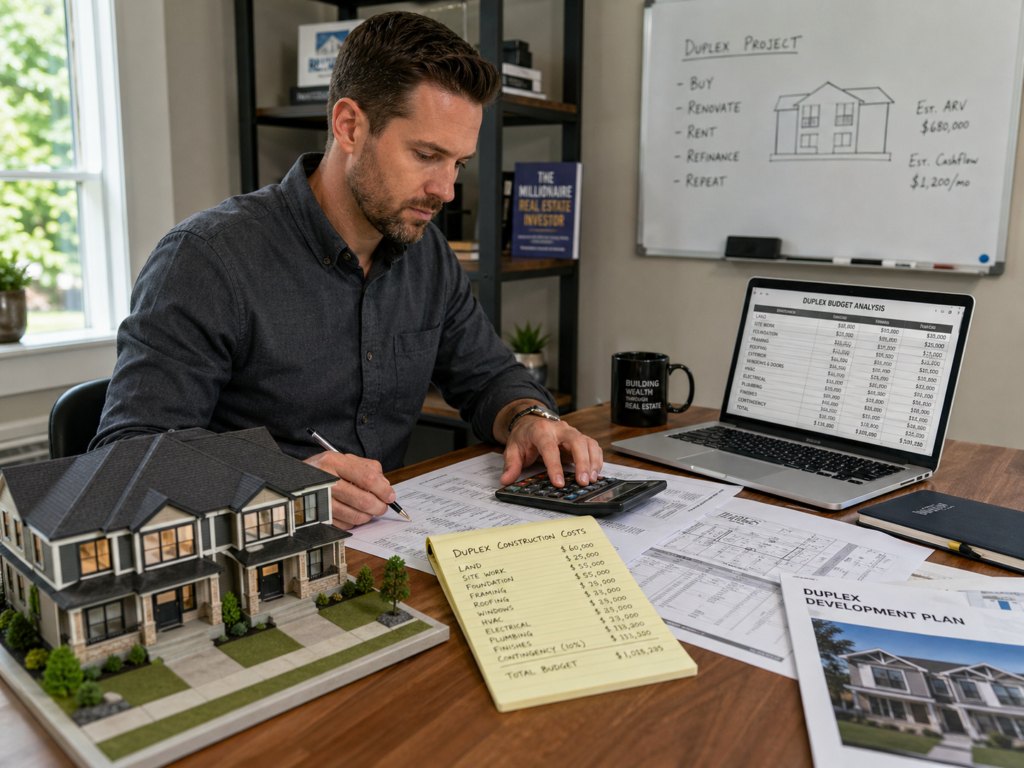
When a duplex build has multiple bids, suppliers, subcontractors, and scope categories, spreadsheet fatigue can set in quickly.
The investor may start with a simple budget, then add tabs, notes, screenshots, emails, PDFs, text messages, and revised estimates. Soon, the budget becomes difficult to audit.
That is where dedicated software can help.
A structured tool can help the investor build the budget, compare bids, document estimates, and later track actual costs against projections. This is particularly useful when the investor is both working with a GC and gathering direct pricing from subs and suppliers.
For investors who want to test a more organized project workflow, the 14-Day $1 Trial of Rehab Valuator Premium is a practical way to see whether the tool fits their process before committing to a larger system.
Connect the Budget to the Funding Plan
A duplex project may require private money, hard money, construction financing, personal capital, or a combination of sources.
The budget should be lender-ready. A lender or capital partner will want to understand total project cost, land basis, construction cost, contingency, expected completed value, rental income potential, timeline, and exit strategy.
This is another area where organized software can help. Instead of sending scattered documents, the investor can build a cleaner presentation that explains the project in a logical format.
A good lender package should answer the obvious questions before the lender asks them.
What is being built? What is the total cost? What is the source of the land? What is the expected value or income after completion? What is the repayment or refinance strategy? What is the investor’s experience? What could go wrong?
For investors who want more support on deal structure, project analysis, and funding strategy, the Inner Circle Mentorship may be worth reviewing. Budgeting software is valuable, but construction decision-making also benefits from experience and pattern recognition.
Review Actual Costs After Completion
The budget is not finished when the duplex is completed.
After the project is done, the investor should compare projected costs to actual costs. This is how future estimates improve.
The investor should review which categories came in over budget, which allowances were unrealistic, which subcontractors performed well, and which decisions created delays or extra expense. This post-project review becomes especially valuable if the investor plans to build again.
A duplex build can provide a template for the next project. But the template is only useful if it is based on actual numbers, not rough memory.
The Bottom Line
Budgeting a duplex requires more than collecting bids.
The investor needs to organize the project into clear categories, compare GC pricing against subcontractor and supplier bids, separate labor from materials, clarify exclusions, build realistic allowances, include soft costs, and connect the construction budget to the final investment model.
Free land can create a major advantage, especially when an investor can carve off part of an existing rental property. But the project still needs disciplined budgeting.
A strong duplex construction budget helps answer the most important question before construction begins: does this project still work when every cost is counted?
For investors who rehab houses, build rentals, or develop small infill projects, the lesson is the same. Better organization leads to better decisions. Better decisions lead to better projects.
Wondering Where the Savviest Investors Find Their Best Deals?
Access the largest database of foreclosure properties nationwide and discover below-market deals before other investors. Start your search today!
You might also like:
 Value-Add Renovations for Rentals That Boost Monthly Income
 BRRRR Investing: How to Buy, Rehab, Rent, Refinance, and Repeat
 Rental Property Cash Flow Analysis: Calculating True Returns + Free Template
 Calculating Cash Flow for Rental Properties: Step-by-Step Template
 Why Better Real Estate Comps Data Makes Better Deals
 Top BRRRR Markets for 2026