
Top BRRRR Markets for 2026

The BRRRR strategy rewards discipline more than excitement. A market can look attractive because homes are inexpensive, but that alone does not make it a strong BRRRR market. Investors also need rent demand, stable employment, manageable renovation costs, lender-friendly comparable sales, and enough price support to refinance without getting trapped in the first deal.
That matters even more in 2026. Rental growth has cooled nationally, home prices remain elevated in many markets, and financing costs are still a major constraint for investors. According to Zillow’s March 2026 rent report, the typical U.S. asking rent was up only 1.8% year over year in March 2026, the slowest annual pace since 2020, while single-family rents rose 2.5% year over year. That does not mean BRRRR no longer works. It means investors need to be more selective about where they buy and how they underwrite each deal.
For this list, we focused on markets where the BRRRR strategy still has a practical foundation: relatively attainable acquisition prices, durable rental demand, a realistic path to value-add improvements, and enough local economic stability to support long-term tenants. This is not a list of the fastest-appreciating housing markets. It is a list of markets where disciplined investors may still be able to buy, improve, rent, refinance, and repeat without depending entirely on aggressive appreciation.
How We Selected the Top BRRRR Markets for 2026
A good BRRRR market needs more than bargain-priced homes. The strategy has five moving parts, and a weak market can break the model at any stage.
We screened for five core factors.
1. Rent-to-price fundamentals
The first question is whether local rents can support the purchase price after repairs, taxes, insurance, property management, maintenance, vacancy, and debt service. ATTOM’s 2026 Single-Family Rental Market Report is useful here because it focuses on rental yields and compares rents against home prices. ATTOM found that rental yields were projected to decline in 54.8% of counties with comparable data, even though rents were rising faster than home prices in 55% of counties. That creates an important distinction for BRRRR investors: rent growth alone is not enough if acquisition prices are too high.
2. Housing supply and competition
Too much new supply can weaken rent growth. Too little supply can make it difficult to buy at a discount. We reviewed supply pressure using Census and HUD new residential construction data. In March 2026, national building permits were running at a seasonally adjusted annual rate of 1.372 million, down 7.4% from March 2025, while housing starts were 1.502 million. That suggests a market where future supply may moderate, but local differences remain important.
3. Employment stability
BRRRR investors need tenants who can keep paying rent. We looked for markets with diverse employment bases, including healthcare, logistics, education, manufacturing, government, and professional services. BLS metro unemployment data remains a useful check because it shows unemployment variation across major metropolitan areas and helps investors avoid relying only on rent or listing data.
4. Refinance and appraisal support
The refinance step is where many BRRRR deals fail. Investors need after-repair value support from comparable sales, not just a spreadsheet assumption. The FHFA House Price Index provides a useful national and metro-level check because it tracks single-family home price changes across hundreds of U.S. cities. FHFA reported that U.S. house prices rose 1.7% from February 2025 to February 2026, which points to a slower appreciation environment than the rapid-growth years after 2020.
5. Practical execution
A market can look attractive on paper but still be difficult for BRRRR if contractors are scarce, permitting is slow, neighborhoods vary sharply street by street, or property taxes change the numbers. For that reason, this list favors markets where investors can realistically find older housing stock, modest value-add opportunities, and working-class rental demand.
The Top BRRRR Markets for 2026
1. Pittsburgh, Pennsylvania

Pittsburgh remains one of the more practical BRRRR markets in the country because it combines affordable housing stock with a diverse employment base. The city is not a boom market in the same way as parts of the Sun Belt, but that can actually be an advantage for BRRRR investors. The strategy works best when acquisition prices leave room for repairs, rents are steady, and values are stable enough to support a refinance.
The Pittsburgh metro has a large inventory of older single-family and small multifamily properties. That creates opportunities for investors who are willing to solve functional problems: outdated kitchens, tired mechanical systems, deferred maintenance, old flooring, inefficient layouts, and cosmetic issues that scare away retail buyers. These are the kinds of improvements that can support both rent growth and appraisal value when the purchase price is disciplined.
The caution in Pittsburgh is neighborhood selection. The metro is highly local. A property that looks inexpensive may be inexpensive for a reason, especially if the school district, street condition, tenant base, or resale pool is weak. Investors should focus on areas with repeatable rental demand, access to employment centers, and enough owner-occupant activity to support refinance comps.
Pittsburgh is best for investors who want a cash-flow-oriented BRRRR market and are comfortable underwriting block by block rather than relying on broad metro averages.
2. Kansas City, Missouri and Kansas
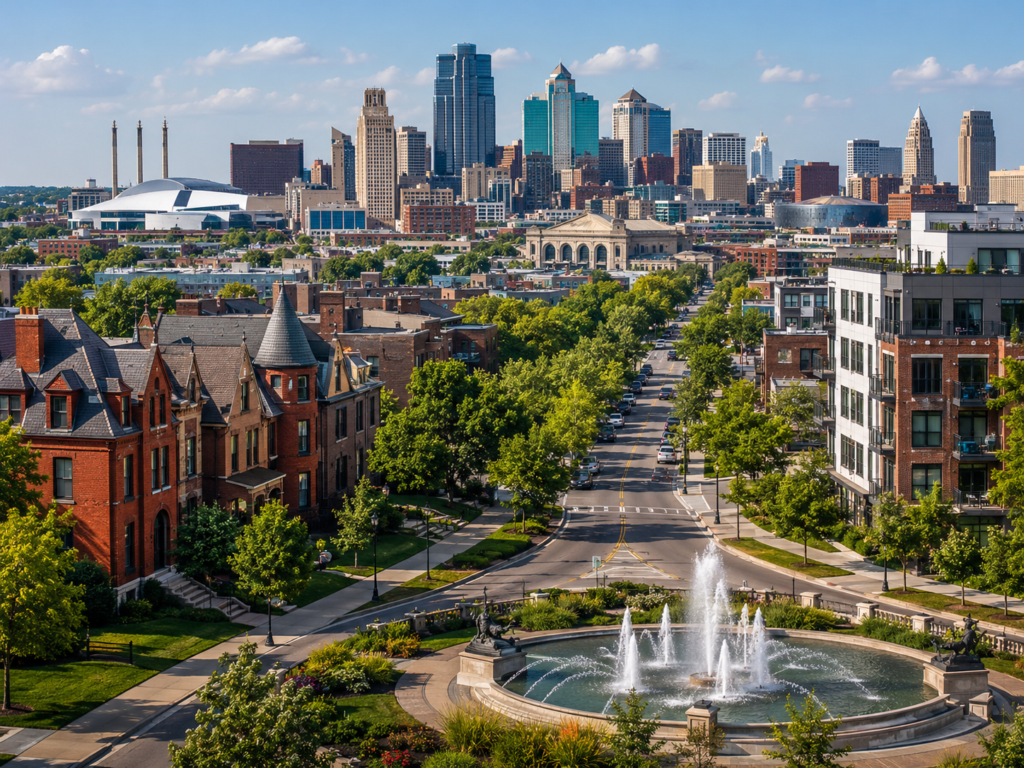
Kansas City offers a strong BRRRR profile because it has a relatively balanced combination of price, rent demand, logistics employment, and housing stock. It is large enough to provide deal flow but still more affordable than many coastal and high-growth Sun Belt markets.
The metro’s appeal comes from its mix of neighborhoods and property types. Investors can find single-family rentals, duplexes, and small multifamily properties in working-class and middle-income areas. Many properties are old enough to support value-add renovations, but not so distressed that every deal requires a full gut rehab. That middle ground is useful for BRRRR because excessive renovation risk can destroy the refinance timeline.
Kansas City also benefits from its central location and logistics infrastructure. Distribution, healthcare, education, and government-related employment help create a broad tenant base. Realtor.com’s March 2026 hottest housing markets report noted that Kansas City posted one of the largest year-over-year improvements among large metros, which suggests improving buyer attention without the same affordability pressure seen in more expensive markets.
The risk is competition. Kansas City has been popular with out-of-state investors for years. That means investors should avoid overpaying for “turnkey BRRRR” deals that have already had most of the upside priced in. The best opportunities are more likely to come from direct sourcing, estate sales, tired landlords, code-compliance issues, and properties that need operational improvement.
3. Birmingham, Alabama
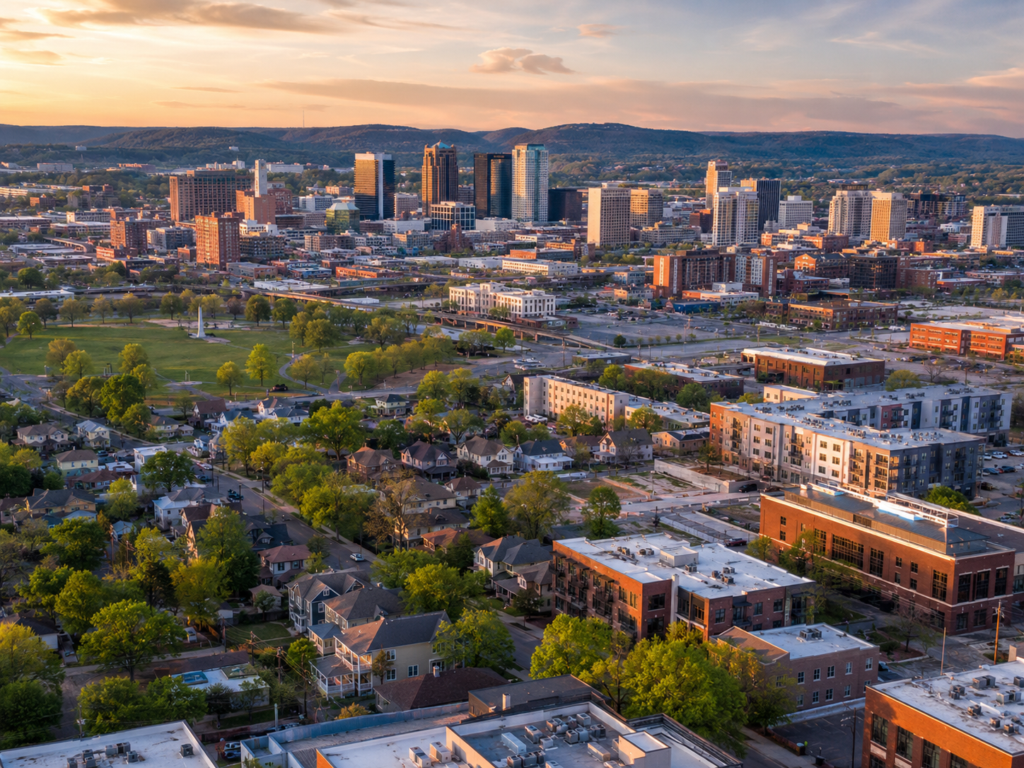
Birmingham is a classic BRRRR candidate because it offers relatively low acquisition costs, strong rental demand in many submarkets, and a large base of older housing. For investors focused on workforce rentals, the metro can still produce numbers that are difficult to find in higher-priced markets.
The local economy is more diversified than many outsiders assume. Healthcare, education, banking, logistics, manufacturing, and public-sector employment all contribute to renter demand. According to BLS data on large metropolitan unemployment rates, Birmingham was among the large metro areas with one of the lower unemployment rates in February 2026, which supports the argument that this is not simply a cheap housing market; it is a market with a functioning employment base.
Birmingham’s BRRRR opportunity is strongest in neighborhoods where modest renovations can move a property from distressed or outdated condition into clean, durable rental condition. Investors should be careful not to over-improve. The goal is not luxury finishes. The goal is a safe, attractive, low-maintenance rental that appraises well enough to support a refinance.
The risk is submarket variance. Birmingham has some areas with strong rental performance and others where management intensity, vacancy, crime, or resale limitations can overwhelm the numbers. Investors should underwrite property management realistically and avoid assuming that a low purchase price automatically equals a strong deal.
4. Louisville, Kentucky

Louisville is a strong BRRRR market for investors who want affordability without moving into very small tertiary markets. The city has a broad renter base, a meaningful logistics and healthcare economy, and a large supply of older homes that can support value-add renovation.
One of Louisville’s advantages is that it is not as nationally hyped as some other investor markets. That can help disciplined buyers find opportunities where the seller pool is less crowded. The metro also has a range of property types, from small single-family homes to duplexes and older multifamily buildings. That flexibility matters because BRRRR investors often need to shift strategy depending on rates, lender requirements, and available inventory.
Louisville’s best BRRRR opportunities are likely to be in stable working-class neighborhoods where rental demand is consistent and rehab budgets can be controlled. Investors should look for properties where major systems can be improved without requiring speculative appreciation to make the deal work.
The main caution is tenant and neighborhood quality. Like many affordable metros, Louisville requires careful screening at the street level. A property may appear to cash flow, but if turnover, repairs, or collection issues are high, the real return can be much lower than projected.
5. Cincinnati, Ohio

Cincinnati has many of the ingredients BRRRR investors look for: older housing stock, multiple employment centers, strong rental neighborhoods, and a relatively affordable entry point compared with larger coastal metros. The city also benefits from proximity to Northern Kentucky, which expands the regional rental and employment base.
The BRRRR case for Cincinnati is based on stability. This is not a market where investors should expect dramatic rent jumps to fix a weak deal. Instead, the opportunity is in buying correctly, renovating efficiently, and refinancing against conservative after-repair value. In a slower national appreciation environment, that kind of discipline is more valuable than chasing speculative growth.
Cincinnati’s housing stock creates value-add potential. Many properties need updates to kitchens, bathrooms, flooring, mechanical systems, roofs, and energy efficiency. Done correctly, those improvements can support higher rents while reducing maintenance calls. For BRRRR investors, that combination matters because the rental phase must be strong enough to carry the property before and after the refinance.
The risk is that Cincinnati has already attracted investor attention. Good neighborhoods with clean rent-to-price ratios can be competitive. Investors should be prepared to analyze multiple neighborhoods separately rather than applying one citywide rent assumption.
6. St. Louis, Missouri

St. Louis is a higher-variance BRRRR market, but it remains attractive for experienced investors because of its affordability, housing stock, and rental demand. The city and surrounding counties include many neighborhoods where older properties can be purchased below replacement cost and improved into functional long-term rentals.
This is a market where the BRRRR strategy can work well when investors are precise. A successful St. Louis BRRRR deal usually depends on choosing the right municipality, understanding occupancy rules, budgeting for older building systems, and managing tenant quality. Investors who treat St. Louis as a simple “cheap house” market can get into trouble quickly.
The upside is that the metro has a meaningful employment base, including healthcare, education, logistics, finance, manufacturing, and government-related work. That creates a broad rental pool, especially for modestly priced homes and small multifamily properties.
St. Louis is best suited for investors who have strong local property management, contractor relationships, and a conservative underwriting model. The spread between a good BRRRR deal and a bad one can be wide. Investors should be disciplined about inspections, rent verification, municipal requirements, and realistic repair reserves.
7. Milwaukee, Wisconsin
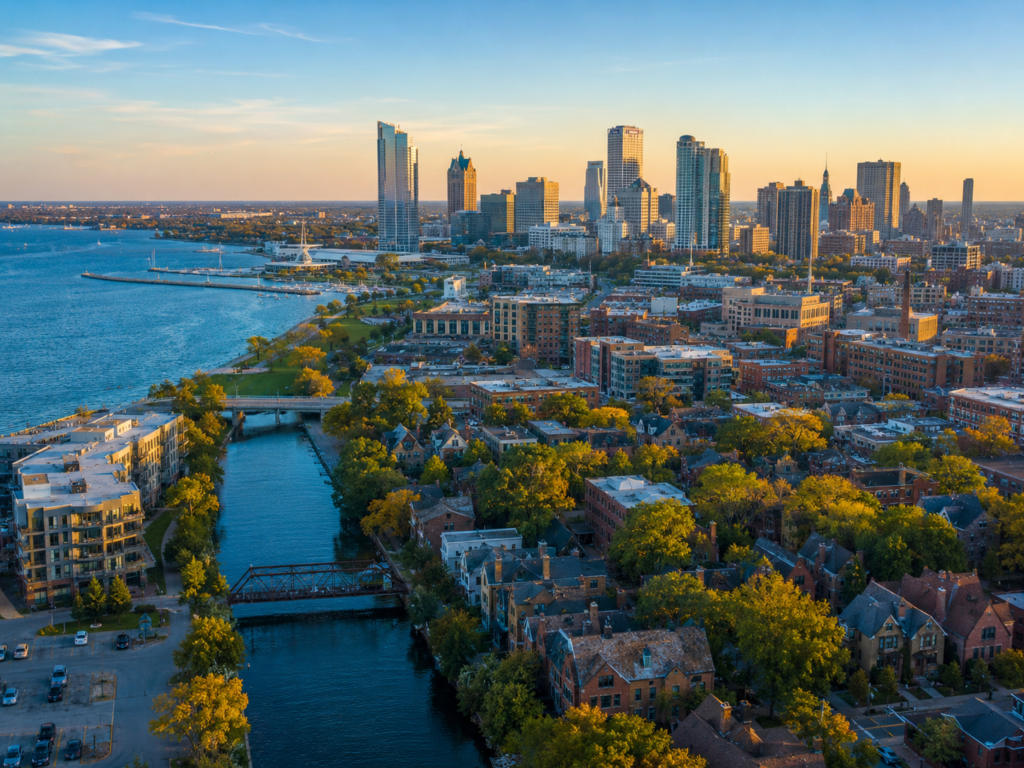
Milwaukee is another Midwest market where BRRRR investors can still find a practical mix of affordability and rental demand. The city has older housing stock, a large renter population, and neighborhoods where moderate renovations can materially improve both rentability and valuation.
Milwaukee can be especially interesting for investors who understand small multifamily properties. Duplexes and triplexes are common in parts of the market, and those properties can work well for BRRRR when the acquisition price, repair budget, and stabilized rent are aligned. Small multifamily can also reduce vacancy risk compared with relying on a single tenant.
The market’s strength is not explosive growth. It is the potential for disciplined execution. Investors should target durable rental neighborhoods with access to employment, transportation, and services. Renovation plans should emphasize low-maintenance materials, strong mechanical systems, clean common areas, and tenant-friendly layouts.
The caution is operating complexity. Cold-weather markets require attention to roofs, heating systems, insulation, plumbing, and exterior maintenance. Property taxes can also affect cash flow. Milwaukee can work well, but only when investors budget for the realities of owning older rental housing in a northern market.
8. Omaha, Nebraska
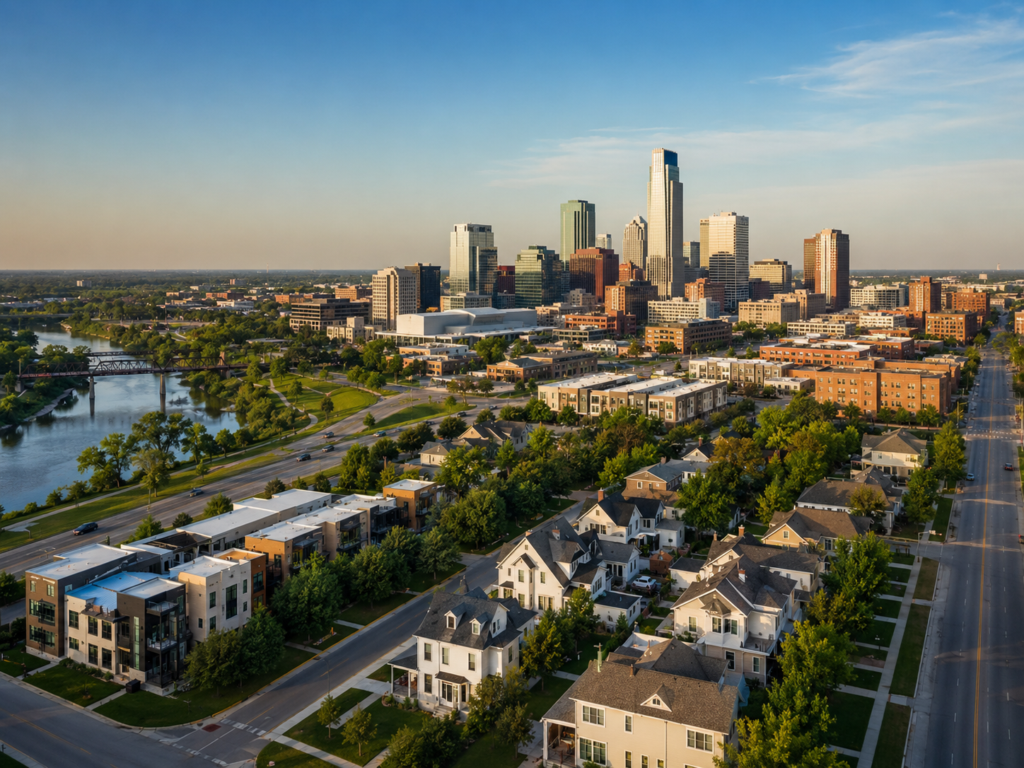
Omaha deserves attention because it offers relative affordability, economic stability, and a less overheated investment environment than many larger metros. It may not produce the same deal volume as bigger markets, but BRRRR investors do not always need the biggest market. They need enough deal flow at prices that still make sense.
The Omaha economy has a broad base, including finance, insurance, healthcare, logistics, food processing, education, and corporate employment. That helps support rental demand and reduces dependence on a single industry. For long-term BRRRR investors, that kind of stability matters.
Omaha’s BRRRR opportunity is more selective than some markets on this list. Investors may need to work harder to find properties with enough discount and value-add potential. However, when deals are available, they can benefit from steady tenant demand and less extreme price volatility.
This market is best for investors who prefer conservative growth, clean operations, and lower drama over maximum yield. The right Omaha BRRRR deal may not look spectacular on paper, but it can fit well into a portfolio built around repeatable long-term rentals.
9. Oklahoma City, Oklahoma
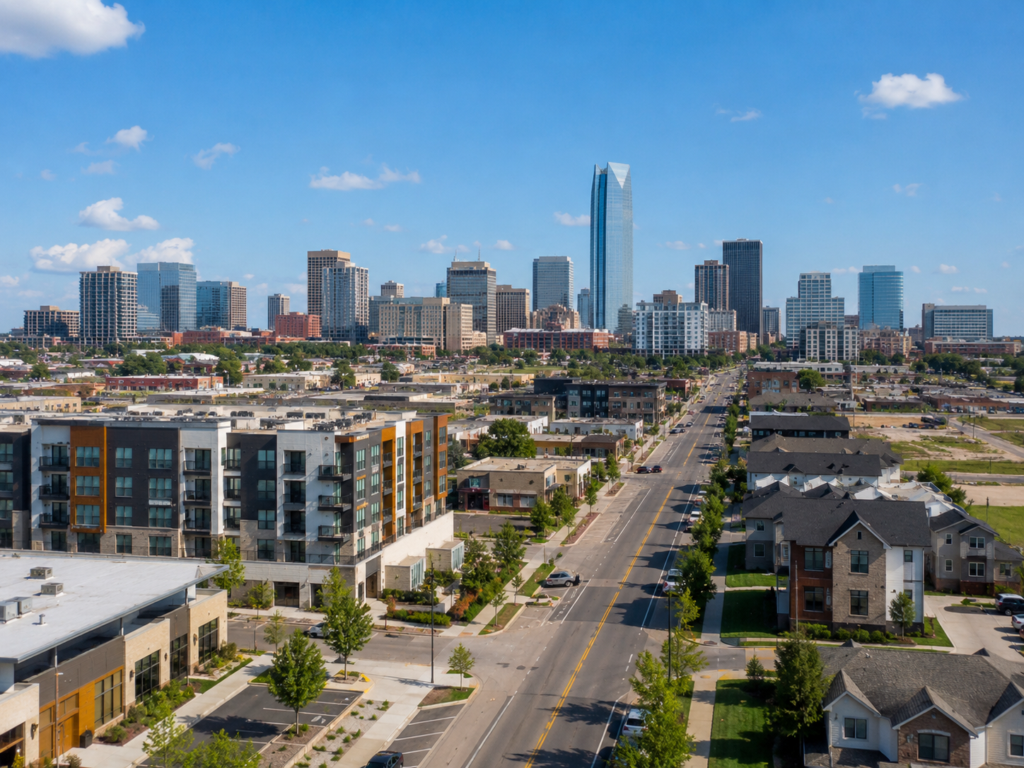
Oklahoma City offers a compelling BRRRR profile because it combines affordability, population growth, employment diversity, and a large geographic footprint. The metro has enough scale to provide deal flow while remaining more accessible than higher-priced growth markets.
The local economy has historically had energy exposure, but it is broader today than many investors realize. Healthcare, aerospace, government, logistics, education, and professional services all contribute to demand. That helps support rental housing beyond a single industry cycle.
For BRRRR investors, Oklahoma City’s appeal lies in moderate acquisition costs and the ability to find homes that need practical improvements rather than luxury repositioning. Investors should look for properties where renovations can improve rent, reduce future maintenance, and support refinance value without pushing the home beyond neighborhood norms.
The caution is insurance, weather, and submarket selection. Storm risk, roof condition, and insurance costs need to be carefully reviewed. Investors should also avoid assuming that all affordable neighborhoods are equally liquid or equally rentable. The best opportunities are likely to be in areas with clear tenant demand, reasonable commute access, and enough resale activity to support appraisals.
10. Tulsa, Oklahoma
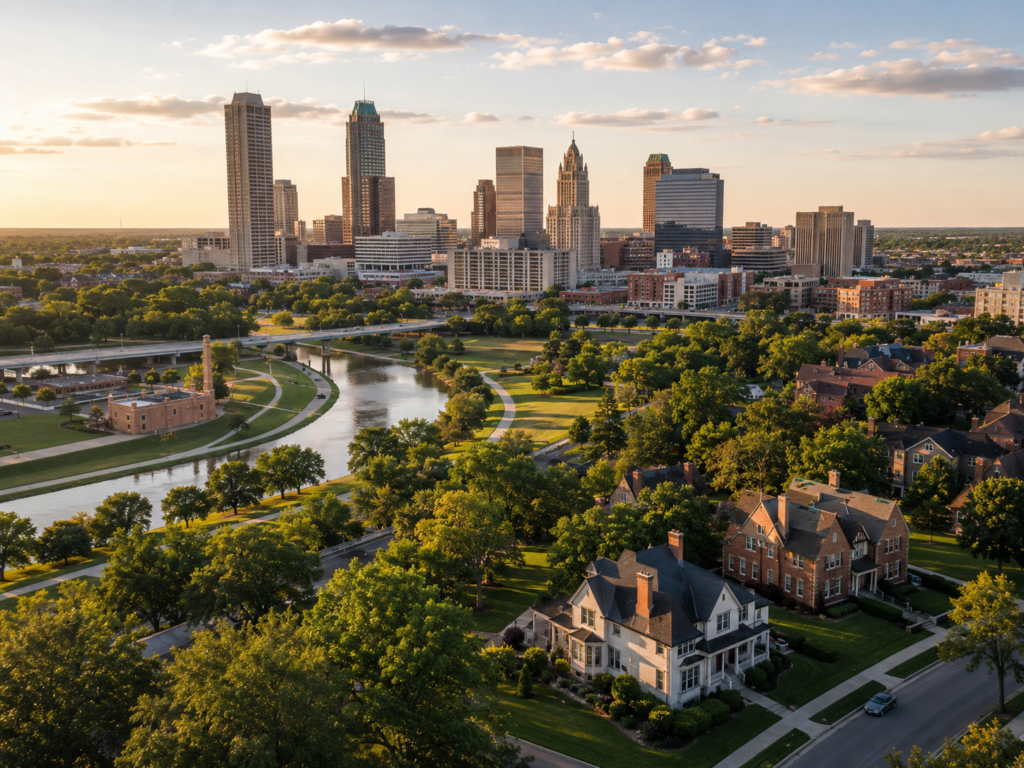
Tulsa rounds out the list because it offers a lower-cost alternative to many larger metros while still providing a meaningful rental market. For BRRRR investors, Tulsa may be more attractive as a portfolio-building market than as a single large-flip market.
The city has older single-family housing stock, attainable prices, and neighborhoods where modest rehabs can turn dated homes into clean rentals. That is exactly the kind of property profile BRRRR investors should be looking for in 2026. The goal is to avoid overpaying for appreciation and instead manufacture value through acquisition discipline and renovation execution.
Tulsa also benefits from a relatively manageable market size. Investors can learn submarkets more quickly than in very large metros. That can be helpful for newer BRRRR investors who want to build local expertise before scaling.
The risk is that lower-cost markets can hide operational problems. A property that looks strong based on rent-to-price ratio may still underperform if tenant turnover, maintenance, or management quality is weak. Investors should verify rent comps, review neighborhood-level vacancy, and budget repairs conservatively.
Quick Comparison of the Top BRRRR Markets for 2026
| Market | Best Fit | Primary Strength | Main Risk |
|---|---|---|---|
| Pittsburgh, PA | Cash-flow investors | Affordable older housing stock | Block-by-block variation |
| Kansas City, MO-KS | Scalable BRRRR operators | Balanced price and rent demand | Investor competition |
| Birmingham, AL | Workforce rental investors | Low acquisition costs | Submarket quality variance |
| Louisville, KY | Conservative BRRRR investors | Stable renter demand | Tenant and neighborhood screening |
| Cincinnati, OH | Value-add investors | Older housing and regional employment | Competitive good neighborhoods |
| St. Louis, MO | Experienced operators | Discounted housing stock | High operational variance |
| Milwaukee, WI | Small multifamily investors | Duplex/triplex opportunities | Taxes and cold-weather maintenance |
| Omaha, NE | Stability-focused investors | Economic resilience | Lower deal volume |
| Oklahoma City, OK | Growth-and-cash-flow balance | Scale and affordability | Insurance and weather risk |
| Tulsa, OK | Portfolio builders | Lower-cost entry point | Management intensity |
Markets That Did Not Make the List
Some well-known investor markets did not make this BRRRR list for 2026, even though they may still offer individual deals.
Austin, Tampa, Denver, and parts of the high-growth Sun Belt are less attractive for BRRRR today because rent growth has slowed or softened while acquisition prices remain high in many submarkets. Zillow’s March 2026 rent analysis reported that renters were saving more than $3,000 per year in Austin, Tampa, and Denver compared with the market’s prior trajectory. That is helpful for tenants, but it is a warning sign for investors relying on aggressive rent growth.
Some foreclosure-heavy markets were also intentionally excluded from this BRRRR list. A market can have distress opportunities but still be difficult for BRRRR if taxes, insurance, repairs, rent ceilings, or resale liquidity make refinancing difficult. That is why this list focuses on rent durability and refinance feasibility rather than foreclosure volume.
What Investors Should Look For in a 2026 BRRRR Deal
A good BRRRR market helps, but the deal still has to work on its own. In 2026, investors should be especially careful with four assumptions.
Do not overestimate after-repair value
The refinance depends on the appraisal. In a slower price-growth environment, investors should use conservative comparable sales and avoid assuming that the market will bail out a thin deal. FHFA’s House Price Index showed modest annual price growth, not the rapid appreciation investors saw during the pandemic-era housing surge.
Do not rely on rent growth to fix the numbers
National rent growth has slowed. A BRRRR deal should work based on current achievable rent, not a hoped-for rent increase 12 months later. Rent growth can be a bonus, but it should not be the foundation of the underwriting. The same Zillow rent report reinforces that rent growth is still positive nationally, but much slower than earlier in the cycle.
Budget repairs like an operator, not a buyer
BRRRR investors need to budget for the work that affects rentability, financing, and long-term maintenance. That usually means mechanical systems, roofs, plumbing, electrical, flooring, kitchens, bathrooms, safety items, and exterior durability. Cosmetic upgrades matter, but they should not come before the systems that keep the property rentable.
Confirm the refinance before buying
The refinance step should be planned before closing on the purchase. Investors should speak with lenders early about seasoning requirements, appraisal rules, debt-service coverage, property condition standards, reserve requirements, and whether the lender will use appraised value or cost basis. A deal is not a true BRRRR deal if the investor cannot refinance on workable terms.
How to Use This List
This list should be used as a starting point, not a substitute for deal analysis. A strong BRRRR market can still produce bad deals, and a weaker market can still produce an excellent individual opportunity.
Before buying in any of these markets, investors should verify:
- Current rent comps
- Recent sold comps
- Neighborhood-level vacancy
- Property tax reassessment risk
- Insurance cost
- Local permitting rules
- Contractor availability
- Property management quality
- Lender refinance standards
- Realistic maintenance reserves
The best BRRRR investors are not chasing markets. They are matching market conditions with a disciplined acquisition model.
Final Takeaway
The top BRRRR markets for 2026 are not necessarily the hottest housing markets. In fact, the hottest markets can be poor BRRRR markets if purchase prices are too high and rents cannot support the debt.
For 2026, the stronger BRRRR opportunities appear to be in practical, cash-flow-oriented metros where investors can still buy below replacement cost, improve older housing stock, rent to a stable tenant base, and refinance without depending on unrealistic appreciation. Pittsburgh, Kansas City, Birmingham, Louisville, Cincinnati, St. Louis, Milwaukee, Omaha, Oklahoma City, and Tulsa all fit that profile in different ways.
The common thread is discipline. Investors who buy carefully, renovate efficiently, verify rents, and plan the refinance before closing may still find strong BRRRR opportunities in 2026. Investors who rely on loose numbers, optimistic appraisals, or future rent growth will have a much harder time making the strategy work.
Want to Partner With Foreclosure Flips?
Build visibility with an audience interested in foreclosure deals, rehabs, rentals, and investment strategy. Learn More
You might also like:
 Rental Property Cash Flow Analysis: Calculating True Returns + Free Template
 BRRRR Investing: How to Buy, Rehab, Rent, Refinance, and Repeat
 Why Missing Middle Housing Is Missing
 How To Build Real Wealth With a New Construction Rental Portfolio
 Learn How One Multifamily Real Estate Deal Can Lead to More
 BRRRR Method Explained: Building Wealth Through Real Estate