
Posts Tagged ‘Buy and Hold’
When Negative Gearing Can Pay Off for Foreclosure Investors
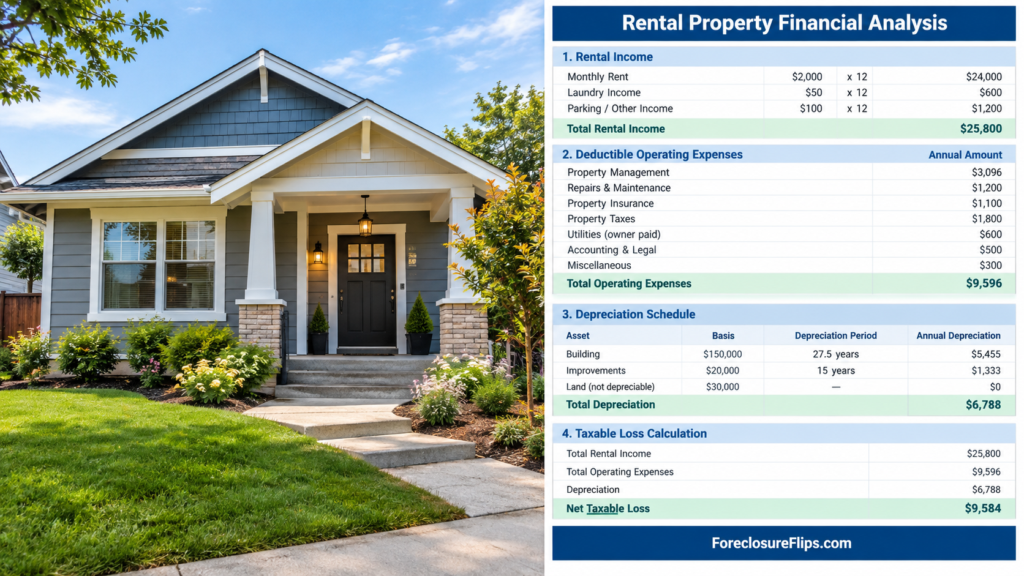
A foreclosure rental can show a tax loss even while the property is building equity and putting cash in your pocket. That is the useful version of negative gearing. Interest, operating expenses, and depreciation push taxable rental income below zero, creating a loss that may reduce other taxable income now or become useful later. The…
Read MoreHow Debt to Income Ratio Affects Property Investors
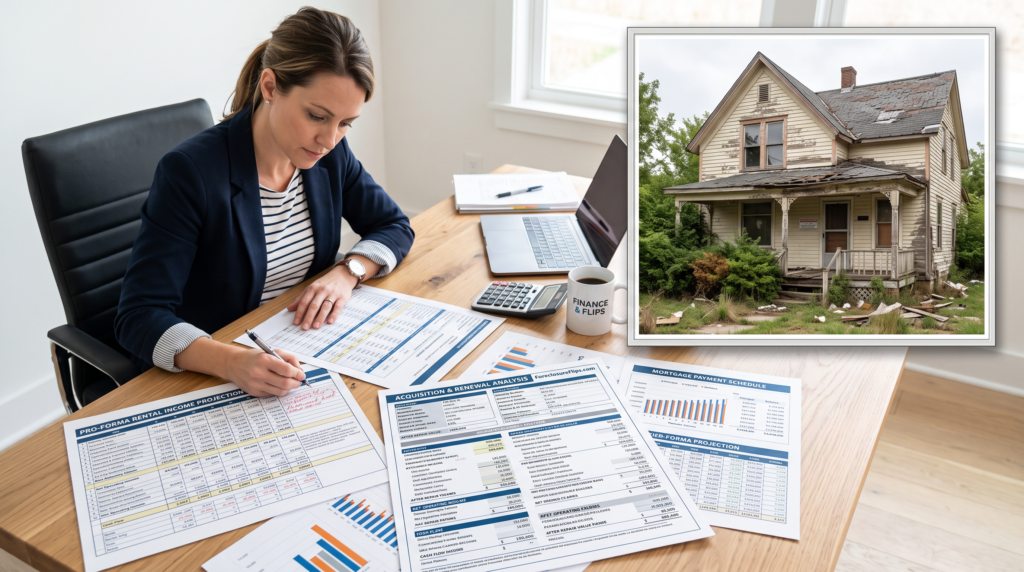
A rental can produce strong cash flow and still fail conventional mortgage underwriting. Your property may cover its expenses, the down payment may be available, and the credit profile may be solid, yet existing mortgages, car loans, credit cards, or other obligations can push the loan outside the lender’s qualifying range. That is why debt…
Read MoreHow Private Credit Risk in Real Estate Is Changing Deal Finance

A bridge loan can rescue an acquisition and become the biggest risk in the deal a year later. The property may be leasing as planned while the loan approaches maturity, the extension requires fresh cash, and the permanent refinance comes in below the original projection. At that point, the financing schedule starts driving the ownership…
Read MoreHow Multifamily Refinancing Stress Can Force a Sale

An apartment property can be full, collect rent every month, and still face a forced decision when its loan matures. The problem often appears when the owner asks for replacement financing. A higher interest rate, lower appraisal, or tighter lender standards can reduce the size of the new loan below the balance that has to…
Read MoreHow Passive Activity Rules Trap Real Estate Investor Losses
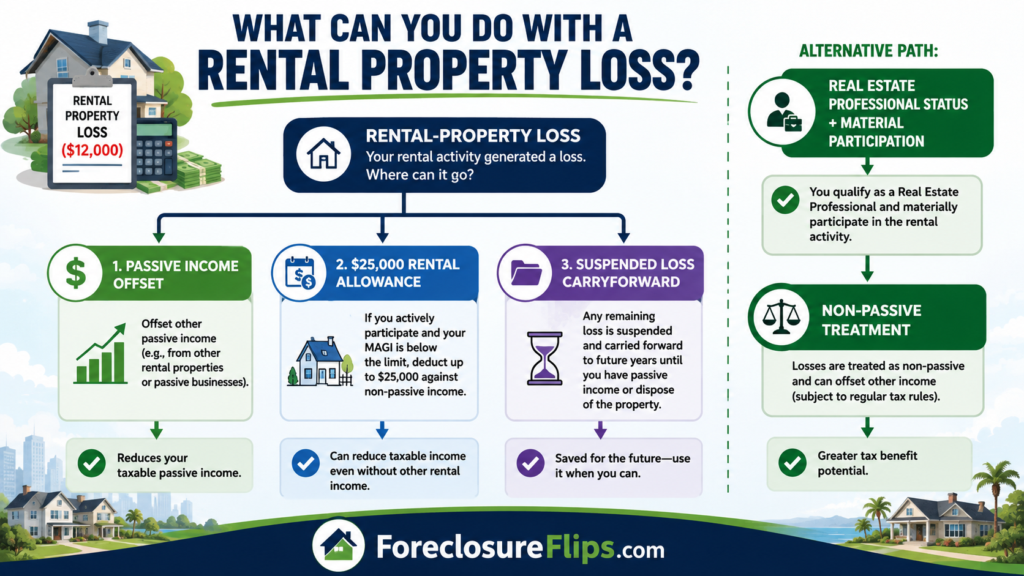
You buy a foreclosure, renovate it, refinance into long-term debt, and put a tenant in place. After depreciation and other expenses, the rental shows an $18,000 tax loss—even though the property produces positive cash flow. You expect that loss to reduce income from your flips or day job. Then you learn that some or all…
Read MoreCan You Use a 1031 Exchange After Buying a Foreclosure?

Buying at a foreclosure sale doesn’t put a property in—or out of—1031 territory. The tax question starts with what you bought the property to do. A 1031 exchange after buying a foreclosure may be possible when the property is genuinely held for investment or productive business use. If you bought the same house to renovate…
Read MoreReal Estate Professional Status: Do Your Hours Qualify?
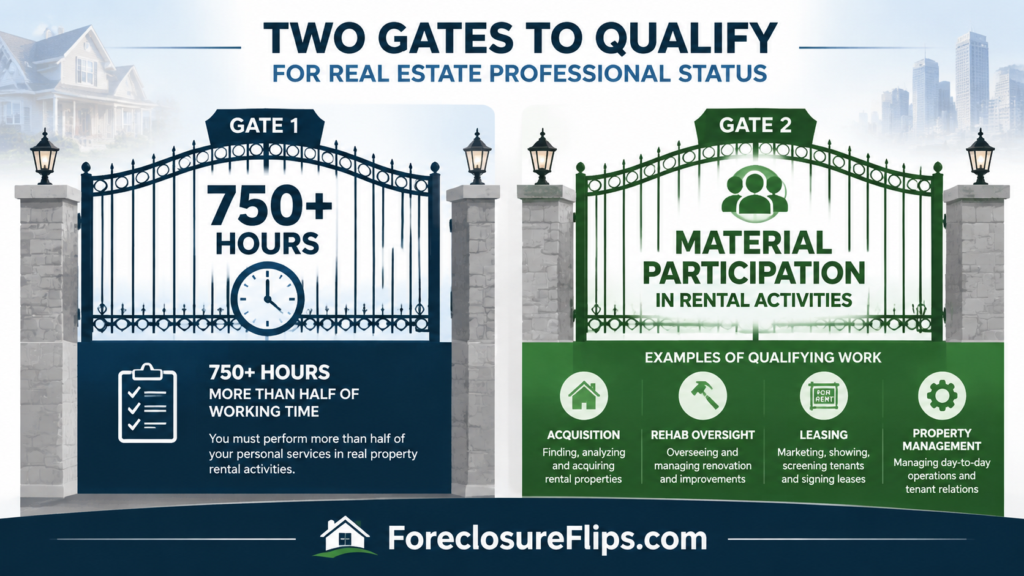
You spend most of your week finding distressed properties, overseeing rehabs, dealing with contractors, managing rentals, and planning the next acquisition. Surely that makes you a real estate professional for tax purposes. Not necessarily. Real estate professional status depends on specific annual tests, not your job title or how seriously you invest. Even after you…
Read MoreThe 1031 Replacement Property Mistake That Trips Up Flippers

You’ve done the difficult part. The property you’re selling has a credible investment history, the exchange is being structured correctly, and you’ve identified a replacement before the deadline. Then you buy a fixer, renovate it, and put it on the market. That next move can create the very qualification problem you worked so hard to…
Read MoreRental Property Tax Deductions When a Flip Becomes a Hold
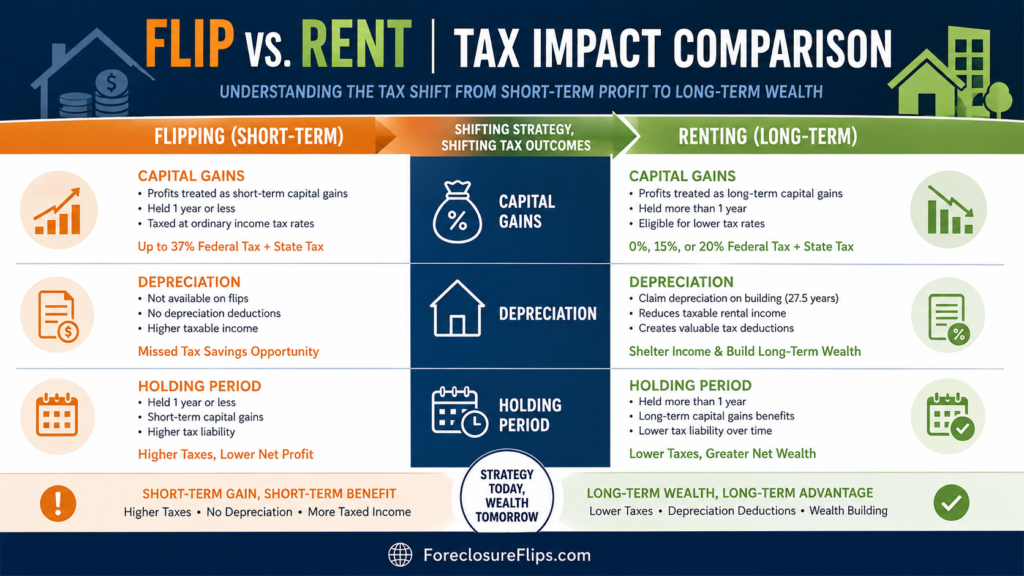
You bought a foreclosure to flip. Then rehab costs climbed, buyer demand softened, or the resale margin disappeared. Instead of forcing a weak sale, you decide to keep the property and rent it. That pivot changes the tax picture. Some costs that made sense under a flip strategy may receive different treatment once the property…
Read MoreWhen a Flip Becomes a Rental Before a 1031 Exchange

You finish the rehab, but the market isn’t cooperating. Buyers have pulled back, your expected margin has narrowed, and cutting the price further no longer makes sense. Instead of selling, you lease the property and hold it. A year or two later, the market has improved and you’d rather move that equity into another investment…
Read MoreWhat Really Determines a 1031 Exchange Holding Period
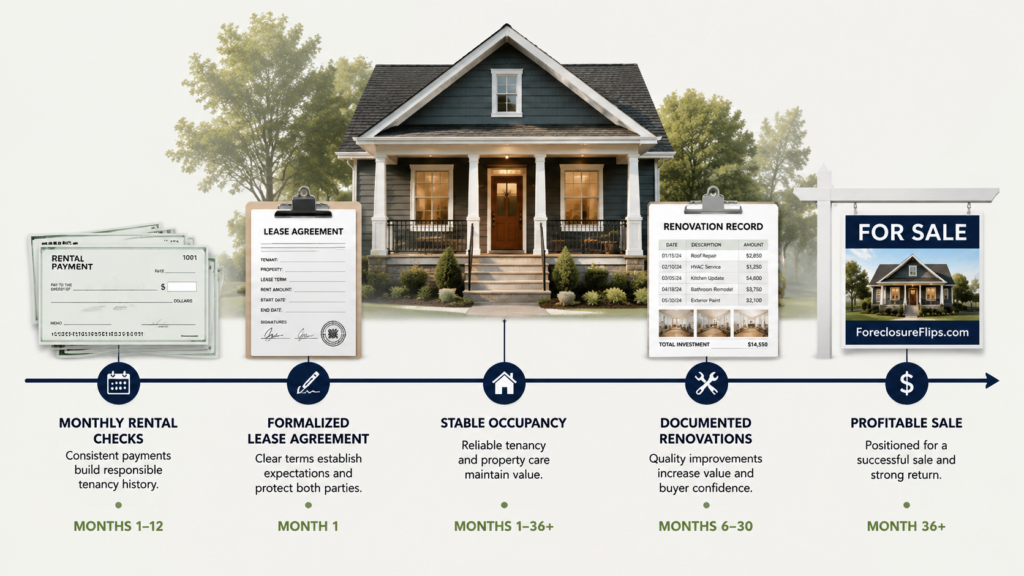
Owning a property for a year can feel like a clean dividing line: short-term flip on one side, investment property on the other. Section 1031 doesn’t work that neatly. There is no universal 1031 exchange holding period that turns a resale property into qualifying investment property once a certain date passes. What matters is the…
Read More