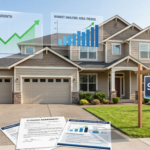
Sacramento Foreclosure Market 2026

The Sacramento foreclosure market has a different investor profile from Los Angeles and Riverside–San Bernardino. It is not as high-basis as coastal Southern California, and it is not as sprawling or logistics-driven as the Inland Empire.
Sacramento is better understood as a capital-region foreclosure market with state-government employment anchors, suburban growth corridors, relatively fast resale velocity, and enough pricing pressure to make disciplined distressed-property research worthwhile.
That does not make Sacramento a soft market. Homes are still moving faster than the national average, and the better-located properties can attract strong buyer demand.
The opportunity for foreclosure investors is more selective: finding properties where distress, deferred maintenance, title complexity, lender ownership, or seller urgency creates a basis advantage large enough to justify the risk.
The investor question is whether a specific Sacramento-area foreclosure can be bought below true exit value after accounting for repairs, trustee-sale rules, tenant status, insurance, taxes, permitting, holding time, and resale or rental demand.
Stay Ahead of the Next Deal
Markets move quickly, and good foreclosure opportunities often require fast analysis. Subscribe to our twice-weekly newsletter for investor-focused tips, tools, and market insights designed to help you make better decisions.
The Current Sacramento Foreclosure Signal
California remains one of the most active foreclosure-start states in the country. ATTOM’s Q1 2026 U.S. Foreclosure Market Report reported 118,727 U.S. properties with foreclosure filings during the quarter, up 26% year over year.
California recorded 7,985 foreclosure starts in Q1 2026, behind only Texas and Florida, with 12,318 total California properties carrying foreclosure filings.
That statewide signal matters for Sacramento because California foreclosure activity is rising from prior-year levels, but the market has not shifted into broad distress.
Sacramento investors should treat the increase as a lead-flow signal, not a license to chase every Notice of Default or trustee-sale notice.
| 2026 Signal | Current Reading | Investor Interpretation |
|---|---|---|
| California foreclosure starts | 7,985 in Q1 2026 | California has a meaningful foreclosure pipeline |
| California foreclosure filings | 12,318 properties in Q1 2026 | Distress is visible but not crisis-level |
| National foreclosure filings | Up 26% year over year in Q1 2026 | More pipeline movement than a year earlier |
| National REOs | Up 45% year over year in Q1 2026 | Lender-owned inventory may become more relevant |
| Sacramento thesis | Stable demand plus selective distress | Better for disciplined basis-driven investing than broad bargain hunting |
ATTOM’s April 2026 foreclosure update showed the broader trend continuing. U.S. foreclosure filings were up 18% year over year, foreclosure starts rose 12%, and completed foreclosures, or REOs, increased 42%. California recorded 2,786 foreclosure starts and 515 completed foreclosures in April, the second-highest REO total among all states.
For Sacramento investors, the useful reading is that the pipeline is active enough to monitor across pre-foreclosures, trustee sales, and REOs. The mistake would be assuming that higher statewide foreclosure activity automatically creates deep local discounts.
Sacramento’s Resale Market Is Holding Up Better Than Many Markets
A foreclosure discount has no value unless the exit market supports the plan. Sacramento’s resale market is showing pricing discipline, but not the kind of broad weakness that allows investors to underwrite casually.
Realtor.com’s April 2026 Sacramento housing market data showed a median listing price of $502,450, up 0.6% year over year. Homes spent a median of 36 days on market, about 16 days faster than the national median, while 16.8% of active listings had price reductions.
That matters because Sacramento is not behaving like a market where buyers have unlimited leverage. Some sellers are adjusting, but well-priced homes are still clearing. A foreclosure investor needs to be careful not to mistake a modest discount for a true investor spread.
| Sacramento Resale Signal | April 2026 Reading | Investor Use |
|---|---|---|
| Median list price | $502,450 | Mid-cost California basis, not low-cost investing |
| Year-over-year list price change | Up 0.6% | Price floor remains relatively stable |
| Median days on market | 36 days | Liquidity is stronger than the national average |
| Price-reduced share | 16.8% | Negotiability exists, but not heavy seller capitulation |
| Investor implication | Buy discipline matters | The discount must be created at acquisition, not by relying on market weakness |
Redfin’s Sacramento housing market data adds a useful second view. Over the three months ending April 2026, Sacramento home prices were down 2.0% year over year, with a median sale price near $495,000. Homes sold after an average of 24 days on market, compared with 16 days a year earlier.
That combination is important for investors. Sale prices show some softness, but market time is still short compared with many metros. For fix-and-resell deals, the underwriting should include both realities: buyers are still active, but the finished product needs to be priced accurately.
County and Submarket Selection Should Shape the Strategy

The Sacramento foreclosure market is best researched as a regional market rather than a single-city market. Sacramento County is the core, but Placer, Yolo, and El Dorado counties can also be relevant depending on the strategy.
Sacramento County
Sacramento County is the main foreclosure research base. It includes Sacramento, Elk Grove, Citrus Heights, Rancho Cordova, Folsom, Galt, Fair Oaks, Carmichael, North Highlands, and other submarkets with different resale and rental characteristics.
The Sacramento County Clerk/Recorder provides an online index of recorded documents, including deeds, deeds of trust, reconveyances, assignments, and liens.
For foreclosure investors, this is important because Notices of Default, lien position, ownership history, and recorded interests should be reviewed before a property is treated as actionable.
Sacramento County can support several strategies. Older single-family homes may fit renovation and resale. Lower-basis areas may support rentals if repairs and taxes are controlled.
Higher-demand areas such as Folsom, East Sacramento, Land Park, Pocket, Natomas, and Elk Grove may provide liquidity but less discount. The correct strategy depends on the specific property and buyer pool.
Placer County
Placer County includes Roseville, Rocklin, Lincoln, Auburn, Granite Bay, and other communities that often carry stronger owner-occupant demand and higher household-income profiles than parts of Sacramento County.
The Placer County Recorder’s Office states that it records documents affecting title on real property located in the county, and its real property records page is useful for understanding where investors can begin document and title research.
Placer may offer cleaner resale exits in selected submarkets, but the tradeoff is thinner foreclosure discounts. A well-located Roseville or Rocklin home with cosmetic distress may attract strong competition.
The best investor opportunities are more likely to involve deferred maintenance, estate complications, title issues, poor presentation, or lender-owned assets where retail buyers hesitate.
Yolo County
Yolo County includes West Sacramento, Davis, Woodland, Winters, and surrounding areas. It can be relevant for investors because it offers proximity to Sacramento, university-related demand in Davis, and more varied price points across the county.
Yolo County’s official records search page allows recorded documents to be searched by grantor or grantee names, document number, document type, or recording date. For investors, that kind of record access is part of the pre-bid and pre-offer process.
Yolo requires a more targeted strategy. Davis may have strong demand but limited discounts. West Sacramento may be more relevant for infill, rental, and value-add strategies. Woodland and Winters may require closer review of buyer depth, commute patterns, and resale timing.
El Dorado County
El Dorado County can matter for investors looking east of Sacramento, including El Dorado Hills, Cameron Park, Placerville, and surrounding foothill areas. These submarkets can be attractive, but they also require a different risk lens.
Foothill and rural-edge properties may involve wildfire insurance, septic systems, wells, sloped lots, access issues, longer resale timelines, and more property-specific due diligence. A foreclosure discount in this part of the region may be real, but it must be checked against insurability and buyer financing constraints.
| Area | Main Investor Use | Primary Risk to Underwrite |
|---|---|---|
| Sacramento / Rancho Cordova | Core-city rehabs, rentals, infill, value-add | Repairs, title, permitting, tenant status |
| Elk Grove / Natomas | Suburban resale and family-rental demand | Thinner discounts and buyer selectivity |
| Folsom / East Sacramento / Land Park | Higher-demand resale exits | High basis and competition |
| Roseville / Rocklin / Lincoln | Owner-occupant resale and suburban rentals | Lower distress discounts and HOA/Mello-Roos costs |
| West Sacramento / Woodland | Rental and affordability-driven plays | Submarket liquidity and commute sensitivity |
| El Dorado Hills / Placerville | Higher-income and foothill opportunities | Wildfire insurance, septic/well, longer exit timing |
California Trustee Sales Require Title Discipline
Sacramento investors need to account for California’s nonjudicial foreclosure process. Many residential foreclosures in California proceed through trustee sales rather than court-supervised auctions.
California Civil Code foreclosure provisions require a Notice of Default stage before the trustee can move toward sale, and the state’s foreclosure notice rules warn prospective bidders that trustee sales may involve buying subject to senior liens.
The notice language also warns that sale postponement information may not always be immediately reflected online or by phone.
For investors, this changes the auction model. You are not just bidding on a house. You are bidding into a legal and title structure that must be understood before capital is committed.
California also has post-sale procedures that may affect timing and finality.
The Attorney General’s reported residential foreclosure sales database is tied to Civil Code Section 2924m, which involves eligible-bidder rules for certain residential foreclosure sales. That framework can matter for one-to-four-unit residential trustee-sale investments.
The practical point is simple: a trustee-sale bid should not be based on the opening bid, Zillow-style valuation, or a drive-by estimate. It should be based on confirmed lien priority, title review, property condition, occupancy, and exit value.
Learn the Strategies Behind Smarter Foreclosure Investing
Get practical foreclosure investing content delivered twice a week, including deal analysis tips, strategy breakdowns, useful tools, and new resources from Foreclosure Flips. Sign up to keep learning and spotting better opportunities.
Acquisition Strategies That Fit Sacramento
Pre-Foreclosures
Pre-foreclosures may be useful in Sacramento because some owners still have equity but face pressure from higher mortgage payments, divorce, probate, tax issues, deferred repairs, relocation, or rental underperformance.
The strongest pre-foreclosure opportunities are not simply recorded defaults. They are situations where the seller has enough equity, enough motivation, and enough time to close before a trustee sale.
Investors should verify the Notice of Default, loan balance, lien position, property taxes, ownership history, occupancy, and repair burden before making an offer.
Trustee Sales
Trustee-sale investing can work in Sacramento, but the margin must be larger than the uncertainty. The investor may have limited access to the property, uncertain occupancy, possible senior liens, sale postponement risk, and post-sale finality issues.
A rational bid starts with conservative resale or rental value.
From that number, subtract repairs, closing costs, resale costs, financing, property taxes, insurance, utilities, HOA or Mello-Roos exposure, possession costs, title risk, holding time, and required profit. The number left is the maximum bid.
REO Properties
REO properties may be attractive for investors who want to avoid some trustee-sale uncertainty. Because the lender has already taken title, REO acquisitions can reduce certain lien-priority and sale-finality risks, though they do not eliminate condition, pricing, occupancy, or repair concerns.
The better Sacramento REO candidates are likely to be properties with poor presentation, outdated interiors, deferred maintenance, stale listing history, or repair issues that retail buyers do not want to solve. The weaker candidates are properties priced near retail value while still requiring major capital.
Short Sales and Discounted Owner Sales
Short sales can occur when mortgage debt, selling costs, and property condition leave limited equity, but Sacramento may also produce discounted owner-sale opportunities where the seller is not fully underwater.
These can be more controllable than trustee sales. The investor may be able to inspect, negotiate, complete title work, and close through escrow. The opportunity comes from solving a real seller problem at a price that leaves room for repairs and profit.
Rentals and BRRRR
Sacramento may be more realistic for rental and BRRRR strategies than Los Angeles, but the math is still tight at many price points. Investors need to account for property taxes, insurance, repairs, vacancy, management, capital expenditures, and refinance assumptions.
The best rental candidates usually have durable tenant demand, functional layouts, manageable repair scope, and a basis low enough to survive conservative rent and refinance assumptions.
A BRRRR deal that works only with aggressive rent growth or a high appraisal should be avoided.
Local Risks That Can Erase the Discount
Sacramento foreclosure investors need to underwrite both California-specific process risk and local property risk.
| Risk | Why It Matters | Investor Response |
|---|---|---|
| Trustee-sale title risk | Senior liens may survive the sale | Confirm lien priority and recorded interests before bidding |
| Fast resale expectations | Some homes sell quickly, but not every submarket is liquid | Use neighborhood-level closed comps and days-on-market data |
| Older housing stock | Roofs, HVAC, plumbing, electrical, and sewer lines can be expensive | Build line-item repair budgets before setting bid limits |
| Tenant or occupancy issues | Possession delays can affect timing and cost | Verify occupancy and applicable local rules |
| HOA and Mello-Roos costs | Suburban communities may carry added ongoing costs | Review assessments, special taxes, dues, and restrictions |
| Insurance exposure | Foothill and rural-edge properties may create wildfire concerns | Quote insurance before finalizing bid or offer assumptions |
Sacramento’s biggest underwriting trap is assuming the market is forgiving because homes still move relatively quickly. Liquidity helps only when the acquisition basis is correct. If the bid is too high, fast resale does not solve thin margin.
How to Research Sacramento Foreclosure Deals
A strong Sacramento foreclosure research process should begin with county records and foreclosure stage.
For pre-foreclosures, search recorded Notices of Default, verify ownership, estimate equity, review liens, check property taxes, confirm occupancy, and compare the property to realistic as-is and repaired values. Then determine whether the seller has enough time and motivation to close before the trustee sale.
For trustee sales, review the Notice of Trustee Sale, trustee information, sale date, postponement history, lien priority, senior debt, taxes, recorded documents, HOA exposure, occupancy, repair scope, and insurance feasibility. Do not bid from the opening amount. Bid from a completed exit model.
For REO properties, compare the lender’s asking price to closed comparable sales and current active competition. Look for stale listings, weak marketing, poor condition, and repair problems that reduce retail-buyer interest.
For rentals, test the deal against conservative rent, higher taxes, higher insurance, vacancy, maintenance reserves, management, and refinance assumptions. The property should work without relying on aggressive appreciation.
Where Sacramento Fits in the California Foreclosure Strategy
Sacramento should be treated as a balanced California foreclosure research market. It does not have the extreme acquisition basis of Los Angeles, and it may not offer the same broad lower-basis inventory as Riverside–San Bernardino.
Its appeal is the combination of capital-region stability, suburban growth, state-government employment, relative affordability versus coastal California, and enough resale liquidity to support multiple exit strategies.
Compared with Los Angeles, Sacramento may offer more practical rental and mid-price resale opportunities. Compared with Riverside–San Bernardino, it may have less commute-driven sprawl risk but fewer deep-discount lower-basis options.
Compared with smaller Central Valley or foothill markets, Sacramento generally offers more liquidity and stronger employment anchors.
Investors comparing Sacramento with other parts of the state should use the broader California foreclosure market page as the statewide reference point. For national context, the hub on states with the most foreclosure opportunities can help compare California against other foreclosure-heavy states.
If you are actively screening inventory, you can compare active foreclosure listings. For rehab-heavy properties, run the numbers carefully before committing capital.
FAQ
Is Sacramento a relevant foreclosure market for investors?
Yes. Sacramento is worth monitoring because California foreclosure activity is rising, and the region offers a more practical price range than many coastal California markets. The opportunity depends on basis, title, repairs, occupancy, and exit strategy.
Is Sacramento better for flips or rentals?
It can support both. Higher-demand areas may fit resale strategies when the acquisition basis is low enough. Lower-basis submarkets may support rentals or BRRRR, but taxes, repairs, insurance, and refinance assumptions need to be conservative.
Are California trustee sales risky in Sacramento?
Yes. Trustee-sale buyers may face lien-priority issues, sale postponements, limited inspection access, occupancy problems, and post-sale finality rules. A bid should be based on title research and a completed exit model.
Which Sacramento-area counties should investors research?
Sacramento County is the core starting point. Placer, Yolo, and El Dorado counties can also be relevant, depending on whether the strategy is resale, rental, suburban growth, or foothill value-add investing.
What is the biggest underwriting mistake in Sacramento?
The biggest mistake is overestimating the margin because the resale market still has liquidity. A property can sell quickly and still be a poor investment if the purchase price, repairs, title issues, insurance, or tenant problems were mispriced.
Looking for deeply discounted properties in Sacramento others don’t know about?
Don’t miss out on the next great investment opportunity! Search millions of foreclosure listings and get daily alerts for new properties in your target market.