Orlando Foreclosure Market 2026

The Orlando foreclosure market is one of the more relevant Florida metros for investors to monitor in 2026 because it combines measurable foreclosure pressure with a housing market that is no longer moving with the same urgency seen during the post-pandemic boom.
That does not mean Orlando is a simple distressed-property market. The metro still has strong population drivers, a large rental base, tourism-related demand, and active investor competition. The opportunity is more specific: finding properties where distress, condition, seller pressure, or lender ownership creates enough basis advantage to offset repairs, insurance, taxes, HOA issues with condo foreclosures, holding time, and exit risk.
For investors, Orlando should be evaluated as a Central Florida foreclosure market with several different deal types.
Orange County may support urban and suburban resale strategies. Seminole County may require tighter pricing because of stronger owner-occupant demand in many areas. Osceola County can offer rental and affordability plays, but tourism-adjacent assumptions need careful underwriting.
Get Foreclosure Investing Insights Twice a Week
Subscribe to the Foreclosure Flips newsletter for practical ideas on finding deals, analyzing opportunities, and understanding foreclosure-related investing strategies. We send concise updates twice a week so you can stay informed without adding more noise to your inbox.
The Current Foreclosure Signal Stack
Florida remains one of the country’s most active foreclosure states. ATTOM’s Q1 2026 U.S. Foreclosure Market Report reported 118,727 U.S. properties with foreclosure filings during the quarter, up 26% from the prior year.
Florida recorded 10,099 foreclosure starts in Q1 2026 and ranked among the five worst states by foreclosure rate, at one filing for every 750 housing units. ATTOM also listed Orlando among major metros with foreclosure rates in the top 20 worst nationally, at No. 17 among major metros with at least 1 million residents.
That last point is important. Orlando is not just a large Florida metro with incidental foreclosure activity. It appeared in ATTOM’s major-metro foreclosure-rate rankings, which makes it more than a generic Central Florida market to watch.
| 2026 Signal | Current Reading | Investor Interpretation |
|---|---|---|
| Florida foreclosure starts | 10,099 in Q1 2026 | Strong statewide pipeline for lead research |
| Florida foreclosure rate | 1 in every 750 housing units in Q1 2026 | Distress elevated versus most states |
| Orlando major-metro ranking | No. 17 among large metros by foreclosure rate | Orlando has a real foreclosure-rate signal, not just volume |
| Florida REOs | 1,014 in Q1 2026, up from 487 year over year | Bank-owned inventory is rising from low levels |
| Orlando thesis | Foreclosure signal plus softer resale conditions | Useful for disciplined investors focused on basis and exit fit |
ATTOM’s April 2026 foreclosure update showed the broader pipeline continuing.
U.S. foreclosure filings were up 18% year over year in April, foreclosure starts increased 12%, and completed foreclosures, or REOs, rose 42%. Florida ranked third-worst by state foreclosure rate and had 381 REOs in April, behind only Texas and California.
For Orlando investors, the useful conclusion is not that a foreclosure wave is producing automatic bargains. It is that more properties are moving through the system while resale buyers are becoming more selective.
That combination can create better entry points, but only when the property-specific numbers support the deal.
Orlando’s Resale Market Changes the Math
Foreclosure investors should not analyze distress in isolation. The exit market determines whether a discount has practical value.
Realtor.com’s April 2026 housing report showed the Orlando-Kissimmee-Sanford metro with a median list price of $419,000, down 1.4% year over year. Median list price per square foot was down 3.3%, median days on market increased by six days, and 20.8% of active listings had price reductions.
That profile is relevant for foreclosure investing because it points to pricing pressure, not a collapsed market. Sellers are adjusting. Buyers are more selective. Investors should not assume aggressive appreciation or instant resale liquidity.
| Orlando Resale Signal | April 2026 Reading | Investor Use |
|---|---|---|
| Median list price | $419,000 | Broad pricing context for the metro |
| Median list price change | -1.4% year over year | Indicates softer seller pricing |
| Median list price per sq. ft. | -3.3% year over year | Useful for comp-direction checks |
| Days on market | Up 6 days year over year | Build longer holds into models |
| Price-reduced share | 20.8% of active listings | Signals buyer selectivity and seller repricing |
City-level data adds another layer. Redfin’s Orlando housing market data showed Orlando home prices down 1.1% year over year over the three months ending April 2026, with a median sale price near $396,000 and average market time increasing to 59 days from 47 days a year earlier.
For investors, this means a flip should be underwritten with a realistic resale timeline and conservative ARV. A foreclosure purchased at a modest discount may not be attractive if the resale market is slower, repairs are higher than expected, or comparable sales are moving down.
County-Level Research Should Come Before Property-Level Offers
The Orlando foreclosure market is best researched by county, because Orange, Seminole, and Osceola can produce different deal profiles.
Orange County

Orange County is the core Orlando market. Investors may find foreclosure opportunities in Orlando, Pine Hills, Azalea Park, Apopka, Ocoee, Winter Garden, Maitland, and other submarkets, but the exit strategy changes materially by location.
Urban and older suburban areas may produce more repair-heavy single-family opportunities.
Some west Orange locations may have stronger resale demand but less margin. Condo and townhome properties require HOA review, rental restriction analysis, fee verification, and assessment checks before any bid or offer is treated as viable.
The Orange County Clerk’s foreclosure information page is a starting point for understanding local foreclosure resources and records access. For investors, the practical work is to connect court records, property records, tax information, HOA exposure, and comparable sales before evaluating a purchase.
Seminole County
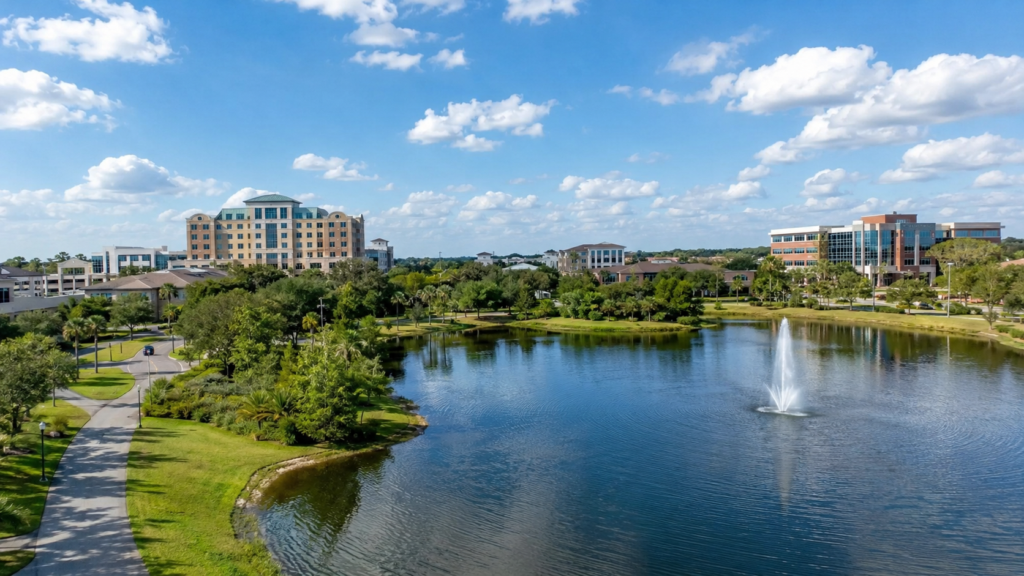
Seminole County may have stronger owner-occupant demand in many submarkets, including Sanford, Altamonte Springs, Casselberry, Longwood, Lake Mary, Oviedo, and Winter Springs. That can help resale liquidity, but it can also compress foreclosure discounts.
The Seminole County Clerk states that foreclosure sales scheduled after October 18, 2022, are handled through its Real Auction site, and that after auction completion there is a 10-day objection period before title can be issued.
The county’s foreclosure guidance is useful for investors because it highlights the timing gap between winning an auction and receiving title.
That timing matters for carrying costs and certainty. Winning the auction is not the same as immediately controlling a clean, marketable asset.
Osceola County
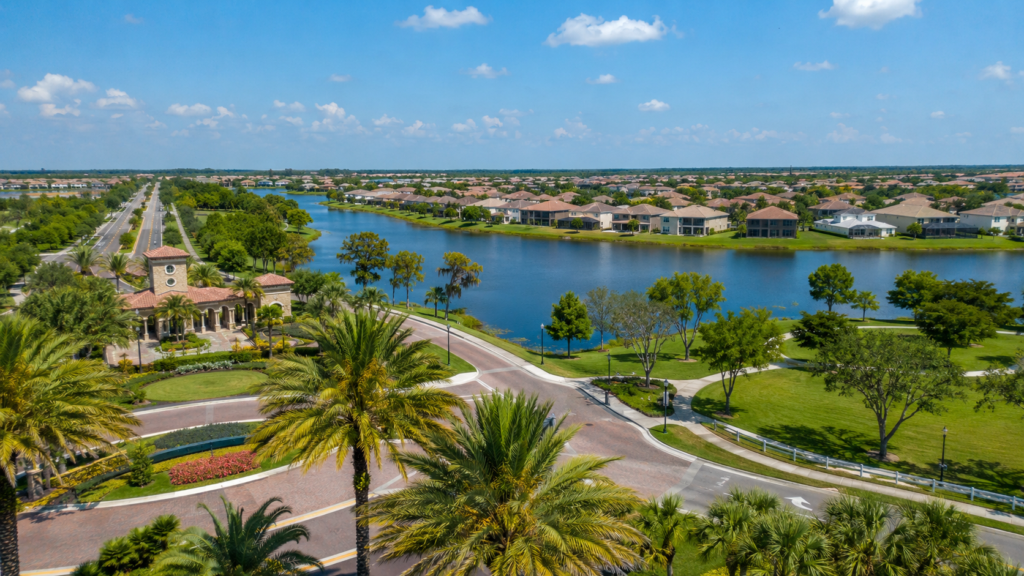
Osceola County can be especially relevant for investors looking at Kissimmee, St. Cloud, Poinciana, Buenaventura Lakes, and tourism-adjacent housing. It can offer lower entry points than some Orange and Seminole submarkets, but the underwriting can be more complicated.
Osceola’s economy and housing demand include a mix of local residents, service workers, commuters, investors, and tourism-related ownership. A property that looks attractive for short-term rental use may be subject to zoning, HOA, financing, insurance, or demand assumptions that need to be verified before acquisition.
The Osceola Clerk’s foreclosure sales page states that foreclosure sales are conducted under Florida Statute 45.031, that the successful bidder must produce 5% of the bid at the time of sale, and that final payment is due by 4:00 p.m. the same day. It also warns that the Clerk does not guarantee clear title and that investors should obtain a title search.
That is a materially different operational risk than simply browsing online listings. Investors need capital, due diligence, and title review lined up before bidding.
| County | Main Investor Use | Primary Risk to Underwrite |
|---|---|---|
| Orange | Core Orlando flips, rentals, older suburban rehabs | Repair scope, HOA exposure, resale timing |
| Seminole | Higher-demand suburbs, resale-oriented deals | Thinner discounts and owner-occupant competition |
| Osceola | Kissimmee/St. Cloud rentals, affordability plays, investor-heavy areas | Same-day payment rules, tourism assumptions, title risk |
| Lake/outlying areas | Lower-basis suburban growth plays | Longer resale timelines and submarket-specific demand |
Foreclosure Auctions Require More Than a Bid Number
Florida foreclosure auctions are judicial sales, and the timing rules matter. Under Florida Statute 45.031, if no objections are filed within 10 days after the certificate of sale, the clerk files a certificate of title.
When that certificate of title is filed, title passes to the purchaser. The state’s judicial sale procedure provides the baseline framework, but county-specific procedures still matter.
The mistake is assuming that auction access equals investment control. The auction platform does not solve title issues, confirm occupancy, inspect the property, clear municipal liens, estimate repair costs, verify insurability, or guarantee that your bid leaves enough room for profit.
For Orlando-area foreclosure auctions, the bid ceiling should be set before the auction begins. Start with conservative ARV or rental value, then subtract selling costs, repairs, taxes, insurance, liens, HOA exposure, financing, utilities, holding time, and required profit. If the auction clears above that number, the correct decision is to stop.
Build Your Investing Knowledge One Email at a Time
Foreclosure investing rewards preparation. Join our 2X week newsletter for straightforward guidance on pre-foreclosures, short sales, BRRRR, flipping, and other strategies investors use to evaluate distressed property opportunities.
Acquisition Strategies That Fit Orlando
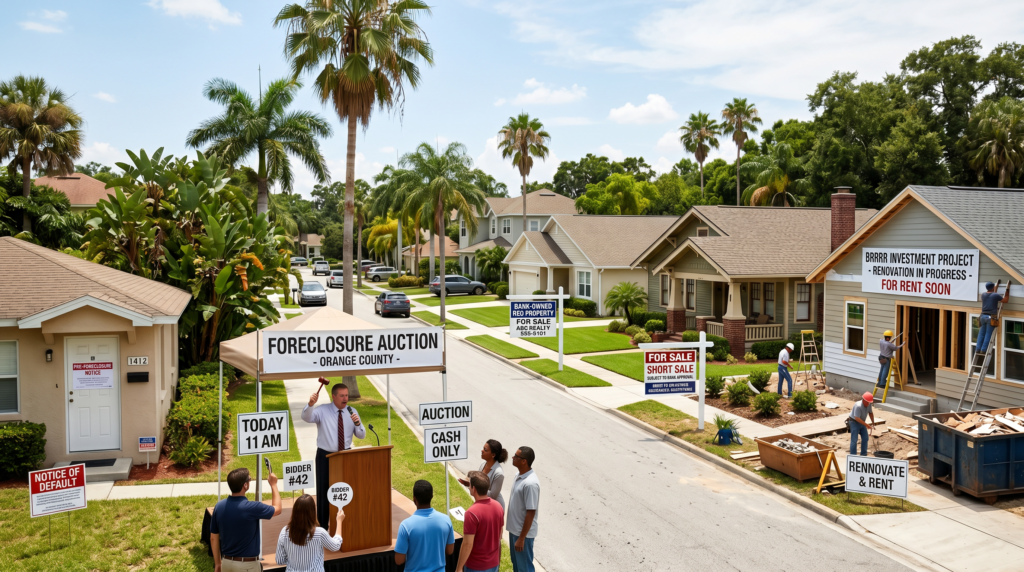
Pre-Foreclosures
Pre-foreclosures can be useful in Orlando because some owners may still have equity but face payment stress, insurance increases, repairs, HOA pressure, or relocation needs. A lis pendens filing is only the starting point.
The best leads are properties where the owner has enough equity, enough motivation, and enough time to close before the case advances. Investors should verify ownership, loan balance, taxes, liens, HOA exposure, occupancy, and comparable sales before making an offer.
Foreclosure Auctions
Auction opportunities in Orange, Seminole, and Osceola can work, but the risks are different by county and property type. Seminole may have stronger competition for cleaner suburban assets.
Osceola may require tighter operational readiness because of same-day payment requirements. Orange can produce a wider spread of urban, suburban, condo, and rental opportunities.
Auction buyers should not use assessed value or opening bid as a proxy for market value. The correct underwriting anchor is the exit value after repairs, not the number displayed at the start of the sale.
REO Properties
REO properties may become more relevant if completed foreclosures continue rising. They can offer a cleaner path than auction purchases because the lender has already taken title, but they are not automatically investor-grade opportunities.
In Orlando, the best REO candidates are usually properties with correctable issues that discourage retail buyers but can be repaired and repositioned profitably. Poorly located REOs, overleveraged condos, properties with major insurance problems, or homes priced close to renovated value may offer limited upside.
Short Sales and Discounted Owner Sales
Short sales may appear when the mortgage balance, selling costs, and property condition leave little or no equity. These deals can work, but lender approval timelines reduce control.
Discounted owner sales may be more practical. Some sellers may not be underwater but may still be motivated because of deferred maintenance, estate issues, relocation, rental underperformance, HOA pressure, or insurance costs. In a softer resale environment, these sellers may be more realistic than they were several years ago.
Rentals and BRRRR
Orlando can support rental and BRRRR strategies, but investors should be careful with overly optimistic rent assumptions. A property near employment, schools, transit corridors, or stable neighborhood demand may underwrite differently from a tourism-adjacent asset that depends on short-term rental performance.
BRRRR deals should be tested with conservative refinance assumptions. If the strategy only works with a high appraisal, rising rents, low vacancy, and no insurance surprises, the margin is too thin.
Local Risks That Can Break the Deal
Orlando’s risk profile is different from coastal Florida, but it is not low-risk. The most important problems often appear after the property is already under review.
| Risk | Why It Matters | Investor Response |
|---|---|---|
| HOA and condo exposure | Dues, assessments, rental restrictions, and liens can impair returns | Review association balances, rules, reserves, and restrictions early |
| Tourism assumptions | Short-term rental demand may not apply to every Kissimmee or Orlando-area property | Verify zoning, HOA rules, occupancy trends, and conservative revenue |
| Repair-heavy housing | Older roofs, HVAC, plumbing, electrical, and water intrusion can alter the budget | Use line-item repair estimates, not percentage assumptions |
| Resale slowdown | Longer market time increases holding costs | Model price cuts, concessions, and slower resale |
| Auction title risk | Winning the bid does not guarantee clean economics | Search title, taxes, municipal liens, code issues, and HOA claims |
| Insurance | Roof age, prior claims, and storm exposure can affect cost and availability | Quote coverage before final bid or offer decisions |
The Orlando foreclosure market is especially vulnerable to false positives. A property can appear attractive because the headline price is below nearby retail listings, but the deal may fail after roof replacement, HOA balances, title work, insurance, or resale concessions are included.
How to Research Deals in the Orlando Market
A practical process should begin with foreclosure stage and county.
For pre-foreclosures, track new filings, confirm the owner of record, estimate equity, review the case docket, search tax and lien records, and compare the property to both as-is and renovated sales. Then test whether the likely payoff and repair burden leave enough room for an investor purchase.
For auctions, review the docket, final judgment, property records, title status, taxes, municipal liens, HOA exposure, code violations, occupancy, insurance feasibility, and repair scope. Do not bid until your maximum bid is already calculated.
For REO properties, compare the bank’s asking price to closed comparable sales, not active listings. Look for price reductions, long market time, poor presentation, correctable condition problems, and misalignment between bank pricing and investor exit value.
For rentals, test the deal against flat rent, higher repairs, higher insurance, vacancy, and conservative refinance assumptions. A rental that works only under perfect assumptions is not a strong foreclosure acquisition.
Where This Metro Fits in the Florida Foreclosure Strategy
Orlando should be treated as a foreclosure market with a real distress signal and a more moderate resale backdrop. That combination can be useful for investors, but it also demands discipline. The best opportunities are likely to come from basis advantage, property-specific problem solving, and careful exit matching rather than broad market appreciation.
Compared with Miami–Fort Lauderdale, Orlando may offer more accessible price points and stronger rental/BRRRR possibilities in selected submarkets.
Compared with Tampa–St. Petersburg, Orlando has less coastal flood exposure but more dependence on tourism, HOA-heavy communities, and Central Florida growth assumptions. Compared with smaller Florida metros, it offers more liquidity and larger lead flow.
Investors comparing Orlando with other Florida metros should use the broader Florida foreclosure market page as the statewide reference point. For national context, the hub on states with the most foreclosure opportunities can help compare Florida against other foreclosure-heavy states.
If you are actively screening inventory, you can compare active foreclosure listings. For rehab-heavy properties, run the numbers carefully before committing capital.
FAQ
Is Orlando a relevant foreclosure market for investors?
Yes. ATTOM listed Orlando among major metros with foreclosure rates in the top 20 worst nationally in Q1 2026. That makes it a market worth monitoring, but each deal still needs property-level underwriting.
Is Orlando better for flips or rentals?
It depends on the property and submarket. Some Orange and Seminole County properties may fit resale strategies. Some Osceola and lower-basis areas may fit rentals or BRRRR, but rent assumptions and HOA rules must be verified.
Are Orlando foreclosure auctions risky?
Yes. Auction buyers face limited inspection access, title risk, possible occupancy issues, strict deposit or payment deadlines, and potential HOA or municipal claims. The bid ceiling should be calculated before the auction begins.
What is the biggest mistake investors make in Orlando?
The biggest mistake is treating a below-market price as proof of a deal. Repairs, insurance, HOA exposure, title issues, resale timing, and rental restrictions can eliminate the apparent discount.
Which Orlando-area counties should investors research?
Orange, Seminole, and Osceola are the core counties to research first. Orange offers the widest range of property types. Seminole may offer stronger resale demand but tighter margins. Osceola may offer affordability and rental opportunities but requires careful tourism, HOA, and payment-timeline underwriting.
Looking for deeply discounted properties in Orlando others don’t know about?
Don’t miss out on the next great investment opportunity! Search millions of foreclosure listings and get daily alerts for new properties in your target market.