
Housing Affordability Crisis and Foreclosure Investing
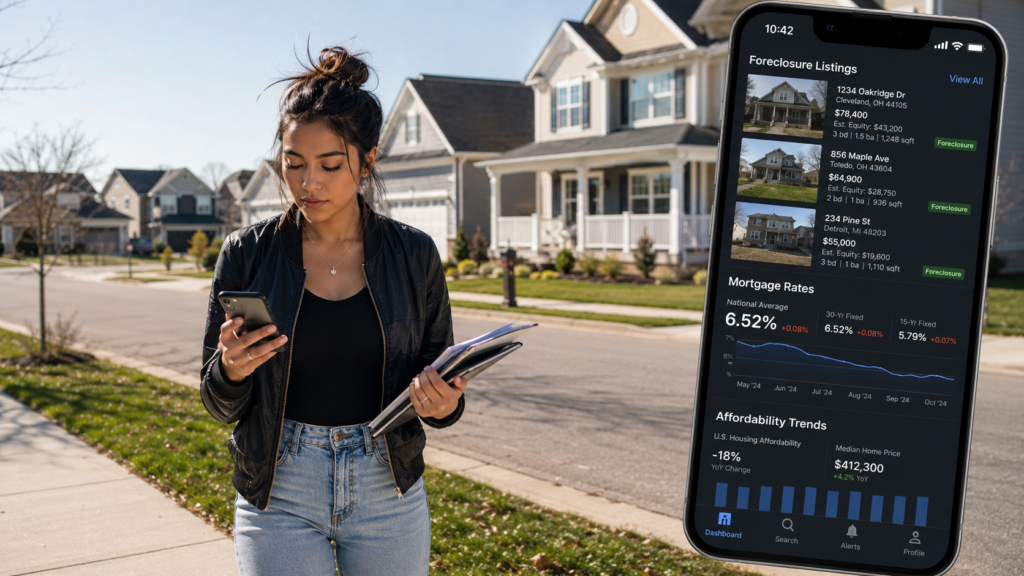
The housing affordability crisis is not just a homebuyer problem. It is also changing how foreclosure investors, pre-foreclosure investors, house flippers, BRRRR buyers, and short sale investors need to evaluate deals.
When mortgage payments rise, insurance costs increase, property taxes climb, and household budgets get tighter, more homeowners can fall behind. Some may need to sell before foreclosure. Others may enter the foreclosure process. At the same time, investors face their own pressure from higher borrowing costs, tighter margins, and more cautious resale buyers.
That creates a complicated market. There may be more distressed-property opportunities, but not every distressed property is a good deal.
Get Foreclosure Investing Insights Twice a Week
Subscribe to the Foreclosure Flips newsletter for practical ideas on finding deals, analyzing opportunities, and understanding foreclosure-related investing strategies. We send concise updates twice a week so you can stay informed without adding more noise to your inbox.
Why Housing Affordability Is Still Under Pressure
Housing affordability is squeezed from several directions at once.
Home prices remain high in many markets. Mortgage rates are still elevated compared with the unusually low-rate years that followed the pandemic. Insurance premiums, taxes, repair costs, and utilities have also increased in many areas. The result is a market where monthly payment affordability matters as much as the purchase price.
According to Freddie Mac mortgage rate data, mortgage rates remain high enough to keep many buyers payment-sensitive. Even when rates move down slightly from prior peaks, the monthly payment on a home can still be difficult for buyers who are also dealing with higher living costs, student loans, car payments, credit card balances, and insurance premiums.
This matters because mortgage rates affect almost every part of the foreclosure investing process.
A higher-rate environment can reduce the number of qualified retail buyers. It can increase holding costs for investors using hard money, private money, or short-term debt. It can also make refinance exits more difficult for BRRRR investors who need the finished property to appraise, cash flow, and qualify under current lending standards.
Foreclosure activity has also been moving higher from prior lows. ATTOM’s April 2026 foreclosure report reported that U.S. properties with foreclosure filings were up 18% from one year earlier, while completed foreclosures also increased year over year.
For investors, the lesson is clear: distress may be increasing, but the market is not a simple repeat of 2008. The opportunity is more selective.
What the Housing Affordability Crisis Means for Foreclosure Investors
Foreclosure investing is often discussed as if more distress automatically means more opportunity. That is only partly true.
Rising affordability pressure can create more motivated sellers, more pre-foreclosure leads, more auction inventory, and more lender-owned properties. But it can also reduce the number of end buyers, increase financing costs, and create wider gaps between what sellers owe and what investors can safely pay.
A foreclosure investor should think about the affordability crisis in three separate layers.
First, homeowner affordability pressure can increase distress. A homeowner who could manage a low fixed-rate mortgage may still struggle after income loss, divorce, medical expenses, rising insurance costs, or higher consumer debt payments. This can create pre-foreclosure situations before the property ever reaches auction.
Second, buyer affordability pressure can weaken the exit. A flip that looked profitable at a lower mortgage rate may sit longer if buyers in that price band cannot qualify. Even if demand exists, buyers may need seller concessions, rate buydowns, repairs, or price reductions.
Third, investor affordability pressure can compress margins. Hard money costs, private lending rates, repair inflation, insurance, taxes, utilities, and longer holding periods all affect net profit. A deal that works only under optimistic assumptions is not really a deal.
The best foreclosure investors are not simply looking for distress. They are looking for a spread between true market value, total project cost, financing cost, and realistic exit value.
Pre-Foreclosures May Become More Important
In an affordability-stressed market, pre-foreclosures often deserve more attention than courthouse auctions.
A pre-foreclosure occurs before the foreclosure sale is completed. Depending on the state and process, the homeowner may still have time to reinstate the loan, sell the property, negotiate with the lender, or pursue another solution.
For investors, pre-foreclosures can create opportunities before competition increases. But this is also where ethical conduct matters most. A homeowner facing foreclosure may be under significant pressure. Investor outreach should be clear, factual, compliant, and respectful. The goal should be to determine whether a sale solves a real problem for the seller, not to pressure someone into a bad decision.
Good pre-foreclosure analysis starts with equity.
If the property has substantial equity, an investor may be able to make a discounted offer that still leaves the homeowner with proceeds. If the property has little or no equity, a traditional purchase may not work. In that case, the situation may require a short sale, loan modification, reinstatement, or another path.
Before pursuing a pre-foreclosure lead, investors should evaluate:
- The estimated property value
- The unpaid loan balance
- Any junior liens or judgments
- Property taxes and municipal charges
- Repair condition
- Owner occupancy status
- Foreclosure timeline
- State foreclosure rules
- Potential resale or rental demand
This is where a foreclosure listing platform can be useful. A tool such as Foreclosure.com can help investors identify pre-foreclosure and foreclosure leads, but the listing is only the starting point. The investor still needs to verify the public record, confirm property condition, analyze equity, and understand the local foreclosure process.
Higher Rates Change the Math on Every Deal
Higher mortgage rates do not just affect buyers. They affect the investor’s entire underwriting model.
For a flipper, higher rates may reduce the buyer pool after renovation. If the target buyer needs financing, the monthly payment can become the obstacle, even when the property is priced reasonably. That can mean longer days on market, more concessions, or a lower resale price.
For a BRRRR investor, higher rates can affect both cash flow and refinance proceeds. A rental that would have produced strong cash flow at a lower rate may only break even at today’s rate. If the refinance loan amount is lower than expected, the investor may have to leave more cash in the deal.
For a short sale investor, higher rates can reduce end-buyer demand and make lender negotiations more complicated. A lender may approve a discounted payoff, but the investor still needs an exit that works in the current market.
For an auction buyer, higher rates can reduce the resale pool while increasing the cost of capital. Auction deals often require cash or fast financing, which means mistakes can become expensive quickly.
Investors should stress-test every deal using conservative assumptions. That means analyzing the property at today’s rates, not hoping rates fall later.
A practical stress test should include:
- A higher-than-expected interest rate
- A longer holding period
- A lower resale price
- Higher repair costs
- Higher insurance and taxes
- Seller concessions
- Closing cost overruns
- Vacancy time, if the exit is rental
This is also why deal analysis software can be valuable. A tool such as Rehab Valuator can help investors compare purchase price, repair costs, financing, resale value, rental income, and profit assumptions before making an offer.
Learn the Strategies Behind Smarter Foreclosure Investing
Get practical foreclosure investing content delivered twice a week, including deal analysis tips, strategy breakdowns, useful tools, and new resources from Foreclosure Flips. Sign up to keep learning and spotting better opportunities.
The Stuck Market Creates Both Risk and Opportunity

A stuck housing market is one where buyers and sellers are both constrained.
Many owners with low mortgage rates do not want to sell and replace their loan with a higher-rate mortgage. Many buyers want to purchase, but the payment is too high. This can keep inventory tight in some markets while still allowing distress to rise in others.
That creates a mixed environment.
Some properties will still attract strong demand because they are in desirable locations, have good schools, or sit in supply-constrained submarkets. Others may struggle because the buyer pool is thin, the repairs are too extensive, or the finished price would exceed local affordability.
Investors should avoid analyzing distressed properties only at the city level. A metro area can look healthy while certain submarkets are under pressure. Conversely, a weak metro can still contain neighborhoods where entry-level housing demand remains strong.
The most useful question is not: “Is this market good?”
The better question is: “Who is the likely buyer or renter for this specific property after the work is done, and can that person afford it?”
That question should guide the purchase price, renovation scope, exit strategy, and offer terms.
Institutional Investors Are Part of the Conversation, But Not the Whole Story
Institutional investors are often discussed in connection with housing affordability because large owners have purchased single-family rental homes in many markets. The video extract also raises this issue as part of the broader affordability discussion.
This issue is relevant, but smaller investors should handle it carefully.
Institutional buyers can influence local markets, especially in areas where large portfolios of single-family rentals have been acquired. They may compete for entry-level inventory, use cheaper capital, and operate at a scale that individual investors cannot match.
However, the presence of institutional investors does not automatically mean a market is impossible for smaller investors. It means the small investor has to be more selective.
Smaller investors can still compete by focusing on properties that institutions often avoid, such as:
- Homes needing heavier renovation
- Properties with title or probate complexity
- Small multifamily assets
- Local pre-foreclosure relationships
- Short sale opportunities
- Neighborhoods requiring local knowledge
- Deals too small or operationally messy for large funds
The advantage of a smaller investor is not scale. It is flexibility, local execution, and the ability to solve specific problems.
Ethical Foreclosure Investing Matters More in This Market
Foreclosure investing has a reputation problem when investors treat homeowner distress as merely a lead source. That approach is short-sighted.
A homeowner in pre-foreclosure may be facing job loss, medical expenses, divorce, inflation pressure, rising insurance costs, or an unaffordable payment. The investor may still be able to buy the property at a discount, but the transaction should be handled professionally.
Ethical foreclosure investing means:
Being clear that you are an investor
Avoiding misleading promises
Not claiming to stop foreclosure unless you have a lawful, specific solution
Encouraging the seller to understand their options
Putting agreements in writing
Complying with state foreclosure, solicitation, and distressed-property laws
Giving the seller time to review documents when required
Avoiding pressure tactics
This is not just about doing the right thing. It is also about reducing legal, reputational, and deal risk.
In some states, transactions involving homeowners in foreclosure may be subject to specific distressed homeowner protection laws. Investors should understand those rules before sending mail, making offers, or signing contracts.
How to Evaluate a Foreclosure Deal During an Affordability Crisis
A foreclosure deal should be evaluated from the exit backward.
Start with the most realistic exit. Will the property be resold to an owner-occupant? Sold to another investor? Rented and refinanced? Held as a long-term rental? Sold wholesale? Each exit has different assumptions.
Then evaluate whether the local buyer or renter can support that exit.
For a flip, analyze recent comparable sales, but also look at days on market, price reductions, seller concessions, and pending inventory. A comparable sale from six months ago may not reflect today’s buyer affordability.
For a rental, analyze market rent, vacancy, property taxes, insurance, maintenance, management, and financing. Do not assume that rent growth will rescue a thin deal.
For a BRRRR deal, be especially conservative. The refinance appraisal, loan-to-value ratio, debt-service coverage, and final interest rate can determine whether the strategy works.
For an auction property, include title risk, possession risk, repair uncertainty, and liquidity risk. The auction discount must be large enough to compensate for incomplete information.
The underwriting should answer five questions:
- What is the property worth today in as-is condition?
- What will it be worth after repairs?
- What will the repairs actually cost?
- How long will the project take?
- What is the investor’s profit after financing, holding costs, closing costs, and risk?
If those answers are unclear, the investor should either reduce the offer or pass.
Where the Opportunity May Be Strongest
The affordability crisis does not affect every strategy equally.
Pre-foreclosures may become more attractive because investors can reach owners before the property becomes widely marketed. This can create room for negotiated solutions, especially when the owner has equity.
Short sales may become more relevant in cases where owners owe more than the property can realistically sell for after accounting for repairs and selling costs. Short sales require patience and lender approval, but they can create opportunities when traditional sales are not viable.
Entry-level flips may still work in markets with strong demand, but investors need to be careful with price points. The finished property should be affordable to the local buyer pool. Over-improving a property can be a serious mistake when payment sensitivity is high.
BRRRR deals can still work, but the financing assumptions need to be current. Investors should avoid relying on aggressive refinance projections or unrealistic rents.
REO properties may increase if completed foreclosures continue to rise. However, bank-owned properties are not automatically bargains. Lenders often price based on broker opinions, local demand, and asset management timelines. The investor still needs to underwrite the deal independently.
What Investors Should Watch in 2026
Foreclosure investors should monitor several indicators throughout 2026.
Foreclosure filings are the obvious starting point. Rising filings can indicate more distress, but investors should look at starts, auctions, and completed REOs separately. Each stage creates different opportunities.
Mortgage rates are the second major indicator. Even small changes can affect buyer affordability and investor financing. The FRED 30-year mortgage rate series is a useful source for tracking rate trends over time.
Inventory is another key metric. If supply rises because distressed owners need to sell, investors may gain negotiating leverage. If inventory remains tight, distressed properties may still attract competition.
Local employment matters as well. Foreclosure risk often increases when household income is disrupted. Investors should watch major employer layoffs, industry weakness, and local economic concentration.
Insurance costs deserve more attention than many investors give them. In markets affected by hurricanes, wildfires, hail, floods, or rising replacement costs, insurance can materially change the economics of a deal.
Finally, investors should monitor days on market and price reductions. These are practical signals of buyer affordability. A market can have high list prices but weak actual demand.
Common Mistakes to Avoid
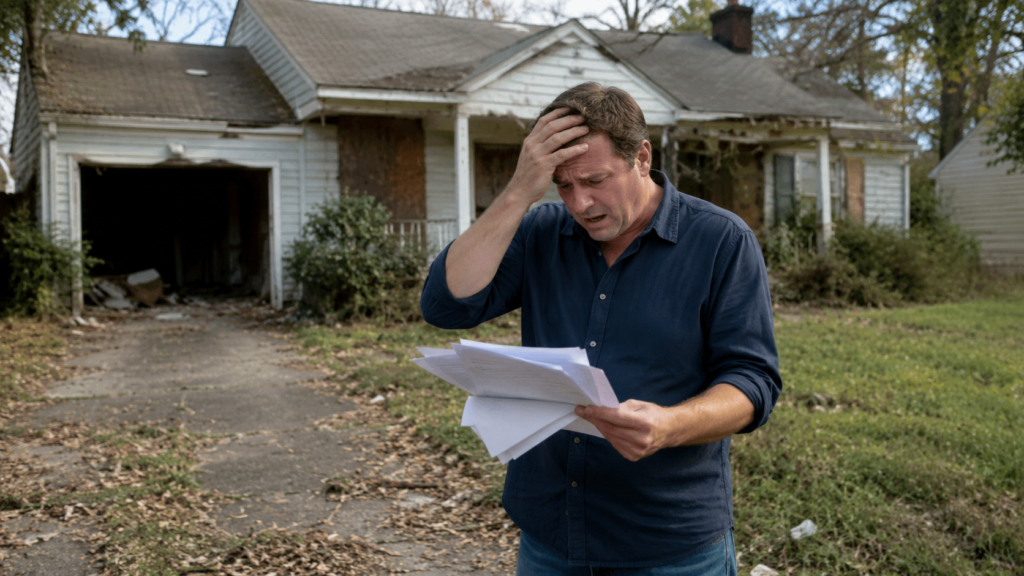
The first mistake is assuming that more foreclosures automatically mean easy profits. Rising distress can create more leads, but it can also signal weaker buyer demand and more fragile household finances.
The second mistake is using outdated comps. In a rate-sensitive market, older comparable sales can overstate current resale value. Investors should prioritize recent pending and closed sales when available.
The third mistake is underestimating holding costs. A project that takes two months longer than expected can lose much of its profit if financing, insurance, taxes, utilities, and maintenance are high.
The fourth mistake is ignoring the end buyer. A renovation should match the likely buyer’s budget and expectations. Luxury finishes in an entry-level affordability-constrained market may not produce a good return.
The fifth mistake is relying on a single exit strategy. The best foreclosure deals often have multiple exits. A property that can work as a flip, rental, or wholesale deal gives the investor more flexibility if market conditions shift.
How Foreclosure Flips Readers Can Approach This Market
The current market requires a disciplined process.
Start with lead sourcing. Look for pre-foreclosures, foreclosure auctions, REOs, short sale candidates, and distressed sellers with equity. Use listing platforms, public records, local agents, attorneys, wholesalers, and direct outreach where appropriate.
Then verify the facts. Do not rely on a single data source. Check county records, liens, taxes, ownership, foreclosure status, and property condition.
Next, analyze the deal conservatively. Use current rates, current repair costs, realistic resale assumptions, and a longer holding period than the best-case scenario.
Finally, match the strategy to the property. Not every distressed property should be flipped. Some may be better suited for BRRRR, short sale negotiation, wholesale assignment, or no offer at all.
The investors who do best in this environment will not be the ones chasing every distressed lead. They will be the ones who understand affordability, financing, repair risk, and exit demand better than their competition.
Wondering Where the Savviest Investors Find Their Best Deals?
Access the largest database of foreclosure properties nationwide and discover below-market deals before other investors. Start your search today!
You might also like:
 Foreclosure Investing: How to Buy, Analyze, and Profit From Foreclosed Homes
 Pre-Foreclosure vs Foreclosure: What Investors Need to Know
 Foreclosure Investing for Beginners: Complete Step-by-Step Guide
 How to Find Foreclosure Properties Before They Hit the Market
 Pre-Foreclosure Leads for Investors: Where to Find the Best Deals
 Finding Your First Foreclosure Deal: Tips for New Investors