
Pre-Foreclosure vs Foreclosure: What Investors Need to Know
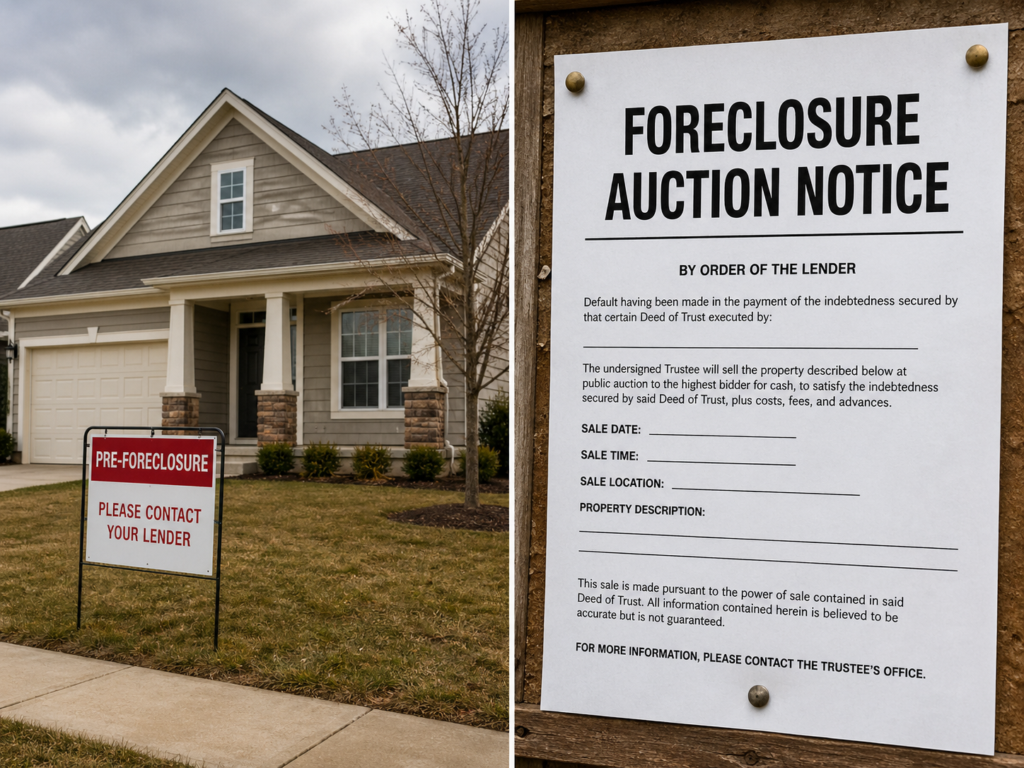
Pre-foreclosure and foreclosure are often used as if they mean the same thing. They do not. For real estate investors, the difference matters because each stage has a different owner, process, risk profile, and acquisition strategy.
In pre-foreclosure, the homeowner usually still owns the property. The lender has started or may soon start foreclosure because of missed payments or default, but the property has not necessarily been sold. In foreclosure, the legal process has moved further. The property may be scheduled for auction, sold at auction, or eventually become bank-owned.
Understanding the distinction helps investors avoid bad assumptions. A pre-foreclosure property is not automatically available. A foreclosure auction property is not automatically a bargain. Each stage requires its own due diligence.
What Is Pre-Foreclosure?
Pre-foreclosure is the stage after mortgage default but before the completed foreclosure sale. The owner may have received notices from the lender, and a public filing may have been recorded. The specific document depends on state law.
The Consumer Financial Protection Bureau explains that foreclosure processes differ by state, with some states using judicial foreclosure and others allowing non-judicial foreclosure. That difference affects what investors see in public records.
In some states, pre-foreclosure may be indicated by a notice of default. In others, it may be indicated by a court complaint or lis pendens. In all cases, the investor should confirm the current status before assuming the property is still active.
What Is Foreclosure?
Foreclosure is the legal process a lender uses to recover the property or force a sale after the borrower defaults. If the borrower does not cure the default, sell the property, negotiate a workout, or otherwise resolve the issue, the property may be sold through a court-supervised sale, sheriff sale, trustee sale, or similar process.
At this stage, investors may be dealing less with the homeowner and more with an auction process, trustee, sheriff, lender, or later the bank as an REO owner.
Foreclosure investing can be attractive, but it often has more rigid rules. Auction buyers may need cash or certified funds. Inspection access may be limited. Title risks may be significant. Competition may be high.
Key Difference: Who Controls the Sale?

The largest practical difference is control.
In pre-foreclosure, the homeowner typically still controls whether to sell, subject to liens and lender payoff requirements. This means an investor may negotiate directly with the owner and potentially use a standard purchase contract.
In foreclosure, the sale may be controlled by the court, trustee, sheriff, or lender. The homeowner’s ability to negotiate may be limited or gone, depending on the stage and state law.
This affects everything: communication, pricing, inspections, closing timeline, and legal risk.
Key Difference: Due Diligence
Pre-foreclosure usually allows more normal due diligence if the owner cooperates. The investor may be able to inspect the property, review seller disclosures where applicable, order title work, negotiate repairs, and arrange financing.
Foreclosure auction purchases often provide less due diligence. Some auctions sell properties as-is. Some do not guarantee vacant possession. Some require immediate deposits or quick payment. Some leave the buyer responsible for certain liens or occupancy issues.
This does not mean foreclosure auctions are bad. It means they are different. Investors need experience, cash readiness, and title knowledge.
Key Difference: Risk Profile
Pre-foreclosure risks include stale data, owner unwillingness, payoff surprises, liens, postponed auctions, short sale complications, and emotional negotiations.
Foreclosure auction risks include limited inspection access, title issues, redemption rights where applicable, occupancy problems, repair uncertainty, and competitive bidding.
Neither stage is automatically safer. The risk depends on the specific property, the state process, the title condition, and the investor’s preparation.
Important Documents Investors Should Know
Notice of Default
A notice of default is common in some non-judicial foreclosure processes. Cornell’s Legal Information Institute defines a notice of default as a notice that a borrower has missed required mortgage payments and that the lender may accelerate the loan or begin foreclosure if the default is not cured.
For investors, this can be an early signal. However, a notice of default does not mean the owner wants to sell.
Lis Pendens
In judicial foreclosure states, a lis pendens may be important. A lis pendens is a notice recorded in the chain of title showing pending litigation that may affect ownership or an interest in the property.
For investors, this often means a foreclosure lawsuit or related title litigation is underway. It should be reviewed carefully.
Notice of Sale
A notice of sale usually indicates a later stage. The property may already be scheduled for auction. At this point, time is shorter, and the investor must move quickly if trying to buy before sale.
Which Stage Is Better for Investors?
Pre-foreclosure may be better for investors who want to negotiate directly with owners, inspect properties, structure creative timelines, or avoid auction competition. It can also be useful for investors focused on acquisitions before properties become widely visible.
Foreclosure auctions may be better for investors with cash, experience, title research capability, and a tolerance for uncertainty. Auctions can produce discounts, but they can also produce costly mistakes.
The better stage depends on the investor’s skill set.
Pre-Foreclosure May Fit Investors Who Prefer:
- Direct negotiation
- More due diligence
- Potential inspection access
- Seller problem-solving
- Flexible closing structures
- Less auction pressure
Foreclosure May Fit Investors Who Prefer:
- Auction bidding
- Cash purchases
- Fast decisions
- High-volume research
- As-is acquisitions
- Competitive distressed sales
Homeowner Options Affect Investor Strategy
Investors should remember that many pre-foreclosure situations never become foreclosure sales. Homeowners may reinstate the loan, obtain a modification, sell voluntarily, refinance, file bankruptcy, or use housing counseling resources. USA.gov provides official guidance for homeowners seeking to avoid foreclosure, including contacting the lender early and exploring counseling options.
For investors, this means pre-foreclosure data should be treated as a lead source, not a prediction. Some leads will disappear because the owner solves the problem without selling.
How to Choose the Right Strategy
If you are new to distressed property investing, pre-foreclosure may be easier to understand because it resembles a negotiated purchase. You still need to understand liens, payoffs, deadlines, and owner communication, but you may have more room to conduct due diligence.
If you are experienced and well-capitalized, foreclosure auctions may offer opportunities, but the margin for error is smaller. Auction rules vary, and mistakes can be expensive.
A balanced investor may track both stages. Pre-foreclosure research can identify early opportunities, while foreclosure auction tracking can show which properties eventually reach sale.
Final Thoughts
Pre-foreclosure and foreclosure are connected, but they are not the same. Pre-foreclosure is usually an earlier stage where the owner may still sell voluntarily. Foreclosure is the legal process that can lead to auction or lender ownership.
For investors, the difference affects strategy. Pre-foreclosure requires communication, verification, and negotiation. Foreclosure requires auction discipline, title research, and cash readiness. Both can produce opportunities, but only when the investor understands the process and respects the risks.
You might also like:
 Top Pre-Foreclosure Markets for 2026
 Foreclosure Investing for Beginners: Complete Step-by-Step Guide
 How to Find Foreclosure Properties Before They Hit the Market
 Pre-Foreclosure Leads for Investors: Where to Find the Best Deals
 Title Search for Foreclosure Properties: Investor Essentials
 Foreclosure Investing: How to Buy, Analyze, and Profit From Foreclosed Homes