
From Gut Rehab to New Construction
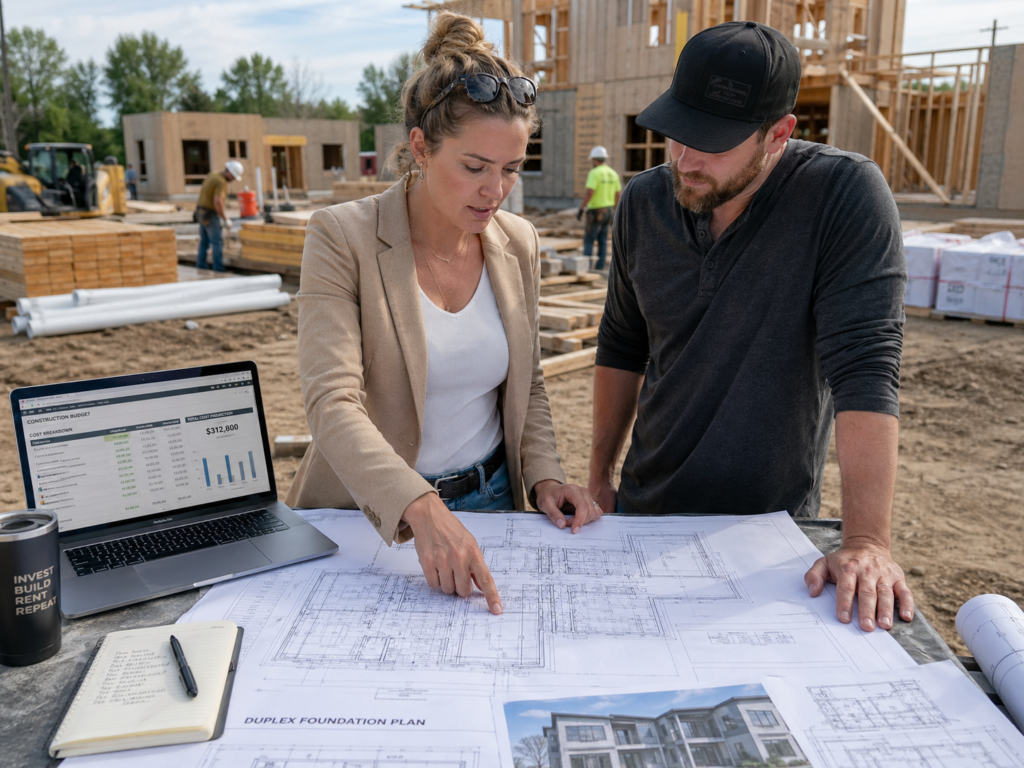
There comes a point when another gut rehab starts to feel less like an investment strategy and more like punishment.
The first few projects may be exciting. There is a distressed house, a big vision, a renovation plan, and the possibility of a strong profit at the end. The investor learns how to price repairs, manage contractors, negotiate with sellers, and push through problems.
But after enough old houses, the pattern becomes familiar.
Termite damage. Mold. Bad framing. Asbestos siding. Foundation problems. Mystery plumbing. Electrical work that should never have passed inspection. Prior renovations that create more problems than they solved. Every wall opened reveals another surprise.
At some point, an investor has to ask whether the model is scalable.
For many rehabbers, the better long-term path may be moving from gut rehabs to new construction. Not all at once. Not recklessly. But through a controlled transition that uses the construction knowledge already gained from rehabbing while filling in the missing pieces.
Why Gut Rehabs Burn Investors Out
Gut rehabs can be profitable, but they are often unpredictable.
Older houses carry hidden risk. A 110-year-old property may have structural problems, water damage, outdated systems, environmental issues, and decades of prior repairs. Even a careful inspection may not catch everything before demolition begins.
Mold and moisture are common examples. The CDC advises that after water damage, drying the home and removing water-damaged materials are key steps for preventing mold, and visible mold should be removed rather than covered up. That is useful safety guidance, but for a rehabber it also points to the broader issue: old houses often contain problems that are expensive, disruptive, and impossible to ignore once discovered. CDC mold cleanup guidance is a practical reference for understanding how seriously moisture and mold issues should be treated.
Asbestos can create another layer of complexity. EPA guidance states that demolitions subject to asbestos NESHAP rules require a thorough inspection before demolition or renovation begins. In practical terms, that means certain projects may require surveys, notifications, licensed professionals, and additional compliance steps before work can proceed. EPA asbestos demolition guidance is a useful reminder that older buildings can carry regulatory risk as well as construction risk.
The investor may start with a rehab budget. Then the house starts negotiating back.
The Scalability Problem
The issue is not that gut rehabs never work. Many do.
The issue is that each project can become its own custom battle.
One house has foundation problems. Another has termite damage. Another has a failed sewer line. Another has knob-and-tube wiring. Another has roof framing that was altered by a previous owner. Another has asbestos siding that turns a simple exterior scope into a compliance-heavy process.
That makes repeatability difficult.
A scalable real estate business needs systems. It needs cost predictability, schedule control, repeatable scopes, reliable trade sequencing, and project data that can be used on the next deal. Gut rehabs often fight against that structure because so much of the project depends on what is discovered after purchase.
For investors who want to grow beyond one-off projects, this can become exhausting.
The Accidental Path to New Construction
Sometimes the transition starts by accident.
An investor buys the house next door, tears it down, and suddenly owns a vacant lot. The original plan may not have been development. It may have been cleanup, land banking, or solving a problem property. Then an architect asks a simple question: why not build a duplex on it?
That question can change the investor’s path.
The next step is zoning. If the lot allows a duplex by right, the project may become much more approachable. Instead of trying to rescue another obsolete structure, the investor can build something new, functional, and easier to operate long term.
This is where rehab experience becomes valuable. A seasoned rehabber already understands a large part of construction. Once the foundation is in place, the project begins to look familiar: framing, rough plumbing, rough electrical, HVAC, insulation, drywall, finishes, punch list, and final inspections.
The intimidating part is usually the first phase.
The First Phase Learning Curve
For many rehabbers, the knowledge gap in new construction is not the entire build. It is the beginning.
Site work. Utility connections. Grading. Excavation. Footers. Foundation walls. Slab or crawlspace decisions. Drainage. Soil conditions. Elevations. Inspections before concrete. Coordination with engineers, surveyors, utility providers, and building officials.
That first phase feels different because it is not a normal rehab scope. In a rehab, the house already stands. In new construction, the investor has to create the platform that everything else depends on.
Foundation work also has to be taken seriously. The International Code Council explains that the International Residential Code provides requirements for footings and foundation walls and that foundations must be evaluated based on soil type and drainage patterns. That is not abstract code language. It is the base of the entire project. ICC’s foundation performance overview is a useful reference for why this stage requires careful execution.
A Smarter Transition Strategy
One practical solution is to hire an experienced general contractor for only the first phase of the project.
The investor does not have to turn over the entire build. Instead, the GC can be hired on a cost-plus basis for the early stage: site work, utilities, grading, footers, and foundation.
Once the foundation is complete, the investor can take over the part of the project that feels more familiar.
This creates a controlled learning model.
The GC handles the highest-uncertainty phase. The investor stays involved, observes the process, asks questions, tracks costs, and learns how the early-stage work is sequenced. Then, once the project reaches the vertical construction phase, the investor resumes more direct control.
For an experienced rehabber, this can be a bridge between full-service GC dependency and reckless self-performance.
Why Cost-Plus Can Make Sense for the First Phase
A cost-plus arrangement means the investor pays the actual cost of the work plus an agreed-upon fee or markup to the contractor.
This structure can make sense when the scope has uncertainty, especially during early site and foundation work. It can also align the relationship differently from a hard fixed bid, although it requires trust, documentation, and transparency.
The investor should still insist on clear reporting. Cost-plus does not mean blank check.
The agreement should define the contractor’s fee, reimbursable costs, documentation requirements, approval process, schedule expectations, subcontractor bidding process, and decision authority. The investor should know what is included, what is excluded, and how changes are approved.
A structured budget tool can help here. A platform such as Rehab Valuator can help organize the development budget, track projected versus actual costs, and keep the first phase from becoming a pile of invoices and verbal updates.
Shadow the Contractor and Learn the Sequence
The real value of this approach is not only getting the first duplex built. It is learning how to repeat the process.
During the first phase, the investor should be on site as much as possible. Not to micromanage every worker, but to understand the sequence.
When does the surveyor come in? When is erosion control installed? How is the building pad prepared? What utility work has to happen before the foundation? What inspections are required before concrete? What does the excavator need from the plans? How are setbacks verified? What causes delays? Which decisions should have been made earlier?
This job-site education is difficult to get from a book or spreadsheet.
By the second duplex, the investor is no longer seeing everything for the first time. The vocabulary improves. The sequencing makes more sense. The cost categories become clearer. The investor begins to know which questions to ask before the problem appears.
That is how confidence is built.
Why New Construction Can Feel More Predictable

New construction still has risk. It is not easy. It can involve permitting delays, utility complications, weather, material cost changes, labor issues, inspection problems, and financing pressure.
But compared with old-house gut rehabs, the problems can be more predictable.
There is no 110-year-old framing hidden behind plaster. There is no surprise knob-and-tube wiring. There is no mystery addition built by a prior owner. There is no termite-damaged sill plate waiting inside the wall. There is no mold-covered drywall from a leak nobody disclosed.
The investor is building from plans.
That does not eliminate mistakes, but it gives the project a cleaner structure. The scope can be standardized. Unit layouts can be repeated. Finish packages can be reused. Trade sequencing can become more consistent. Actual costs from one duplex can inform the next duplex.
This is where the model begins to scale.
Why New Construction Can Be More Profitable
New construction can be profitable because the investor may create the asset instead of buying someone else’s finished product.
A developer can capture the spread between total project cost and completed value. If the property is held as a rental, the investor may also create long-term cash flow and equity. If the project is repeated, the investor can improve pricing, scheduling, design, and financing with each build.
That is different from rehabbing one old house after another.
A rehabber is often fighting the existing structure. A small developer is creating the structure.
For investors who want more help understanding this transition, including development analysis, budgeting, funding presentations, and project strategy, the Inner Circle Mentorship may be worth reviewing.
Keep Control Without Doing Everything Alone
Some investors hesitate to move into new construction because they fear losing control to a full-service GC.
That concern is understandable. Many experienced rehabbers are hands-on. They know how to manage trades, source materials, push schedules, and watch costs. Turning the entire project over to someone else can feel expensive and uncomfortable.
But the choice is not binary.
An investor can use specialized help where it matters most and still control the rest of the project. Hiring a GC for the foundation phase is one example. Hiring an experienced sitework contractor, consulting with a construction manager, or paying for targeted advisory support are other possibilities.
The goal is not to prove independence. The goal is to execute the project well.
Build a Repeatable Project System
The first new construction project should not be treated as a one-off experiment. It should become the template for the next project.
The investor should document the budget, timeline, subcontractors, inspection sequence, utility costs, sitework issues, foundation costs, material choices, and final performance. After completion, the investor should compare projected costs with actual costs.
That post-project review is where the learning compounds.
Which line items were underestimated? Which trade bids were reliable? Which decisions created delays? Which finish choices worked well? Which design features improved rentability? What would be changed on the next duplex?
For investors who want to test a more organized workflow, the 14-Day $1 Trial of Rehab Valuator Premium can help structure deal analysis, budgeting, and project reporting from the beginning.
The Bottom Line
Moving from rehabbing to new construction can feel like a major leap, but it does not have to be reckless.
A rehabber already understands much of the vertical construction process. The real learning curve is often the first phase: site work, utilities, grading, footers, and foundation. By hiring an experienced GC for that phase, paying cost-plus, shadowing the process, and then taking over after the foundation is complete, an investor can transition into development without giving up all control.
For burned-out rehabbers, this can be a major shift.
Gut rehabs can feel like riding an old bicycle over broken pavement. Every project brings another surprise. New construction, when properly planned, can feel faster, smoother, more repeatable, and more scalable.
The investor still has to manage risk. But the risk becomes more visible, more organized, and easier to improve with each project.
For those tired of chasing surprises inside old walls, new construction may be the next logical step.
You might also like:
 Rental Property Cash Flow Analysis: Calculating True Returns
 Value-Add Renovations for Rentals That Boost Monthly Income
 Calculating Cash Flow for Rental Properties: Step-by-Step
 Best Renovations for BRRRR Rentals to Maximize Rent
 Expenses to Include in Cash Flow Analysis for BRRRR Properties
 BRRRR Investing: How to Buy, Rehab, Rent, Refinance, and Repeat