
What Happens After You Win a Foreclosure Auction
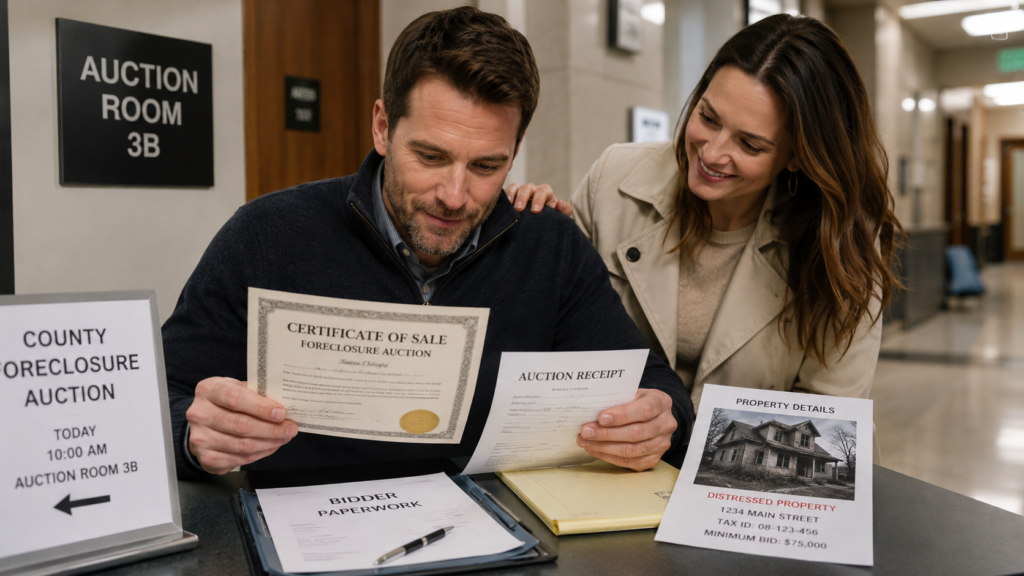
Winning the bid is not the finish line. For investors, the real work begins after you win a foreclosure auction. The next few days can determine whether the deal stays profitable or starts absorbing unnecessary costs.
Your post-auction checklist should cover payment deadlines, sale documents, deed recording, insurance, possession, utilities, eviction risk, and rehab planning. Missing one step can delay your timeline or weaken your exit strategy.
Stay Ahead of the Next Deal
Markets move quickly, and good foreclosure opportunities often require fast analysis. Subscribe to our twice-weekly newsletter for investor-focused tips, tools, and market insights designed to help you make better decisions.
Confirm the Payment Deadline Immediately
The first priority is payment. Foreclosure auctions often require a deposit before bidding and full payment soon after the sale. Auction.com notes that, in many states, full payment may be due at the auction event, commonly by cashier’s check, although property-specific rules can vary. This makes pre-auction funding preparation essential, not optional. Auction payment requirements should be built into your bidding plan before auction day.
Why Payment Timing Affects Profit
If you miss the deadline, you may lose your deposit, the property, or future bidding privileges. Even if the auction allows a short balance window, that window may not be long enough to arrange traditional financing. Most investors need cash, hard money, private capital, or a verified line of credit ready before bidding.
Get the Sale Documents and Track Title Transfer
After payment, the auction process usually moves to sale confirmation, a certificate of sale, trustee’s deed, sheriff’s deed, or similar transfer document depending on the state and auction type.
Auction.com explains that winning bidders generally receive a certificate of sale after deposit or full payment, but state procedures control the exact process. Certificate of sale procedures are part of the closing timeline, not just paperwork.
Recordation Matters
You may not be able to resell, refinance, or obtain clean title insurance until the deed or certificate is properly recorded. Before you spend heavily on the property, confirm whether there are objection periods, redemption rights, court confirmation requirements, or surviving liens.
Secure Insurance Before You Take Possession
Do not assume a standard homeowner policy will fit a foreclosure purchase. The property may be vacant, damaged, occupied, or under renovation.
You may need vacant property insurance, builder’s risk coverage, landlord insurance, or liability protection depending on the condition and your intended exit.
This step matters because foreclosure properties can have broken windows, roof leaks, vandalism risk, or unsafe interior conditions. A cheap policy that excludes the actual risk is not protection.
Handle Possession and Occupancy Carefully
Winning the auction does not always mean you can walk in the next day. The property may be occupied by the former owner, a tenant, an unauthorized occupant, or no one at all.
Zillow’s foreclosure buying guidance notes that distressed purchases can be more complicated than standard transactions, which is especially true once possession and condition issues surface. Foreclosure purchase complications should be reflected in both your timeline and budget.
Eviction Risk Can Change the Numbers
If someone remains in the property, avoid self-help eviction tactics. Do not change locks, remove belongings, shut off utilities, or pressure occupants without understanding local law. Depending on the situation, you may need a formal eviction, writ of possession, tenant notice, or cash-for-keys agreement.
Transfer Utilities and Inspect Before Rehab
Once you can lawfully access the property, transfer utilities carefully. Water, electricity, gas, and sewer issues can expose hidden problems.
A simple walkthrough is not enough. Before finalizing your rehab scope, inspect the roof, plumbing, electrical systems, HVAC, foundation, drainage, environmental hazards, and code violations.
Build the Rehab Plan Around Reality
Your pre-auction repair estimate was probably based on limited access. After possession, update your scope of work, timeline, contractor bids, and resale plan. If the property is worse than expected, revise the budget before starting cosmetic upgrades.
The Investor Takeaway
After winning a foreclosure auction, move quickly but do not skip process. Confirm payment deadlines, track title transfer, secure insurance, handle possession legally, transfer utilities, and rebuild your rehab budget after inspection.
The strongest foreclosure investors do not treat the winning bid as the deal. They treat it as the starting point for execution.
Looking for Deeply Discounted Properties Others Don’t Know About?
Don’t miss out on the next great investment opportunity! Search millions of foreclosure listings and get daily alerts for new properties in your target market.
You might also like:
 How to Analyze a Multifamily Foreclosure Deal
 Judicial vs Non-Judicial Foreclosure for Investors
 How to Set a Foreclosure Auction Maximum Bid
 Title Search for Foreclosure Properties: Investor Essentials
 Foreclosure Investing: How to Buy, Analyze, and Profit From Foreclosed Homes
 Housing Affordability Crisis and Foreclosure Investing