
Mortgage Loss Mitigation and Foreclosure When Workouts Fail
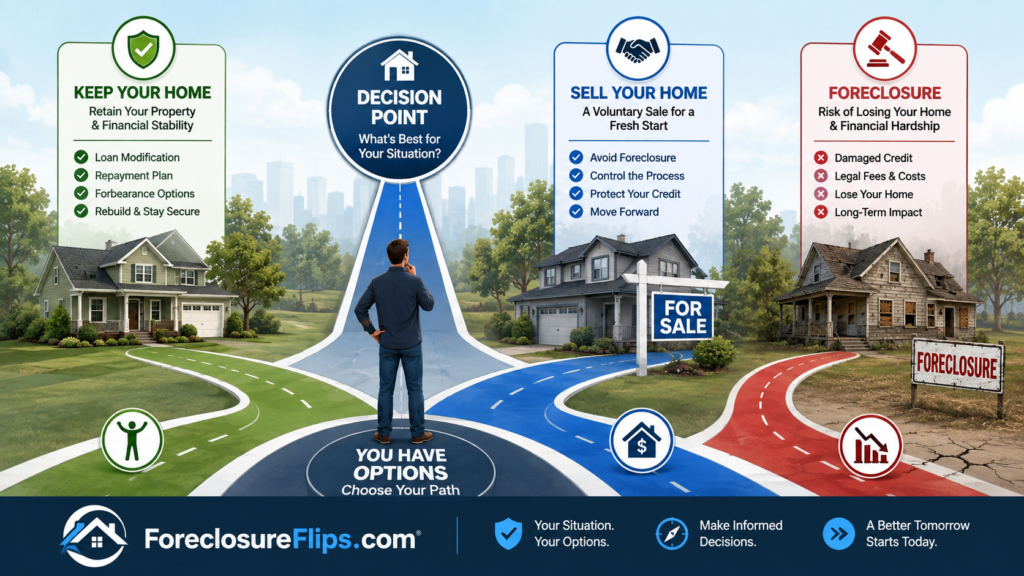
A homeowner can spend months trying to save a delinquent mortgage. Then a modification is denied, a trial payment plan fails, or the proposed payment still exceeds what the household can afford.
At that point, the owner’s choices begin to narrow. Keeping the property may give way to selling it before the lender reaches foreclosure sale.
For a pre-foreclosure investor, mortgage loss mitigation and foreclosure can overlap during this period. Understanding that overlap helps you identify properties where the owner still has time, equity, and a realistic path to sell before auction.
Get Foreclosure Investing Insights Twice a Week
Subscribe to the Foreclosure Flips newsletter for practical ideas on finding deals, analyzing opportunities, and understanding foreclosure-related investing strategies. We send concise updates twice a week so you can stay informed without adding more noise to your inbox.
Where Loss Mitigation Fits in the Foreclosure Process
Loss mitigation is the servicer’s process for evaluating ways to resolve mortgage delinquency.
Depending on the loan and borrower, available options may include repayment plans, forbearance, loan modifications, partial claims, payment-reduction programs, or other home-retention solutions.
FHA’s current loss mitigation program includes several permanent home-retention options and may require a trial payment plan before final approval. FHA also provides home-disposition options for eligible borrowers who can no longer retain the property, including a pre-foreclosure sale.
A successful workout can cure or restructure the default and keep the property out of foreclosure. An unsuccessful workout leaves fewer ways to resolve the delinquency.
For investors, that difference affects timing. A borrower pursuing a workable modification may have little interest in selling. The same borrower may reconsider after learning that the available payment still exceeds the household budget.
What It Means When a Workout Stops Working
Loss mitigation ends differently from one borrower to another.
One homeowner may receive a denial after completing the servicer’s review. Another may qualify for a modification but find the new payment unaffordable. A third may enter a trial payment plan and then miss the required payments.
The Consumer Financial Protection Bureau’s foreclosure guidance explains that federal servicing rules generally prevent a servicer from making the first foreclosure filing until the borrower is more than 120 days delinquent, subject to specified exceptions. A complete loss-mitigation application can also affect foreclosure activity while the servicer completes its review.
State law then controls much of the foreclosure procedure. Judicial filings, statutory notices, mediation, bankruptcy, and sale postponements can all change the timeline.
Instead of treating a failed workout as a fixed countdown to auction, treat it as a shift in the owner’s available choices.
The Decision Can Move From Retaining the Home to Selling It
Consider a homeowner who is five months behind.
The servicer reviews the loan for modification. The proposed payment comes down, but household income has also fallen and the new amount remains unaffordable.
The property is worth about $325,000. The mortgage balance is approximately $245,000.
Before the review, the owner’s goal may have been to keep the home. After the workout fails, selling may offer a better financial outcome than allowing the foreclosure to continue.
That shift can create a pre-foreclosure opportunity.
A voluntary sale may allow the homeowner to satisfy the mortgage, preserve remaining equity, and control the timing of the move. An investor may be able to purchase the property if the price works after repairs, liens, closing costs, and the owner’s required proceeds.
The numbers still decide whether a deal exists. Financial distress alone cannot create enough margin for a purchase.
FHA Changed Its Loss-Mitigation Rules in 2026
FHA updated its requirements in Mortgagee Letter 2026-08, issued June 23, 2026. Mortgagees may implement the changes immediately, with mandatory implementation beginning no later than September 21, 2026.
Among the changes, FHA added another condition under which a trial payment plan can fail. If a borrower repeatedly fails to accept a TPP agreement for a third time during the same default episode, the mortgagee can treat the plan as failed under the revised requirements.
HUD also addressed repeat loss-mitigation reviews. In certain circumstances, a mortgagee can move forward after completing the required review unless the borrower’s circumstances change in a way that affects eligibility for another option.
When a borrower fails a TPP and qualifies for no other permanent home-retention option, FHA requires evaluation for home-disposition alternatives. HUD also provides an automatic 90-day extension for the mortgagee to approve another loss-mitigation option or to commence or recommence foreclosure after a TPP failure.
The same mortgagee letter states that foreclosure initiation may occur after at least three full monthly mortgage payments are unpaid when specified FHA review requirements have been satisfied. Regulation X still imposes the separate federal 120-day rule governing the first foreclosure notice or filing in most cases.
For investors, the 2026 change adds another reason to watch FHA defaults closely. Failed trial plans and completed reviews can move some borrowers toward a sale decision before the property reaches auction.
County Records Show Only Part of the Story
Public records can confirm that formal foreclosure activity has begun.
Depending on the state, you may see a notice of default, lis pendens, foreclosure complaint, trustee notice, or scheduled sale notice. Those records establish legal status and dates.
They rarely show the borrower’s complete servicing history.
A county filing usually will not tell you whether the homeowner previously applied for a modification, completed a trial payment plan, received a denial, or remains under review for another option.
Build your lead research around facts you can verify.
Confirm the foreclosure filing. Check whether a sale date has been scheduled. Review ownership history. Estimate property value. Search for junior liens, judgments, delinquent taxes, HOA balances, probate issues, or other claims that could affect closing.
When you speak with the owner, the servicing history can help fill in the remaining timeline.
Equity Determines Whether a Sale Can Solve the Default
A delinquent borrower can still have substantial equity.
Suppose a property has a conservative market value of $325,000 and the first-mortgage payoff is $238,000. The apparent spread is $87,000.
Actual equity available at closing may be much lower.
Past-due interest, foreclosure fees, property taxes, HOA balances, junior mortgages, judgments, commissions, title charges, and other closing costs can consume part of the difference.
Repair costs affect your side of the transaction as well.
If the home needs $55,000 in work and your resale assumptions require a purchase price below the seller’s net proceeds, the property may fail your buy box despite substantial gross equity.
Start with conservative value. Then work backward through every claim against the property and every cost required to acquire, repair, hold, and resell it.
Time Becomes More Valuable as Foreclosure Advances
Early-stage pre-foreclosure leads can give you room for research, title work, inspections, and financing.
A scheduled sale changes the pace.
Title work may need to begin immediately. A lender payoff must be obtained. Financing needs to be ready. Ownership disputes, probate, bankruptcy, divorce, or junior liens can consume days or weeks.
Verify auction dates through the trustee, court, county, sheriff, or other authority responsible for the sale. A lead-list date can help with discovery, while the official source should control your closing schedule.
The Foreclosure Flips Investor Foreclosure Funnel explains how a delinquent mortgage can progress through pre-foreclosure, auction, REO, and resale. Foreclosure.com can also help you research pre-foreclosure, auction, and bank-owned properties in markets where activity is increasing.
Prioritize Leads Where a Sale Can Still Work
Every foreclosure filing has urgency. Only some produce viable acquisitions.
Start with five questions:
- Does the property have enough equity after all liens and closing costs?
- Is there enough time to complete title work and close before the scheduled sale?
- Does the property fit your target price, location, and renovation profile?
- Can you fund the purchase within the available timeline?
- Is the owner willing to consider a sale?
A property that clears all five tests deserves more attention than a lead with thin equity, unclear ownership, major title defects, or a sale date too close for a responsible closing.
This approach also keeps higher foreclosure volume from turning into wasted marketing spend.
More filings can increase the number of names in your database without increasing the number of deals that meet your acquisition criteria.
When the Available Options Narrow
Mortgage loss mitigation and foreclosure intersect most clearly after a borrower loses a workable way to retain the property.
Some owners will still find another solution. Others will sell conventionally, pursue a home-disposition option, file bankruptcy, or continue through foreclosure.
Your job is to determine which properties still have enough time, equity, and title clarity for a purchase.
Confirm the legal status first. Calculate usable equity next. Identify title problems early. Then underwrite the property against current resale values and realistic repair costs.
A homeowner who can no longer afford to keep the property may still have enough control over the timeline to sell it. That period before foreclosure sale can produce some of the strongest pre-foreclosure leads because the owner has both a reason to act and a remaining path to preserve equity.
You might also like:
 Pre-Foreclosure Leads in an Affordability Crisis
 Why FHA Mortgage Delinquency Is a Warning Signal for Investors
 Pre-Foreclosure vs Foreclosure: What Investors Need to Know
 Lease Options for Pre-Foreclosure Properties
 Mortgage Acceleration Clauses and Foreclosure Risk
 How Adjustable-Rate Mortgages Create Distress