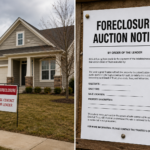
Pre-Foreclosure Leads in an Affordability Crisis

Pre-foreclosure leads can become more important when housing affordability is under pressure.
When homeowners face higher monthly costs, job instability, rising insurance premiums, property tax increases, medical bills, divorce, or other financial stress, some may fall behind on mortgage payments. Not every missed payment becomes a foreclosure. Not every foreclosure notice becomes an investor opportunity. But affordability pressure can increase the number of owners who need to evaluate their options before a property reaches auction.
For real estate investors, that creates both opportunity and responsibility.
A pre-foreclosure lead is not just a data point. It usually represents a homeowner dealing with a serious financial problem. Some owners may be able to reinstate the loan, request forbearance, pursue a loan modification, sell traditionally, or use another foreclosure prevention option. Others may need a faster sale because the property has repairs, limited equity, title complications, subject-to limitations, or a foreclosure deadline.
The investor’s job is not to pressure the owner. The investor’s job is to evaluate whether a sale can solve a real problem while still producing a legitimate investment return.
That requires better lead analysis, better outreach, better underwriting, and more careful communication.
Learn the Strategies Behind Smarter Foreclosure Investing
Get practical foreclosure investing content delivered twice a week, including deal analysis tips, strategy breakdowns, useful tools, and new resources from Foreclosure Flips. Sign up to keep learning and spotting better opportunities.
What Is a Pre-Foreclosure Lead?
A pre-foreclosure lead usually refers to a property where the owner has entered some stage of mortgage default or foreclosure, but the property has not yet been sold at foreclosure auction or taken back by the lender.
The exact process depends on the state. Some states use judicial foreclosure, where the lender files a lawsuit and the process moves through the courts. Other states use nonjudicial foreclosure, where the process may move through notices, trustee actions, and scheduled sale dates outside of court. Timelines, owner rights, redemption periods, notice requirements, and investor restrictions can vary significantly by state.
For investors, this means the phrase “pre-foreclosure” is not enough. The lead needs context.
A homeowner who recently missed a payment is in a very different situation from an owner whose property is scheduled for auction in two weeks. A property with substantial equity is different from one with multiple liens and no realistic sale proceeds. A vacant property is different from an owner-occupied home where the seller is trying to preserve housing stability.
Good investors do not treat all pre-foreclosure leads the same. They sort them by urgency, equity, property condition, owner situation, legal stage, and likely solution.
Why Pre-Foreclosure Leads Matter More During an Affordability Crisis
Affordability pressure can increase the number of homeowners who become financially vulnerable.
A homeowner may have a fixed-rate mortgage and still struggle because other costs have increased. Insurance, property taxes, repairs, utilities, food, transportation, medical expenses, and consumer debt can all strain the household budget. If income falls or a major expense hits at the wrong time, the mortgage can become harder to manage.
Foreclosure activity has been increasing from prior lows. ATTOM’s April 2026 foreclosure report reported 42,430 U.S. properties with a foreclosure filing in April 2026, up 18% from one year earlier. Foreclosure starts rose 12% year over year, while completed foreclosures increased 42%. ATTOM also noted that foreclosure activity remains significantly below pre-pandemic levels, which is important context.
That last point matters. This is not simply a repeat of the Great Financial Crisis. The market has more complexity. Many owners still have equity. Some have low mortgage rates but high non-mortgage costs. Some need time more than a deep-discount sale. Others may be unable to sell because liens, repairs, or local market conditions make the numbers difficult.
For investors, the opportunity is not “more distress.” The opportunity is better identification of which situations are actually solvable.
A Pre-Foreclosure Lead Is Not Automatically a Deal
One of the biggest mistakes investors make is assuming that every pre-foreclosure lead is a motivated seller lead.
Some owners are behind temporarily and will cure the default. Some are already working with their lender. Some will sell through a real estate agent. Some owe too much for an investor purchase to work. Some have legal issues that make the transaction impractical. Some simply do not want to sell.
That is why lead quality matters more than lead volume.
A large list of pre-foreclosure names may look valuable, but the real value is in finding the small percentage of properties where the owner has a problem an investor can help solve and the deal still works financially.
A useful pre-foreclosure lead usually has some combination of equity, urgency, property condition issues, seller openness, and a timeline that allows a lawful transaction. If those factors are missing, the investor may be chasing activity rather than opportunity.
This is where platforms such as Foreclosure.com can help investors begin the search. A foreclosure lead source can identify properties worth reviewing, but the investor still needs to verify the foreclosure status, ownership, liens, equity, property condition, and local process before making contact or submitting an offer.
Equity Is the First Filter
Equity is usually the first major filter in pre-foreclosure investing.
If the owner has meaningful equity, a sale may solve several problems at once. The homeowner may be able to pay off the loan, avoid a completed foreclosure, preserve some remaining proceeds, and move on with less long-term financial damage. The investor may be able to buy at a discount that reflects repair needs, speed, certainty, or transaction complexity.
If there is little or no equity, a standard investor purchase may not work. The owner may owe more than the property is worth after repairs and selling costs. There may be unpaid taxes, HOA dues, municipal liens, judgments, second mortgages, or other claims that reduce or eliminate the seller’s proceeds.
That does not always mean there is no solution. It may mean the situation belongs in a different category, such as short sale analysis, foreclosure prevention, legal review, or lender negotiation. But it does mean the investor should not assume the property can be bought profitably.
Equity analysis should be conservative. Investors should avoid inflating the property’s value just to make the deal look possible. The as-is value, repair needs, closing costs, liens, and foreclosure timeline all matter.
The Timeline Can Make or Break the Opportunity
Pre-foreclosure investing is highly time-sensitive.
A property that is early in the process may give the owner and investor time to evaluate options, inspect the property, clear title issues, negotiate terms, and close properly. A property close to sale may leave little room for mistakes. Title problems, payoff delays, lender response time, probate issues, bankruptcy filings, or missing owners can make a quick closing difficult.
The timeline also affects seller decision-making. A homeowner who just received an early notice may not be ready to sell. A homeowner facing an upcoming auction may need a faster answer but may also be under more pressure. That pressure increases the need for careful, ethical communication.
Investors should understand the local foreclosure process before pursuing leads. The rules are not the same everywhere. Judicial foreclosure timelines may differ significantly from nonjudicial timelines. Some states have redemption periods. Some have specific distressed-property protection laws. Some restrict certain investor practices involving homeowners in foreclosure.
A pre-foreclosure strategy that works in one state may create legal risk in another.
Ethical Outreach Is Not Optional
Pre-foreclosure outreach requires a different tone from ordinary seller marketing.
A homeowner in pre-foreclosure may be embarrassed, overwhelmed, skeptical, or angry. Some have received calls, letters, texts, or visits from multiple investors. Others may be receiving confusing information from lenders, attorneys, relatives, agents, or online sources.
Investors should communicate clearly and avoid exaggerated promises.
A good outreach message should identify the investor, explain the reason for contact, and offer a conversation without pressure. It should not imply official government, lender, or legal authority. It should not guarantee that the investor can stop foreclosure. It should not hide the fact that the investor is seeking to buy the property.
Ethical outreach protects both sides. It gives the homeowner a clearer picture of who is contacting them, and it reduces the investor’s risk of complaints, misunderstandings, or regulatory problems.
Homeowners also have legitimate foreclosure prevention options. HUD advises homeowners not to ignore the problem and to contact their lender as soon as they realize they may have trouble paying, because lenders may have options to help borrowers through difficult financial periods. HUD’s foreclosure avoidance guidance is a useful reminder that selling to an investor is only one possible path.
For investors, that does not mean avoiding pre-foreclosures. It means approaching them professionally.
Build Your Investing Knowledge One Email at a Time
Foreclosure investing rewards preparation. Join our 2X week newsletter for straightforward guidance on pre-foreclosures, short sales, BRRRR, flipping, and other strategies investors use to evaluate distressed property opportunities.
How to Separate Good Leads From Weak Leads
A good pre-foreclosure lead is not defined only by distress. It is defined by the combination of distress, equity, property condition, seller motivation, and a realistic path to closing.
This is one section where a simple review checklist helps. Before spending significant time on a lead, an investor should ask:
- Is the foreclosure status current and verified?
- Does the owner appear to have equity after liens and estimated costs?
- Is there enough time to complete a lawful transaction?
- Does the property condition support an investor discount?
- Is the owner likely to benefit from a sale?
- Can the investor verify title, payoff, taxes, and occupancy?
- Does the exit strategy work under current market conditions?
If several of those answers are unclear, the lead may still be worth monitoring, but it is not yet a strong acquisition target.
The goal is to spend less time chasing names and more time analyzing situations.
Property Condition Often Creates the Real Investor Opening
Many pre-foreclosure owners could list with an agent if the property were clean, financeable, and easy to sell. Investors often become relevant when the property has problems that make a traditional sale harder.
The home may need major repairs. It may have deferred maintenance, code issues, water damage, an old roof, outdated mechanical systems, or tenant occupancy problems. It may not qualify for conventional buyer financing without work. It may need a fast closing that a retail buyer cannot provide.
That is where an investor may be able to offer value.
The discount should be tied to real factors: repair cost, transaction speed, certainty, risk, and the investor’s need for a profit margin. It should not be based solely on the fact that the owner is under pressure.
A fair investor offer still needs to be lower than retail value. But the reasoning should be grounded in the actual economics of the property, not just the owner’s distress.
Higher Rates Affect Pre-Foreclosure Offers
Interest rates matter in pre-foreclosure deals because they affect both the investor’s cost of capital and the final exit.
If the investor plans to flip the property, higher rates may reduce what the end buyer can afford. If the investor plans to hold the property as a rental, higher rates may reduce cash flow after financing. If the investor plans to wholesale the contract, the next buyer will also underwrite with today’s borrowing costs.
That means higher rates usually reduce the maximum safe offer.
The investor may need a larger margin than in a lower-rate market because the project carries more uncertainty. Resale may take longer. Buyer concessions may be needed. Refinance proceeds may be lower. Holding costs may be higher.
This is why lead generation and deal analysis should work together. Finding a motivated seller is not enough. The property still needs to produce a safe spread after repairs, financing, closing costs, holding costs, and exit risk.
A deal analysis platform such as Rehab Valuator can help investors model multiple exit scenarios before making an offer. That is particularly useful when the investor is comparing a flip, rental, BRRRR, or wholesale strategy for the same property.
Seller Options Should Be Part of the Conversation
An investor does not need to become the homeowner’s counselor, attorney, or financial adviser. But the investor should understand that a sale is not the only possible outcome.
Some homeowners may be able to reinstate the loan. Some may qualify for a repayment plan, loan modification, forbearance, or another foreclosure prevention option. The Consumer Financial Protection Bureau explains that forbearance can temporarily pause or reduce mortgage payments, although the missed payments still have to be repaid later. CFPB foreclosure prevention guidance also encourages homeowners to contact their mortgage servicer and seek help early.
This matters because investors should not frame their offer as the only solution unless it truly is. In many situations, it will not be.
A better approach is to be clear about what the investor can and cannot do. The investor may be able to buy as-is, close quickly, avoid repair requirements, or create certainty before a deadline. But the seller should still be free to compare that offer with other options.
That transparency may reduce the number of deals that close, but it improves the quality and durability of the deals that do close.
The Best Pre-Foreclosure Deals Usually Solve Multiple Problems
The strongest pre-foreclosure opportunities often involve more than a low price.
They may involve a seller who needs speed, a property that needs repairs, a title issue that can be resolved, a loan deadline that creates urgency, or a local market where a renovated property still has demand. The investor is not just buying a house. The investor is solving a transaction problem that the normal retail market may not handle well.
For example, an owner with equity may have a property that needs too much work for a typical buyer. Listing the home could take time the owner does not have. An investor may be able to close faster, buy as-is, and give the seller a cleaner exit.
In another case, a property may have enough equity but require careful lien review. An investor who understands title, payoff statements, and closing coordination may be able to move the transaction forward where a casual buyer would not.
In a third case, the home may work as a rental after repairs, but not as a flip. An investor who can adjust the exit strategy may see value where another investor passes.
The common thread is problem-solving. Distress creates the lead. Problem-solving creates the deal.
Local Market Demand Still Controls the Exit
Pre-foreclosure investing starts with the seller, but it ends with the market.
The investor still needs to know who will buy or rent the property after acquisition. A deal that looks attractive at the seller level can fail if the exit market is weak.
For a flip, the investor should understand the likely buyer’s price range, financing type, and monthly payment sensitivity. For a rental, the investor should understand rent levels, tenant demand, vacancy, property taxes, insurance, and maintenance. For a wholesale deal, the investor should understand what local buyers are actually paying for similar opportunities.
National foreclosure data can show broad trends, but local market behavior determines whether the investment works. County filings, auction activity, active listings, price reductions, days on market, rental demand, and employment trends all matter.
The best investors do not buy pre-foreclosures only because the owner is motivated. They buy because the property fits a verified exit strategy.
Common Mistakes With Pre-Foreclosure Leads
The first mistake is relying too heavily on raw lead lists. A list can identify possible opportunities, but it does not verify equity, motivation, condition, title, or exit value.
The second mistake is contacting homeowners without understanding the foreclosure process. This can lead to poor timing, inaccurate messaging, or legal risk.
The third mistake is assuming every distressed owner wants to sell. Some owners want to keep the property and need time, counseling, or lender assistance. Others may sell, but only if the offer is clearly better than their alternatives.
The fourth mistake is ignoring liens and payoff issues. A property can appear to have equity until taxes, HOA balances, second mortgages, judgments, utilities, or municipal charges are reviewed.
The fifth mistake is making offers based on optimistic resale values. In an affordability-stressed market, buyer demand may be thinner than the investor expects.
The sixth mistake is using pressure as a strategy. Pressure may create a signed contract, but it also creates reputational, legal, and ethical risk.
A Practical Pre-Foreclosure Lead Workflow
A practical workflow does not need to be complicated, but it should be consistent.
Start by identifying the lead source and confirming the foreclosure status. Then estimate equity using conservative property value assumptions and available debt information. Review liens, taxes, and ownership records where possible. Study the foreclosure timeline and state-specific rules. Evaluate property condition from public information, exterior observation where lawful, or seller-provided details.
Only after that should the investor decide whether outreach makes sense.
If the owner responds, the conversation should focus on the situation, the property, the timeline, and whether a sale is something the owner is actually considering. If there is a possible fit, the investor can move into inspection, title review, payoff verification, and formal offer analysis.
The final offer should reflect the property’s condition, timeline, risk, and exit strategy. It should also leave the investor with enough margin to handle surprises.
Wondering Where the Savviest Investors Find Their Best Deals?
Access the largest database of foreclosure properties nationwide and discover below-market deals before other investors. Start your search today!