
Foreclosures
Orlando Foreclosure Market 2026

The Orlando foreclosure market is one of the more relevant Florida metros for investors to monitor in 2026 because it combines measurable foreclosure pressure with a housing market that is no longer moving with the same urgency seen during the post-pandemic boom. That does not mean Orlando is a simple distressed-property market. The metro still…
Read MoreTampa–St. Petersburg Foreclosure Market 2026
The Tampa–St. Petersburg foreclosure market is one of the more useful Florida metros for investors to monitor in 2026, but not because it offers easy distressed-property discounts. The better thesis is that Tampa Bay combines foreclosure pipeline growth, meaningful resale liquidity, inland affordability pockets, coastal risk, and a housing market where price reductions are forcing…
Read MoreMiami–Fort Lauderdale Foreclosure Market 2026

The Miami–Fort Lauderdale foreclosure market is not a low-cost distressed-property market where investors can rely on headline foreclosure counts alone. It is a high-price, high-liquidity South Florida market where foreclosure opportunities may exist, but only when the acquisition discount is large enough to absorb insurance costs, HOA exposure, title risk, repair inflation, carrying time, and…
Read MoreOccupied Foreclosure Properties: What Investors Need to Know
Occupied foreclosure properties can look attractive because the purchase price may be discounted. But occupancy changes the risk profile. If an owner, tenant, or unknown occupant is still inside, the deal may involve delayed possession, legal notices, eviction costs, property damage risk, and a slower rehab timeline. For investors, the key question is not only…
Read MoreHow to Analyze a Multifamily Foreclosure Deal
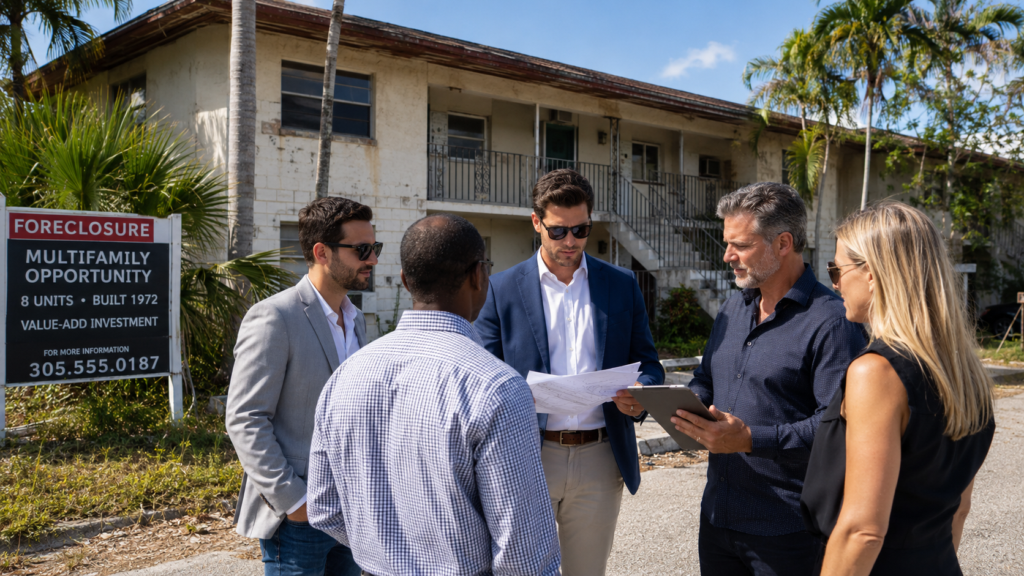
A multifamily foreclosure deal can look attractive at first glance. You may see a discounted price, a motivated lender or seller, and several units that could produce rental income once the property is stabilized. But a multifamily foreclosure is not just a cheaper version of a regular apartment building. It is a distressed income-producing asset.…
Read MoreHow to Set a Foreclosure Auction Maximum Bid
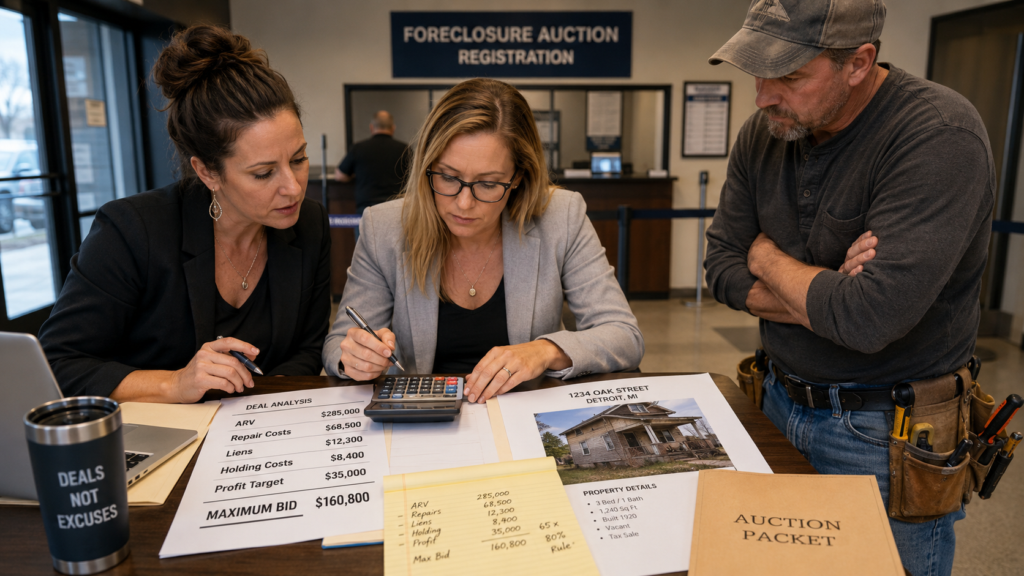
Setting a foreclosure auction maximum bid before auction day is one of the most important habits a real estate investor can build. The auction environment can move quickly, and competitive bidding can make a weak deal look better than it really is. Your maximum bid is the highest price you can pay while still protecting…
Read MoreWhat Happens After You Win a Foreclosure Auction
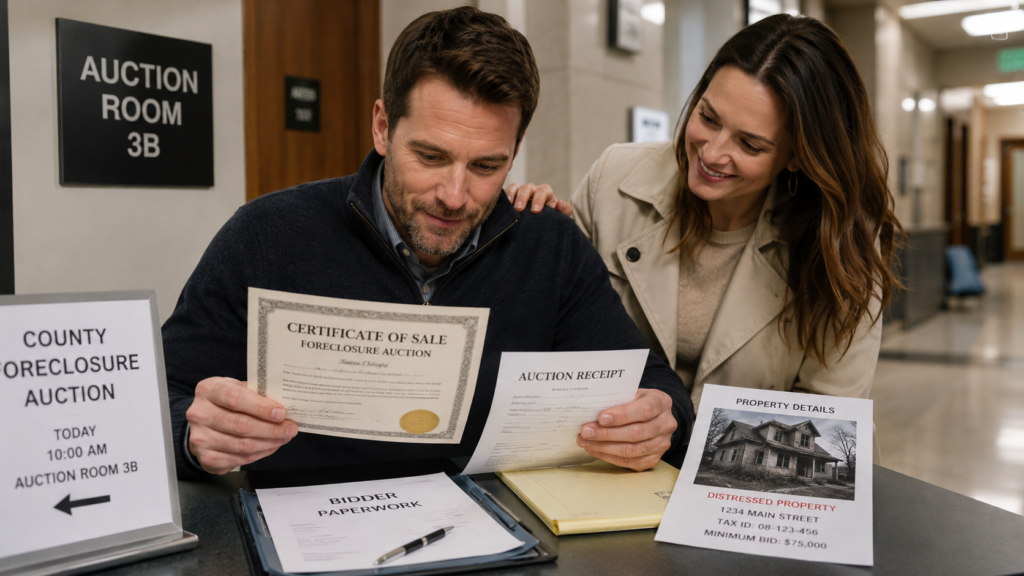
Winning the bid is not the finish line. For investors, the real work begins after you win a foreclosure auction. The next few days can determine whether the deal stays profitable or starts absorbing unnecessary costs. Your post-auction checklist should cover payment deadlines, sale documents, deed recording, insurance, possession, utilities, eviction risk, and rehab planning.…
Read MoreJudicial vs Non-Judicial Foreclosure for Investors
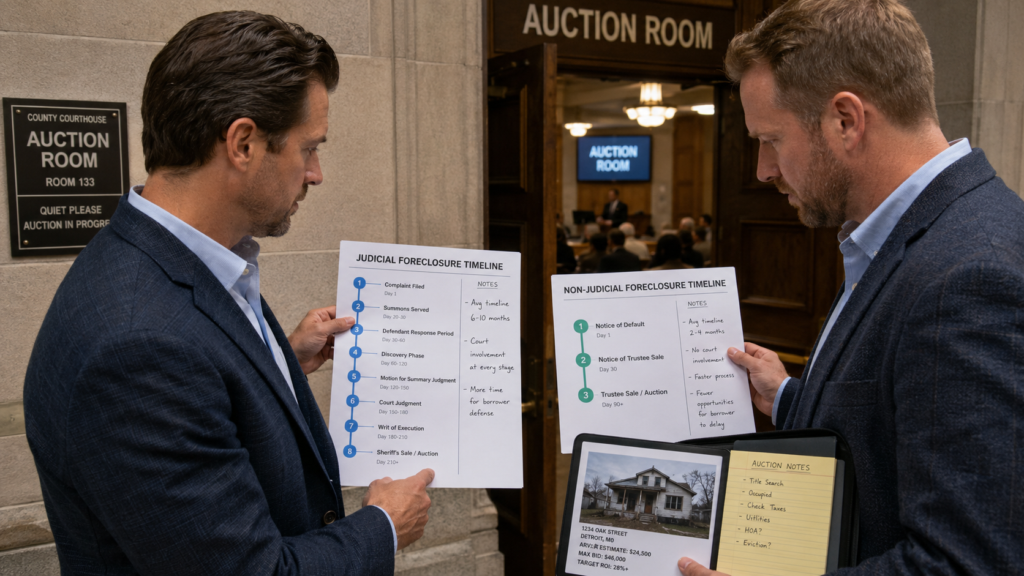
Understanding judicial vs non-judicial foreclosure is essential before bidding on distressed property. The difference is not just legal terminology. It can affect how long the process takes, how much uncertainty remains after the sale, how you calculate holding costs, and how aggressively you should bid. For investors, foreclosure procedure shapes the deal before the auction…
Read MoreHow Foreclosure Redemption Periods Affect Investor Profit
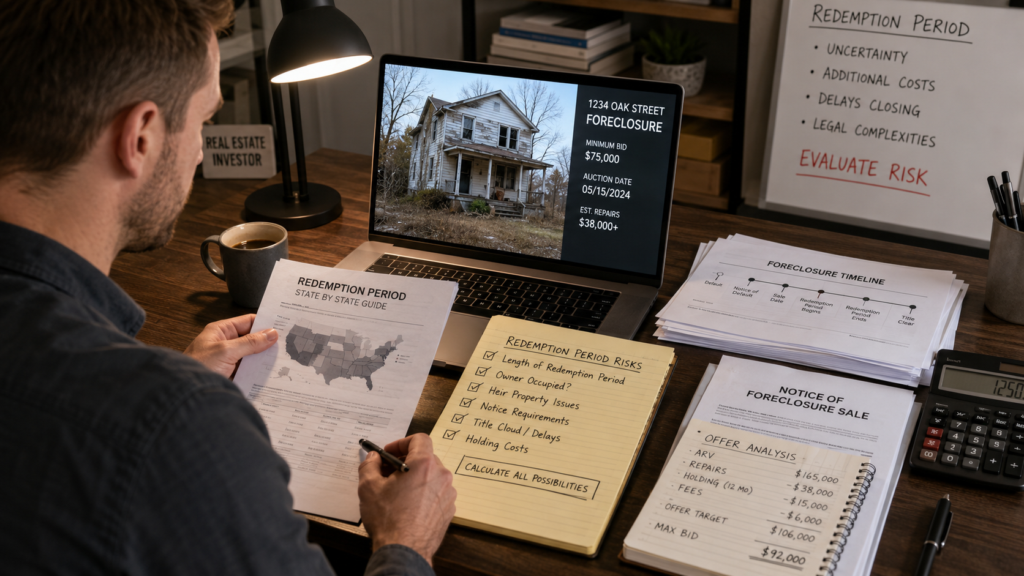
A foreclosure redemption period can change the entire profit timeline on a foreclosure deal. Winning the bid does not always mean you can immediately take possession, start repairs, list the property, refinance, or collect rent. For investors, this is not just a legal detail. It is a holding-cost issue, a financing issue, and a risk-management…
Read More