How to Research Tax Liens Before Buying Distressed Property
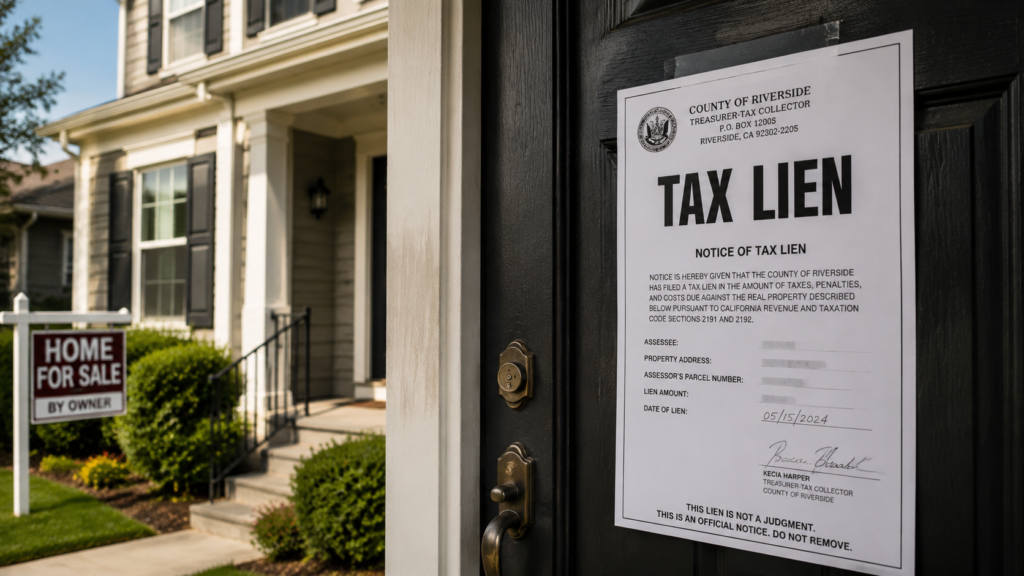
Unpaid taxes can change the economics of a distressed-property purchase before you ever reach the closing table. They may increase the amount needed to acquire the property, affect lien priority, delay title insurance, or prevent a future buyer from obtaining financing.
Effective tax lien due diligence requires more than checking the current property-tax bill. You need to identify the type of tax debt, determine which government entity is owed, verify whether a lien has been recorded, and understand what happens to that lien through the specific foreclosure or auction process.
The objective is not simply to discover unpaid taxes. It is to determine who must pay them, when they must be paid, and whether they will affect your ownership after acquisition.
Learn the Strategies Behind Smarter Foreclosure Investing
Get practical foreclosure investing content delivered twice a week, including deal analysis tips, strategy breakdowns, useful tools, and new resources from Foreclosure Flips. Sign up to keep learning and spotting better opportunities.
Separate Property Taxes From Other Tax Liens
Several types of tax-related claims may appear in a distressed-property transaction.
Local property taxes are generally assessed directly against the real estate. Municipalities may also attach water, sewer, demolition, nuisance-abatement, or other charges to the tax account. State revenue agencies can record liens or tax warrants against an owner’s property, while the IRS can assert a federal tax lien for unpaid federal obligations.
These claims should not be treated as interchangeable.
Massachusetts’ explanation of tax lien foreclosure illustrates how unpaid real estate taxes and certain municipal charges can create an enforceable lien against the property itself. State and local procedures differ, but the example shows why the tax collector’s records matter even when a mortgage foreclosure is already underway.
Begin With the Correct Parcel
Tax research should start with the parcel identification number rather than the street address alone.
Addresses can be formatted differently across assessor, tax collector, recorder, and court systems. A property may also include multiple parcels, such as the house lot, an adjacent vacant lot, a parking space, or a separate condominium interest.
Confirm the legal owner, parcel number, legal description, assessed value, billing address, and property classification. Then verify that the parcel in the foreclosure notice matches the property you intend to acquire.
An unpaid balance attached to a neighboring lot may not affect the house. Conversely, overlooking a second parcel could leave part of the property outside your acquisition.
Review the Complete Property-Tax History
Do not stop after finding the amount due for the current year. Look for prior-year delinquencies, interest, penalties, tax-sale costs, legal charges, and later assessments that have not yet appeared in a basic search.
Request or download a detailed tax statement showing all open years. Determine whether the taxes have merely become delinquent or whether the account has advanced into a tax-certificate, tax-title, tax-deed, or foreclosure process.
This distinction affects both cost and timing. A delinquent bill may be payable directly to the tax collector. A sold tax certificate or assigned tax lien may require payment to another party under a statutory redemption procedure.
You should also ask whether a recent payment is pending but not yet posted. Public records can lag behind wires, escrow disbursements, and auction activity.
Determine Which Foreclosure You Are Buying Through
The effect of unpaid taxes depends partly on the acquisition method.
In a conventional pre-foreclosure purchase, the title company will usually identify delinquent property taxes and arrange for them to be paid from closing proceeds. If the seller lacks sufficient equity, the taxes may reduce the amount available to satisfy mortgages, judgments, and the seller’s proceeds.
At a mortgage foreclosure auction, you need to know whether property taxes survive the sale or must be paid by the purchaser. Auction notices may not provide a complete accounting of every tax obligation.
At a tax sale, you may be purchasing a lien, a certificate, or a deed depending on the jurisdiction. Those are fundamentally different assets. A tax lien certificate usually does not provide immediate ownership, while a tax deed sale may transfer an interest in the real estate subject to local procedures and possible title concerns.
Identify the sale type before applying any bidding formula.
Search for State Tax Warrants and Recorded Liens
Property-tax records do not reveal every government claim.
Search the county recorder, clerk of court, secretary of state, and state revenue agency using the owner’s legal name. A state tax warrant may be recorded against the taxpayer rather than indexed under the property address.
Wisconsin’s guidance on delinquent tax warrants, for example, explains that a filed warrant acts as a lien against real property owned in the county and becomes part of the public record. Other states use different terminology and filing systems.
Pay close attention to common names, business entities, trusts, former owners, and name variations. A title professional can determine whether a recorded claim actually attaches to the property and whether it must be released before your ownership can be insured.
Treat Federal Tax Liens Separately
A federal tax lien requires specialized analysis because federal notice, priority, discharge, and redemption rules can interact with state foreclosure law.
The IRS describes a federal tax lien as a legal claim against a taxpayer’s property after federal tax debt remains unpaid. Finding a recorded Notice of Federal Tax Lien should immediately move the property into a higher level of review.
You need to determine when the lien was recorded, whether the IRS received legally sufficient notice of the foreclosure, whether the lien will be discharged through the sale, and whether any federal redemption right may apply.
Do not assume that a mortgage foreclosure automatically removes the federal claim. Have a title attorney or experienced title company analyze the specific filing and foreclosure procedure.
Add Tax Exposure to Your Maximum Bid
Your maximum bid should reflect the amount you may need to pay after acquisition, not merely the amount shown as due today.
Assume a foreclosure property appears to support a maximum purchase price of $160,000 before tax research. You then identify $9,000 in delinquent property taxes, $3,000 in penalties and collection expenses, and a possible $6,000 municipal assessment that requires confirmation.
Until the assessment is resolved, your tax-related exposure is $18,000. Your adjusted maximum price falls to $142,000 unless another part of the deal improves.
This calculation is especially important at auction, where you may have limited ability to renegotiate after winning.
Confirm the Payoff Rather Than Estimating It
Online tax balances can be useful for screening, but they should not be treated as final payoff figures.
Interest may accrue daily or monthly. Additional legal fees may have been added. A tax certificate holder may have paid later taxes that must also be redeemed. Municipal charges may be transferred between departments before appearing on the main tax account.
Before closing or bidding, obtain a written payoff or redemption figure valid through a specific date. Confirm the accepted payment method and how long the authority needs to issue a release, satisfaction, or redemption certificate.
A paid lien that remains unreleased in the public records can still delay title insurance and resale.
Plan for Title Clearance Before Your Exit
Your tax lien due diligence should consider the eventual buyer, not just your acquisition.
A future lender and title insurer will need evidence that tax claims have been paid, discharged, released, or properly eliminated through the foreclosure process. If the documentation is incomplete, your renovated property may be ready for sale while the title is not.
Ask the title company what documents it will require after the acquisition. These may include tax receipts, recorded releases, foreclosure judgments, proof of statutory notice, redemption-period confirmation, or a court order.
Tax-deed and tax-foreclosure properties may also require additional curative work before conventional title insurance is available. Build that time and legal expense into your holding-period estimate.
Use a Focused Tax Research Workflow
A practical initial review should answer five questions:
- Which parcel or parcels are included?
- What local property taxes and municipal charges remain unpaid?
- Have any tax certificates, tax titles, or tax-sale proceedings begun?
- Are state or federal tax liens recorded against the owner?
- What must happen before a title company will insure your purchase and resale?
This is one area where a short checklist is useful because missing any one category can materially change your bid.
Wondering Where the Savviest Investors Find Their Best Deals?
Access the largest database of foreclosure properties nationwide and discover below-market deals before other investors. Start your search today!