
Miami–Fort Lauderdale Foreclosure Market 2026

The Miami–Fort Lauderdale foreclosure market is not a low-cost distressed-property market where investors can rely on headline foreclosure counts alone.
It is a high-price, high-liquidity South Florida market where foreclosure opportunities may exist, but only when the acquisition discount is large enough to absorb insurance costs, HOA exposure, title risk, repair inflation, carrying time, and aggressive competition from cash buyers.
That makes this metro worth researching, but not casually. Miami-Dade, Broward, and Palm Beach counties each have different foreclosure procedures, property types, buyer pools, and risk profiles.
A foreclosure investor looking at South Florida should be comparing foreclosure stage, property condition, lien exposure, resale depth, and exit strategy before treating any deal as a bargain.
The investor question is straightforward: can you buy below true market value, solve a problem that other buyers are avoiding, and still leave enough room for repairs, holding costs, and profit?
Get Foreclosure Investing Insights Twice a Week
Subscribe to the Foreclosure Flips newsletter for practical ideas on finding deals, analyzing opportunities, and understanding foreclosure-related investing strategies. We send concise updates twice a week so you can stay informed without adding more noise to your inbox.
The Current Foreclosure Signal Stack
Florida remains one of the most active foreclosure states in the country. ATTOM’s Q1 2026 U.S. Foreclosure Market Report reported 118,727 U.S. properties with a foreclosure filing during the quarter, up 26% from the prior year. Florida recorded 10,099 foreclosure starts in Q1 2026 and ranked among the five worst states by foreclosure rate, at one filing for every 750 housing units.
That does not mean Miami–Fort Lauderdale is automatically the strongest foreclosure opportunity in Florida. ATTOM’s Q1 data showed that some smaller Florida metros had more severe foreclosure-rate readings.
The South Florida thesis is different: scale, liquidity, and deal-flow diversity. Miami–Fort Lauderdale may not always rank as the highest-rate foreclosure metro, but it has a large property base, deep resale demand, active investor participation, and multiple acquisition channels.
For investors, that distinction matters. Foreclosure rate can help identify relative distress. Foreclosure volume can help identify lead flow. REO activity can show whether lenders are taking properties back. But none of those signals, by itself, tells you whether a specific property is worth buying.
| 2026 Signal | Current Reading | Investor Interpretation |
|---|---|---|
| Florida foreclosure starts | 10,099 in Q1 2026 | Strong statewide lead flow, but many filings never become investor deals |
| Florida foreclosure rate | 1 in every 750 housing units in Q1 2026 | Statewide distress is elevated versus most states |
| Florida REOs | 1,014 in Q1 2026, up from 487 year over year | Bank-owned inventory is rising, but quality varies |
| National foreclosure trend | Q1 filings up 26% year over year | More pipeline activity, not a 2008-style reset |
| Miami–Fort Lauderdale thesis | Scale and liquidity | Best suited for disciplined investors with local due diligence |
ATTOM’s April 2026 report reinforced the same pattern. Florida led the country in foreclosure starts that month, with 3,505 starts, while completed foreclosures rose nationally by 42% year over year. That supports a “monitor closely” thesis for South Florida investors, not an indiscriminate buying thesis.
Foreclosure Volume Is Only the First Filter
Miami–Fort Lauderdale can produce visible foreclosure volume simply because the metro is large. That does not mean discounts are easy to capture. In a high-price metro, the spread between apparent value and true investor value can disappear quickly.
A property that appears to be $80,000 below renovated comparable sales may still fail after you account for roof replacement, impact windows, mold remediation, electrical updates, insurance, taxes, HOA balances, utilities, financing costs, resale commissions, and price reductions. The larger the nominal price point, the easier it is to confuse a large dollar discount with a sufficient margin.
A better underwriting approach is to separate the market signal from the property signal.
The market signal tells you whether there is enough distress activity to justify research. The property signal tells you whether one specific deal works after title, liens, repairs, occupancy, and exit assumptions are tested. Miami–Fort Lauderdale has enough market signal to deserve attention. The property signal still has to be proven one deal at a time.
County-Level Research Should Come Before Property-Level Offers
The Miami–Fort Lauderdale metro is best analyzed as a three-county investor market. Miami-Dade, Broward, and Palm Beach each create different risks and acquisition mechanics.
Miami-Dade County
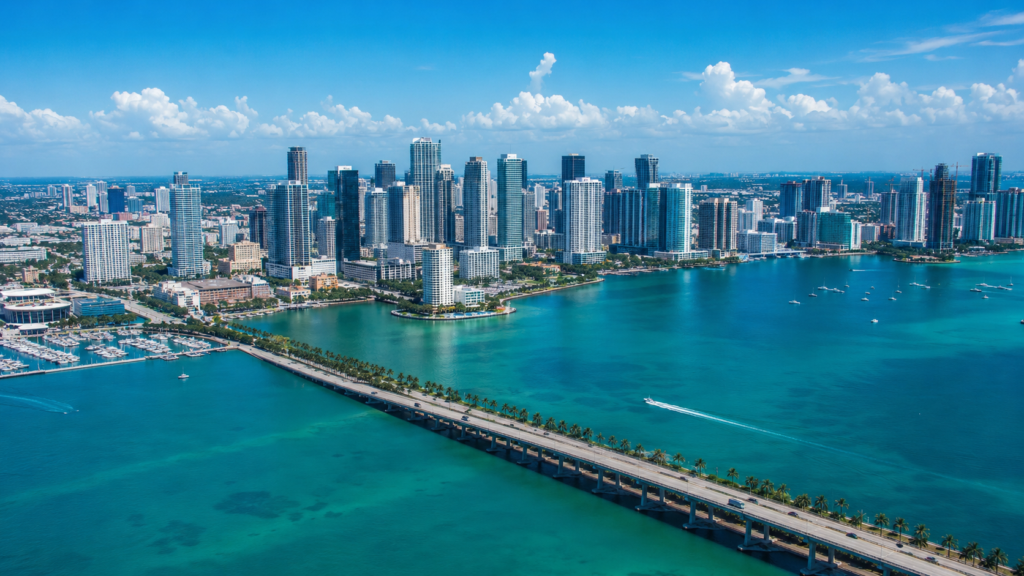
Miami-Dade is the most complex part of the metro. It includes luxury condos, older inland homes, urban infill neighborhoods, waterfront properties, working-class rental areas, and investor-heavy redevelopment corridors.
For foreclosure investors, the lis pendens stage is especially important. The Miami-Dade Clerk explains that foreclosure proceedings begin with a civil complaint, the recording of a lis pendens, and summons to the defendants. The county’s mortgage foreclosure process is useful for investors because it clarifies where early-stage filings enter the public record.
Miami-Dade also requires extra caution with condos. A discounted condo foreclosure can become unattractive if you uncover special assessments, unpaid dues, reserve issues, litigation, recertification concerns, insurance shortfalls, or association restrictions that limit rentals. The discount has to be measured against the full ownership burden, not just the purchase price.
Broward County
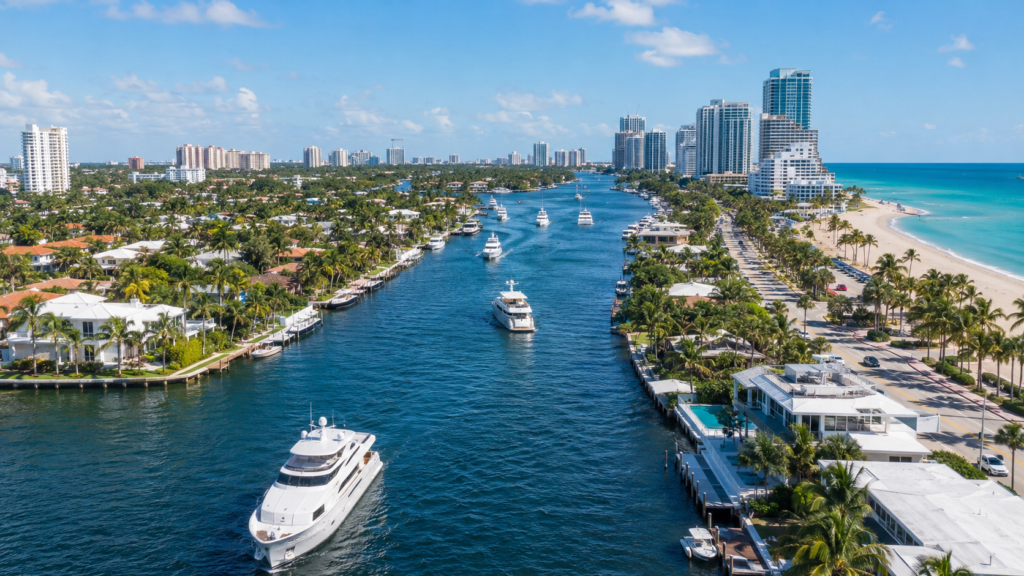
Broward County may offer a broader range of suburban foreclosure opportunities than Miami-Dade, but the submarkets are not interchangeable. Fort Lauderdale, Hollywood, Pompano Beach, Miramar, Sunrise, Lauderhill, Plantation, and Deerfield Beach can support very different exit strategies.
Broward is also a market where auction liquidity matters. The Broward Clerk states that foreclosure-sale bidders must place a deposit equal to 5% of the estimated highest bid for each property they expect to win, with deposits received before the auction deadline. That makes the county’s foreclosure sale procedures relevant before you bid, not after you find a property.
For investors, Broward may be attractive when a property has functional resale demand, manageable repair scope, and enough price support from nearby owner-occupant buyers. It may be less attractive when the property requires heavy renovation, has uncertain title, or sits in a submarket where resale velocity is slowing.
Palm Beach County
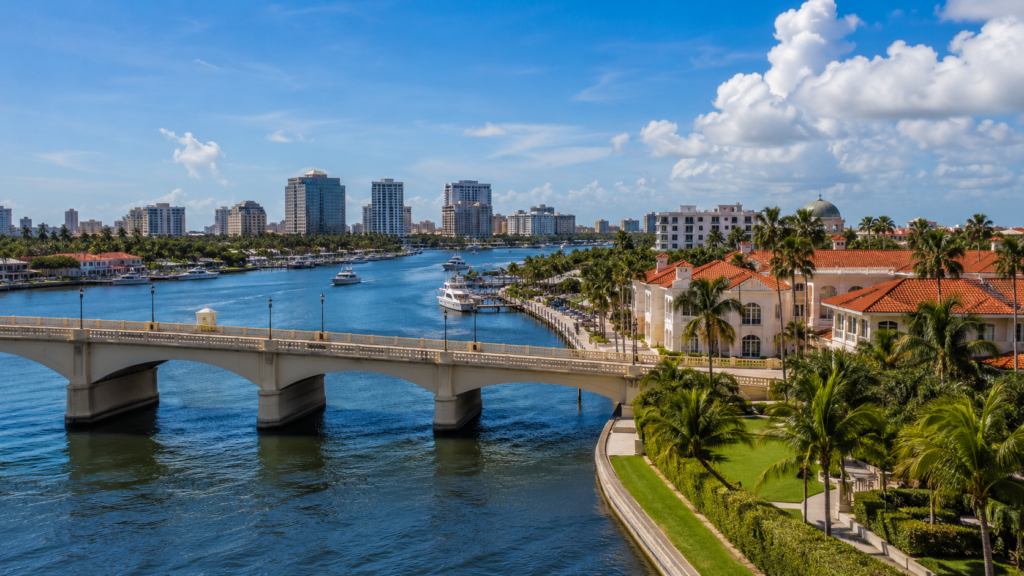
Palm Beach County adds another layer of price dispersion. West Palm Beach, Lake Worth Beach, Boynton Beach, Delray Beach, Boca Raton, and inland communities may all show foreclosure activity, but the buyer pool and exit strategy can differ sharply.
The Palm Beach Clerk states that foreclosure sales are conducted online, generally Monday through Thursday at 10:00 a.m., and that the clerk cannot guarantee clear title. That warning in the county’s foreclosure sale information is central to auction underwriting.
A winning auction bid does not guarantee a clean acquisition. Investors still need to research taxes, municipal liens, association balances, superior liens, code violations, and occupancy before placing capital at risk.
| County | Main Investor Use | Primary Risk to Underwrite |
|---|---|---|
| Miami-Dade | Lis pendens tracking, condos, urban infill, high-liquidity resale | HOA, condo, insurance, and assessment exposure |
| Broward | Auction monitoring, suburban flips, rentals, small multifamily | Deposit rules, title review, and repair discipline |
| Palm Beach | Online auctions, REOs, price-discount comparisons | Clear-title risk and wide submarket variation |
Property Type Determines the Exit Strategy
A foreclosure discount only matters if the property supports a realistic exit. In Miami–Fort Lauderdale, property type often matters as much as the neighborhood.
A single-family home with a functional layout, insurable roof, strong school-zone demand, and cosmetic distress may fit a fix-and-resell strategy. A dated but structurally sound house in a workforce rental area may fit a rental or BRRRR approach. A condo with high assessments may work only if the acquisition price is low enough to compensate for association risk. A small multifamily property may be attractive, but only if rents, vacancy, repairs, insurance, and code compliance are underwritten conservatively.
The broader housing backdrop also matters. Redfin’s Miami housing market data showed Miami prices up 4.5% year over year over the three months ending April 2026, with a median sale price near $690,000 and average days on market rising to 109 days. That combination is important: prices remain high, but liquidity is not instant.
In a market like that, a flip that depends on a premium resale price and a short hold period may be fragile. You should test the exit at a lower resale price, longer hold time, and higher carrying cost before deciding whether the deal is still attractive.
FHFA’s Q1 2026 House Price Index showed U.S. house prices up 1.7% year over year and 0.5% quarter over quarter. The FHFA House Price Index is useful context because it points to a slower appreciation environment than investors saw during the pandemic-era boom.
In slower-growth conditions, foreclosure investors should not rely on appreciation to rescue thin margins. The profit has to be created through acquisition basis, execution, and exit discipline.
Build Your Investing Knowledge One Email at a Time
Foreclosure investing rewards preparation. Join our 2X week newsletter for straightforward guidance on pre-foreclosures, short sales, BRRRR, flipping, and other strategies investors use to evaluate distressed property opportunities.
Acquisition Strategies That Fit the Metro
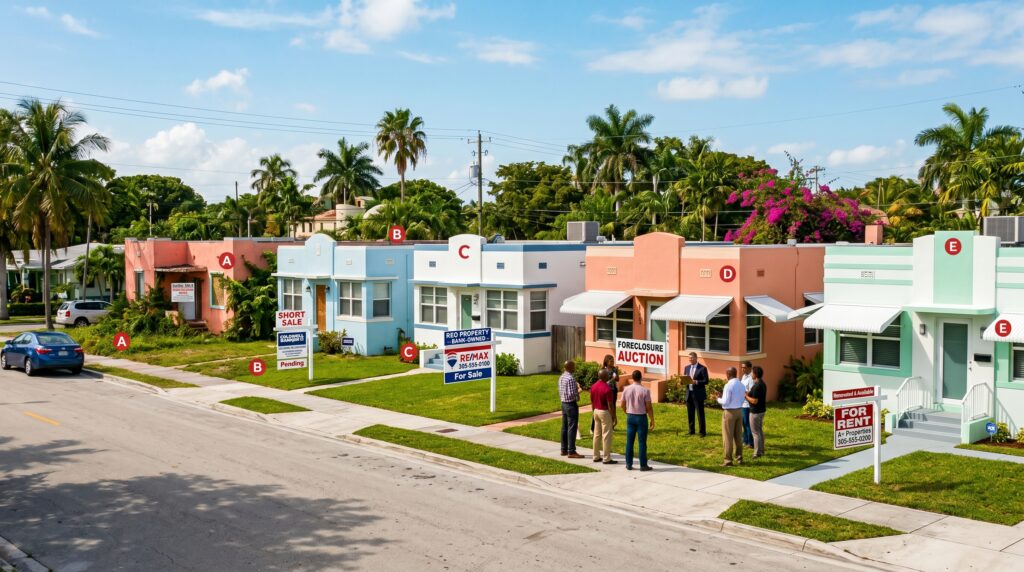
Pre-Foreclosures
Pre-foreclosures may be one of the more flexible strategies in Miami–Fort Lauderdale because many distressed owners may still have equity. Rising insurance premiums, HOA dues, taxes, repairs, and mortgage-payment pressure can push some owners toward selling before the auction date.
The best pre-foreclosure leads are not simply properties with a lis pendens. They are properties where there is enough equity, motivation, and transaction feasibility to close before the process advances. You should verify mortgage balance, liens, taxes, association exposure, condition, occupancy, and comparable sales before making contact or writing an offer.
Foreclosure Auctions
Auction investing can work in South Florida, but it is unforgiving. You may have limited inspection access, uncertain occupancy, strict deposit requirements, and title risks that are not obvious from the auction listing.
Before bidding, work backward from your exit. Start with conservative ARV or rental value, then subtract selling costs, required profit, repairs, liens, insurance, taxes, utilities, association exposure, financing costs, and holding time. The result is your bid ceiling.
That bid ceiling should be set before the auction begins. In a competitive online auction, emotional bidding is one of the fastest ways to turn a potential foreclosure deal into an overpaid asset.
REO Properties
REO properties may become more relevant if completed foreclosures continue rising. Bank-owned acquisitions can reduce some auction-specific risks because the lender has already taken title. However, REOs are not automatically discounted enough for investors.
Banks may price properties close to market value. Property preservation may be uneven. Some REOs still need major repairs. Others may attract strong investor and owner-occupant competition. The useful REO opportunity is not simply “bank-owned.” It is a bank-owned property where the pricing, condition, title status, and exit path leave enough spread.
Short Sales and Discounted Owner Sales
Short sales may appear when equity is thin or when the property has enough deferred maintenance that a standard sale is difficult. They can work, but they require patience, documentation, and lender cooperation.
In South Florida, investors should also watch for discounted owner sales that are not technically short sales. Some owners may have equity but still need to sell because of insurance increases, special assessments, estate issues, divorce, relocation, rental underperformance, or repair costs. Those situations may create more practical opportunities than crowded auctions.
Rentals and BRRRR
Rental and BRRRR strategies require strict underwriting in Miami–Fort Lauderdale. High purchase prices, insurance, property taxes, repairs, and HOA costs can compress cash flow.
A BRRRR deal should be tested against conservative refinance assumptions. If the deal only works with an optimistic appraisal, rising rent, low vacancy, and perfect refinancing terms, it is not a durable foreclosure strategy.
Local Risks That Can Break the Deal
The biggest risks in Miami–Fort Lauderdale are not theoretical. They directly affect purchase price, closing feasibility, financing, and exit value.
| Risk | Why It Matters | Investor Response |
|---|---|---|
| Insurance | Wind, flood, roof age, and prior claims can materially alter holding costs | Quote insurance before finalizing the bid or offer |
| HOA and condo exposure | Assessments, dues, litigation, and liens can erase the discount | Review association documents and balances early |
| Title and lien issues | Auction buyers may inherit problems they failed to price | Run title, check taxes, search municipal and code issues |
| Occupancy | Possession delays increase carrying costs and legal risk | Verify likely occupancy and post-sale possession process |
| Repair inflation | Roofs, windows, mold, electrical, and plumbing can be expensive | Build a line-item repair budget, not a percentage guess |
| Resale timing | Prices can remain high while days on market lengthen | Use conservative resale timing and price reductions |
Cotality’s March 2026 loan-performance report adds useful context. The national foreclosure inventory rate reached 0.4%, its highest level in six years, and 77% of U.S. metro areas posted annual foreclosure-rate increases.
The report also noted that metros in Florida and Texas saw some of the largest increases. The Cotality foreclosure inventory report supports the view that investor deal flow is increasing, but it does not justify loose underwriting.
How to Research Deals in the Miami–Fort Lauderdale Market
A practical research process should begin with the foreclosure stage.
For pre-foreclosures, track lis pendens filings, verify the owner of record, estimate equity, search additional liens, review the court docket, and compare the property to realistic as-is and after-repair values. Do not assume the owner has enough equity or motivation just because the property appears in a filing search.
For auctions, work backward from your maximum bid. Start with conservative ARV, subtract resale costs, required profit, repairs, insurance, taxes, liens, association exposure, utilities, financing costs, and holding time. If the auction clears above that number, the correct move is to let someone else win.
For REO properties, compare the bank’s asking price to closed comparable sales, not active listings. Review days on market, price reductions, property condition, and whether the bank has already addressed title or occupancy issues.
For rentals, test the deal as if rents stay flat, insurance increases, and repairs come in above budget. If the rental still works under conservative assumptions, it may be worth deeper review.
Where This Metro Fits in the Florida Foreclosure Strategy
Miami–Fort Lauderdale should be treated as a liquidity-and-complexity market. It may not offer the deepest foreclosure-rate signal in Florida, but it does offer a large property base, multiple acquisition channels, and several exit paths for investors who can underwrite carefully.
Investors comparing this metro with Tampa, Orlando, Jacksonville, Lakeland, or other parts of the state should use the broader Florida foreclosure market page as the statewide reference point. For national context, the hub on states with the most foreclosure opportunities can help compare Florida against other major foreclosure states.
If you are ready to screen live inventory, you can compare active foreclosure listings. For rehab-heavy deals, run the numbers carefully before you commit capital.
FAQ
Is Miami–Fort Lauderdale a strong foreclosure market for investors?
It is a relevant market to monitor, but not because it is cheap. Its strength is scale, liquidity, and deal-flow variety. The challenge is that acquisition costs, insurance, HOA exposure, and competition can compress returns quickly.
Is Miami–Fort Lauderdale leading Florida in foreclosure rates?
Not based on the latest ATTOM data reviewed. Other Florida metros showed stronger foreclosure-rate signals in Q1 2026. Miami–Fort Lauderdale is better viewed as a large, liquid, complex market rather than the state’s highest-rate foreclosure market.
Are foreclosure auctions the best way to buy in South Florida?
Not necessarily. Auctions can produce deals, but they carry title, occupancy, inspection, deposit, and timing risks. Pre-foreclosures, REOs, short sales, and discounted owner sales may offer better control depending on the property.
What property types require the most caution?
Condos require special caution because HOA dues, assessments, litigation, reserves, insurance, and building issues can materially affect value. Older single-family homes also require careful review of roofs, electrical systems, plumbing, flood exposure, and insurability.
What is the most important underwriting rule in this metro?
Do not underwrite from the headline discount. Underwrite from the exit backward. Start with realistic ARV or rental value, then subtract every cost required to acquire, repair, hold, insure, finance, and sell or rent the property.
Wondering where the savviest investors find their best deals?
Access the largest database of foreclosure properties nationwide and discover below-market deals before other investors. Start your search today!
You might also like:
 Foreclosure Investing: How to Buy, Analyze, and Profit From Foreclosed Homes
 Treasury Yields and Distressed Housing Deals
 Foreclosure Investing for Beginners: Complete Step-by-Step Guide
 Best Markets for Foreclosure Investing in 2026
 Housing Affordability Crisis and Foreclosure Investing
 Occupied Foreclosure Properties: What Investors Need to Know