
Auction Houses vs Online Foreclosure Auctions
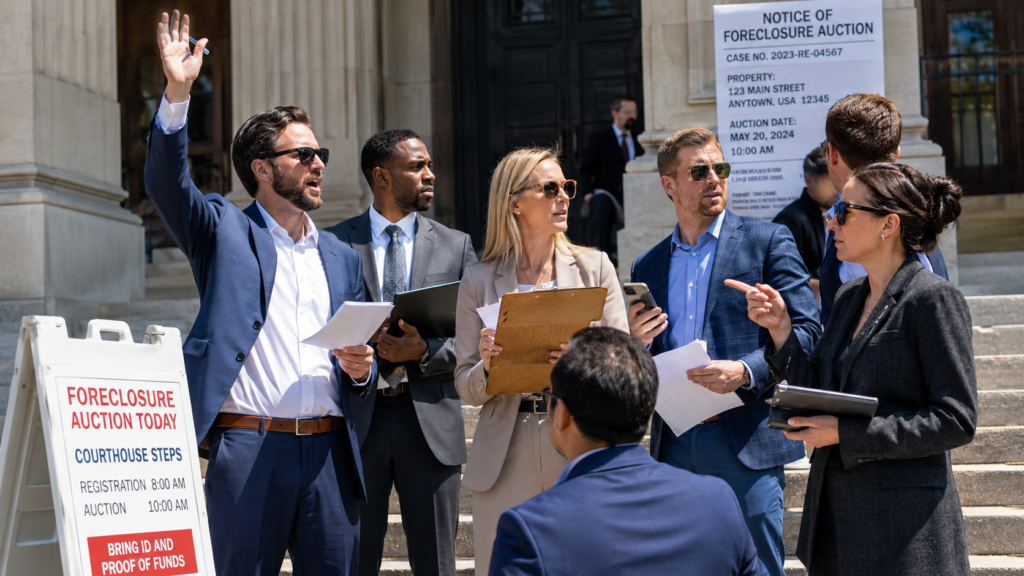
Online foreclosure auctions have made distressed-property bidding more accessible, but easier access does not automatically make the deal safer. You may be able to bid from your laptop instead of standing at a courthouse, but you still need to understand deposits, buyer premiums, title risk, due diligence limits, closing rules, and payment deadlines.
As an investor, your goal is not simply to find more auctions. Your goal is to know which auction format gives you the best chance to buy profitably without creating avoidable closing problems.
Get Foreclosure Investing Insights Twice a Week
Subscribe to the Foreclosure Flips newsletter for practical ideas on finding deals, analyzing opportunities, and understanding foreclosure-related investing strategies. We send concise updates twice a week so you can stay informed without adding more noise to your inbox.
What Are Online Foreclosure Auctions?
Online foreclosure auctions are public or private auction sales where properties are offered through a digital bidding platform. Some are county foreclosure sales moved online. Others are bank-owned, trustee, sheriff, tax deed, or auction-house sales hosted through private platforms.
The National Auction Association explains that real estate auctions can create price discovery by allowing the public to bid competitively, but the format and terms still control the buyer’s actual risk. That matters because an online bid can feel casual, even though it may create a binding purchase obligation. Real estate auction basics should be part of your preparation before you click the bid button.
Courthouse Auctions vs Online Auctions
Traditional courthouse sales often take place at a county courthouse, sheriff’s office, trustee location, or other public venue. Online foreclosure auctions move some or all of that process to a digital system.
The biggest difference is convenience. Online auctions let you research, register, deposit funds, and bid without physically attending the sale. That can help you track more properties across multiple counties. But convenience can also increase competition because more bidders can participate with less friction.
Local Courthouse Sales
Local courthouse auctions may have fewer casual bidders because attendance, local knowledge, and funding logistics can be barriers. If you know the county process, understand the neighborhoods, and can act quickly, you may find less crowded opportunities.
The downside is that local rules can be rigid. Payment may be due immediately or within a very short window. You may need cashier’s checks, verified deposits, or pre-registration. If you miss a deadline, your deposit may be at risk.
Online Auction Platforms
Online platforms may offer better property pages, document uploads, photos, bidding history, countdown timers, and remote participation. That can make the process easier to monitor.
But online platforms can also add fees, buyer premiums, reserve prices, extension rules, technology issues, and platform-specific contracts. You should never assume the winning bid is the total price.
Deposits and Bidder Registration
Before you bid, confirm the deposit requirement. Some online foreclosure auctions require you to deposit a percentage of your anticipated high bid. Others require a flat deposit, wire transfer, cashier’s check, or verified account balance.
Lee County’s foreclosure sale rules provide a useful example of how specific this can get: online bidders must register, deposit 5% of their anticipated final bid, and ensure funds settle before the auction deadline. The same guidance also states that the successful bidder must pay the remaining balance and fees by the next business day. A clear foreclosure auction deposit process helps you avoid bidding with funds that are not actually eligible.
Why Deposits Affect Strategy
Your deposit does two things. It qualifies you to bid, and it creates consequences if you fail to close.
If you want to bid up to $250,000 and the county requires a 5% deposit based on your anticipated high bid, you may need $12,500 cleared before you can participate. If the platform requires a larger deposit, a separate registration fee, or multiple property-specific deposits, your available capital can get tied up quickly.
This is why you should decide your target properties before funding auction accounts. Do not spread deposits across too many possible deals if doing so weakens your ability to close on the one you actually win.
Buyer Premiums and Hidden Cost Differences
Buyer premiums are one of the biggest differences between some auction-house sales and certain public foreclosure sales. A buyer premium is an added amount charged to the winning bidder, usually as a percentage of the winning bid or as a flat fee.
The National Auction Association defines a buyer’s premium as an advertised percentage or flat fee added to the high bid to determine the total contract price. A short buyer’s premium definition can help you avoid confusing the bid price with the actual purchase price.
How Buyer Premiums Change Your Maximum Bid
If you are willing to pay $200,000 total and the auction charges a 5% buyer premium, you should not bid $200,000. A $200,000 bid plus a 5% premium becomes $210,000 before other closing costs, transfer fees, title costs, recording fees, or taxes.
Your maximum bid should be reverse-engineered from the total cost. The formula is simple:
Maximum total acquisition cost – buyer premium – closing costs – lien risk – repair budget – holding costs – required profit = maximum bid
This is especially important on online auction platforms because the interface may focus your attention on the current bid, not the full all-in number.
Build Your Investing Knowledge One Email at a Time
Foreclosure investing rewards preparation. Join our 2X week newsletter for straightforward guidance on pre-foreclosures, short sales, BRRRR, flipping, and other strategies investors use to evaluate distressed property opportunities.
Due Diligence Access Can Be Very Different
Online auction platforms may provide photos, title documents, occupancy notes, disclosures, inspection summaries, or property condition reports. Courthouse sales may provide little more than a case number, legal description, judgment amount, and sale notice.
Neither format guarantees full due diligence. You may not be able to inspect the interior. You may not know whether the property is occupied. You may not know the full repair scope. You may still need to research title, liens, taxes, HOA balances, municipal violations, permits, and redemption rights.
What You Should Research Before Bidding
Before you bid, confirm the property address, parcel number, owner name, legal description, judgment amount, opening bid, lien priority, taxes, HOA status, municipal code cases, flood zone, occupancy clues, and comparable sales.
If the online platform provides documents, read them. If the county provides court records, review them. If the auction terms say the property is sold as-is with no warranties, price that into your bid.
A property with poor access is not automatically a bad deal, but it needs a larger discount.
Closing Rules and Payment Deadlines
The closing process can vary sharply by auction type. Some county foreclosure sales require payment within hours or by the next business day. Some online REO-style auctions may allow a more traditional closing period. Some private auction houses require a signed purchase agreement and earnest money quickly after the auction ends.
Pasco County’s sale information shows how strict public foreclosure deadlines can be, stating that winning bid payment must be received by the stated deadline on the day of the sale to avoid default. That type of foreclosure sale payment rule should be reviewed before bidding, not after you win.
Financing Must Match the Auction Format
If the auction requires full payment the same day or next business day, traditional financing probably will not work. You may need cash, private money, hard money, or a line of credit that is already available.
If the auction allows a longer closing, financing may be possible, but you still need to confirm appraisal risk, property condition, title requirements, and lender approval. A distressed property with missing utilities, major repairs, or occupancy issues may not qualify for the loan you expected.
Which Auction Format Is Better for Investors?
There is no universal answer. Courthouse auctions can be better if you have local knowledge, fast capital, and the ability to research public records. Online foreclosure auctions can be better if you want broader reach, easier tracking, and more digital access to auction materials.
The better format is the one where you can complete due diligence, understand the terms, fund the deposit, close on time, and buy below your maximum allowable price.
Courthouse Auctions May Fit You If
- You know the local market.
- You can attend or monitor sales closely.
- You understand county court records.
- You have cash ready.
- You are comfortable with limited property access.
Online Auctions May Fit You If
- You want to track more inventory.
- You can compare multiple markets.
- You understand platform terms.
- You account for buyer premiums.
- You can move quickly after winning.
Want To Know What Properties Banks Are About To List?
Learn how to find deeply discounted properties. Get instant access to pre-foreclosures, REOs, and short sales updated daily!
You might also like:
 How HOA Liens Can Change a Foreclosure Deal
 Buying REO Properties: Essential Guide for Investors
 Housing Affordability Crisis and Foreclosure Investing
 How to Analyze a Multifamily Foreclosure Deal
 Judicial vs Non-Judicial Foreclosure for Investors
 Tax Delinquency vs Mortgage Foreclosure for Investors