When a Foreclosure Listing Is Not Really a Deal
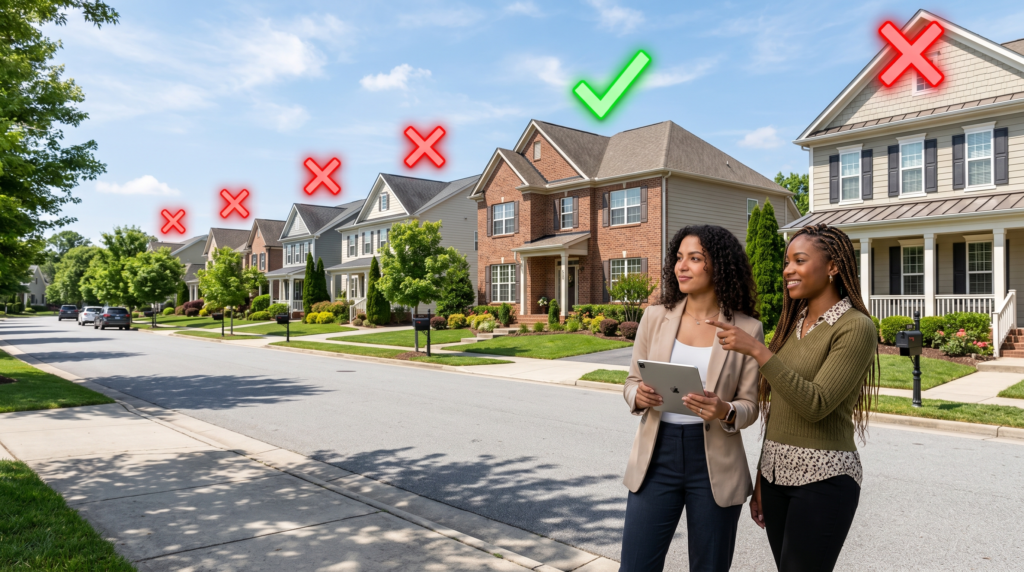
A low foreclosure listing price can attract attention before you know what the property will actually cost. The asking price may sit far below nearby home values, the listing may describe the property as an investment opportunity, and the projected spread may look substantial at first glance.
But price and value are not the same. A useful foreclosure listing analysis measures the complete cost of acquiring, controlling, repairing, holding, and eventually exiting the property. Once you account for liens, deferred maintenance, occupancy, title defects, financing, and resale liquidity, the supposed bargain may disappear.
Your objective is not to find the largest apparent discount. It is to identify properties where the discount remains after every material risk has been assigned a realistic cost.
Build Your Investing Knowledge One Email at a Time
Foreclosure investing rewards preparation. Join our 2X week newsletter for straightforward guidance on pre-foreclosures, short sales, BRRRR, flipping, and other strategies investors use to evaluate distressed property opportunities.
First Determine What the Listing Actually Represents
The word “foreclosure” can describe several different acquisition stages. A listing may be a pre-foreclosure offered by the homeowner, a short sale requiring lender approval, a scheduled auction property, a bank-owned REO, or a government-owned home acquired after foreclosure.
Each stage gives you a different level of control and certainty.
A pre-foreclosure listing may still depend on the owner’s ability to deliver clear title and satisfy the mortgage at closing. A short sale may require approval from one or more lienholders. An auction listing may provide no normal inspection contingency. An REO listing may offer a conventional contract but still be sold as-is.
Before calculating profit, identify the actual seller, the sale procedure, the deed you expect to receive, and any approvals required before closing. A low price is not actionable if the transaction cannot close under your funding timeline.
Reconstruct the True Acquisition Cost
The number displayed in the listing is only the starting point. Your real acquisition cost can include buyer premiums, auction fees, transfer taxes, recording charges, title work, legal review, delinquent taxes, HOA balances, municipal claims, and immediate property-preservation expenses.
This distinction is especially important when comparing an REO asking price with a courthouse or online auction bid. A $150,000 REO contract and a $150,000 auction bid may produce very different cash requirements.
Suppose an online auction property shows a current bid of $142,000. If the platform charges a 5% buyer premium, the contract price becomes $149,100. Add $3,500 in closing and recording costs, $4,000 in immediate insurance and security expenses, and a $7,500 allowance for unresolved municipal or association charges. Your effective acquisition basis is already $164,100 before repairs begin.
A disciplined foreclosure listing analysis works backward from the maximum total cost you can support, rather than forward from the advertised price.
Run the Title Review Before You Trust the Discount
Foreclosure does not automatically mean every claim against the property disappears. The effect of the sale depends on the lien being foreclosed, the priority of other claims, state law, the parties named in the action, and the type of sale.
Unpaid property taxes, municipal assessments, HOA claims, federal liens, utility balances, code-enforcement charges, and senior mortgages may affect your ownership or closing cost. Even when a lien should be removed through the foreclosure, errors in service, documentation, or the legal description can complicate title insurance.
The American Land Title Association’s discussion of title research and curative work illustrates how frequently real estate transactions require more than a simple record search before insurable title can be issued.
Ask the Title Company a More Useful Question
Do not only ask whether a title search has been completed. Ask whether the title company expects to insure your ownership after this specific acquisition method.
Those are different questions. A report may identify recorded matters without confirming that an insurer will issue a policy immediately after the sale.
You should know whether curative documents, a court order, a quiet-title action, lien releases, an affidavit, or a waiting period may be required. If title cannot be insured promptly, your refinance or retail resale could be delayed even after you have paid for the property and completed repairs.
A listing with uncertain title is not necessarily unusable, but it needs a larger discount and a longer holding-cost assumption.
Treat Limited Access as a Pricing Variable
A property you can fully inspect is worth more to you than an otherwise identical property you can only view from the street. Better access reduces the range of possible repair outcomes.
When interior access is unavailable, you cannot reliably confirm plumbing condition, electrical safety, HVAC operation, water intrusion, structural movement, mold, vandalism, or missing components. You may also be unable to verify whether the advertised bedroom count, bathroom count, or finished area matches the property’s present configuration.
Official foreclosure guidance often makes the buyer-beware nature of these sales explicit. The Brevard County Clerk, for example, warns that foreclosure properties are sold on a buyer-beware basis without guaranteed clear title. The same mindset should apply to condition: limited information belongs in your bid as a measurable risk allowance.
Use a Repair Range, Not a Single Estimate
For an accessible property, you might develop a contractor-backed budget of $62,000 with a 10% contingency. For a property with no interior access, it is safer to model a range.
Your base visible repair estimate might be $50,000. A realistic unknown-condition reserve could add $20,000 to $35,000 depending on the property’s age, exterior condition, vacancy history, and neighborhood. You should then test whether the deal still works at the higher end of the range.
If the projected profit disappears when repairs rise by $20,000, the listing is not priced for the uncertainty you are accepting.
Occupancy Can Turn a Property Discount Into a Timeline Problem
A listing may appear vacant without being legally available for immediate possession. The former owner, a tenant, a family member, or an unknown occupant may still have possession rights or may simply refuse to leave.
That affects more than legal expense. You may be unable to complete inspections, activate utilities, secure insurance, schedule contractors, or prevent further damage. Every month of delayed access adds financing interest, taxes, insurance, maintenance, and opportunity cost.
Review listing photographs carefully. Sparse or outdated photos do not establish vacancy. Look for current utility usage where legally available, mailing records, posted notices, exterior maintenance, vehicles, curtains, trash service, and information from local property managers or attorneys. Do not enter the property or contact occupants in a way that violates privacy, trespass, debt-collection, or foreclosure laws.
Your analysis should model at least three possession outcomes: immediate vacancy, negotiated move-out, and contested possession. If only the immediate-vacancy scenario produces an acceptable return, your bid is too aggressive.
Check Whether the Property Can Be Insured and Financed
Some foreclosure listings cannot be financed through the loan product an investor expects to use. Missing kitchens, damaged roofs, exposed wiring, disconnected utilities, structural concerns, or severe water intrusion may prevent conventional financing.
Even hard-money lenders can reduce leverage when condition risk is high. They may require more cash down, larger reserves, repair escrows, environmental review, or proof that the property can be insured.
Insurance can become a separate obstacle. A vacant, occupied, fire-damaged, or substantially renovated property may require vacant-property coverage, builder’s risk insurance, or another specialized policy. The premium and deductible may be much higher than your initial estimate.
Before submitting an offer, describe the property honestly to both the lender and insurance agent. A quote based on an occupied home in ordinary condition is not useful if you are buying a vacant structure with an active roof leak and full renovation planned.
Do Not Let a High ARV Hide Weak Resale Liquidity
A foreclosure may appear profitable because one renovated home nearby sold for a strong price. That single sale does not prove your property can achieve the same result.
Your after-repair value should reflect the most probable price in a competitive market, not the highest price you can find. Freddie Mac’s comparable-sale requirements emphasize similarity, market conditions, concessions, and appropriate adjustments. Those principles are equally useful when you develop an investor ARV.
Compare properties with similar location, site size, living area, condition, bedroom and bathroom count, construction type, parking, and buyer appeal. Then examine how long those homes took to sell and whether sellers gave concessions.
Liquidity Is More Than Value
Two properties can have the same theoretical ARV but very different resale liquidity.
A standard three-bedroom home in a large first-time-buyer market may sell faster than a highly customized six-bedroom conversion. A property near the top of its neighborhood’s price range may need more time than one priced near the median. A rural home may have fewer comparable sales and a smaller financed-buyer pool.
You should evaluate:
- How many genuinely comparable homes sold recently
- How many competing homes are currently listed
- Typical days on market
- Price reductions and seller concessions
- The percentage of cash versus financed buyers
- Whether your finished price will exceed neighborhood norms
This is one area where a short list is useful because the indicators work together. If comparable sales are scarce, active competition is rising, and buyer concessions are common, your exit requires more time and a lower expected price.
Distinguish Deferred Maintenance From a Full Repositioning
A property that needs paint, flooring, and fixtures is not equivalent to one that needs a new layout, structural repair, major system replacement, and code legalization.
The second property – perhaps a $100 HUD home – may require architectural plans, engineering, permits, licensed trades, inspections, utility upgrades, and a longer construction schedule. Your rehab estimate should reflect the project category, not just the visible defects.
You should also confirm that the proposed finished use is legal. A listing may advertise a converted garage, basement unit, enclosed porch, or additional bedroom that was never permitted. If the resale value depends on that area, verify whether it is recognized by local records and can legally remain.
An unpermitted improvement can create several outcomes: you may need to legalize it, expose completed work for inspection, correct deficiencies, or remove it entirely. Each outcome changes both the budget and the ARV.
Calculate the Deal Using Total Risk-Adjusted Cost
A practical foreclosure listing analysis can use this formula:
Conservative ARV
– acquisition price and buyer fees
– verified repairs
– unknown-condition reserve
– title and lien allowance
– possession costs
– financing and holding costs
– selling costs
– required profit
= remaining bid capacity
Assume the conservative ARV is $325,000. The verified repairs are $70,000, with a $20,000 unknown-condition reserve. Title and lien exposure is budgeted at $8,000. Financing and holding costs total $24,000, selling costs are $27,000, and you require a $45,000 profit.
That leaves $131,000 for the purchase price and acquisition fees.
If the foreclosure listing is offered at $145,000, it is not automatically close enough. You are already $14,000 above your risk-adjusted ceiling before any unfavorable surprise occurs.
The correct decision may be to offer less, monitor the listing for a price reduction, or move on.
Recognize Listings That Are Cheap for a Reason
Some properties remain available because experienced buyers have already identified a structural problem in the deal. Repeated auction failures, long REO market time, canceled contracts, or frequent price changes should prompt more investigation.
The issue may be an inaccessible parcel, title defect, severe foundation damage, environmental concern, uncooperative occupant, HOA restriction, flood exposure, insurance problem, or lack of buyer demand. Do not interpret low competition as proof that you discovered an overlooked bargain.
Ask what other buyers may know.
A stale listing can create negotiation leverage, but only after you identify the reason it has not sold. The problem may be fixable at the right price. It may also be outside your buy box regardless of price.
Know When the Listing Fails the Deal Test
You do not need certainty about every minor expense. You do need enough reliable information to define a realistic downside.
Consider rejecting or heavily repricing a foreclosure listing when title cannot be insured on your required timeline, possession is unclear, no meaningful inspection is possible, financing is uncertain, or the resale value depends on one exceptional comparable sale.
The same applies when several moderate risks appear together. An occupied property with an old roof may be manageable. Add open permits, possible foundation movement, a high buyer premium, and weak resale demand, and the combined risk may exceed the available discount.
Deal quality is determined by the interaction of risks, not the number of issues on a checklist.
The Investor Takeaway
A useful foreclosure listing analysis separates the advertised price from the total investment required to reach a profitable exit.
You need to identify the actual sale stage, reconstruct the acquisition cost, review title and surviving claims, price limited inspection access, account for occupancy, verify financing and insurance, and test resale liquidity with realistic comparable sales.
A foreclosure listing becomes a deal only when the price compensates you for the property’s condition, legal uncertainty, time requirements, and exit risk. If the profit depends on clean title, immediate possession, minimum repairs, fast resale, and the highest possible ARV all occurring together, you are not analyzing an opportunity. You are relying on a perfect outcome.
The strongest investors are not the ones who find the lowest listing prices. They are the ones who recognize when a low price still leaves too little margin for the risks attached to it.
Looking for Deeply Discounted Properties Others Don’t Know About?
Don’t miss out on the next great investment opportunity! Search millions of foreclosure listings and get daily alerts for new properties in your target market.