
Bankruptcy Property Due Diligence Checklist
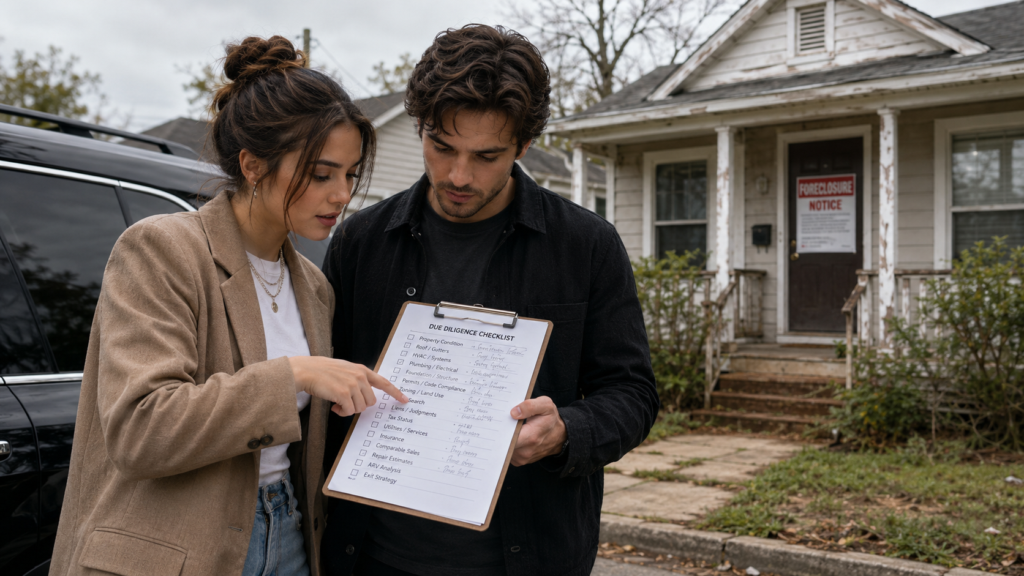
Bankruptcy property due diligence requires more than estimating repairs and checking comparable sales. When a property is tied to a bankruptcy case, the deal may depend on court approval, trustee authority, creditor notice, lien treatment, and timing conditions that do not exist in a normal distressed-property purchase.
As an investor, your job is to answer one practical question before you spend serious time or money: can this property be legally sold, insured, closed, and delivered under terms that still leave room for profit?
A bankruptcy property may still be a good deal. But the discount needs to compensate you for extra complexity.
Get Foreclosure Investing Insights Twice a Week
Subscribe to the Foreclosure Flips newsletter for practical ideas on finding deals, analyzing opportunities, and understanding foreclosure-related investing strategies. We send concise updates twice a week so you can stay informed without adding more noise to your inbox.
Start With the Court File, Not the Listing
A listing description, auction page, or seller conversation may not tell you enough. Your first step is to confirm the bankruptcy case and review the docket. The federal court system’s PACER case tools can help you locate bankruptcy filings, schedules, motions, orders, trustee information, and case status.
You are looking for more than the existence of a bankruptcy. You need to know where the case stands.
Court File Items to Check
Confirm the case number, bankruptcy chapter, filing date, debtor name, trustee name, attorney information, and current status. Then review whether the case is active, dismissed, converted, discharged, or closed.
You should also look for any motion to sell the property, motion for relief from stay, notice of abandonment, objection deadline, hearing notice, or sale order. These documents tell you whether the property is truly moving toward sale or simply tied up in a case with no clear acquisition path.
If the sale is not visible in the court file, slow down. The seller may be motivated, but motivation does not equal authority.
Confirm Who Can Sign and Who Can Approve
One of the biggest mistakes investors make with bankruptcy property is assuming the owner can sell the property the same way they could before filing. That may not be true.
Depending on the case, the seller may be the debtor, a Chapter 7 trustee, a debtor in possession, or another court-authorized party. The contract may also require bankruptcy court approval before it becomes enforceable.
Authority Checklist
Before you rely on any agreement, verify:
- Who owns the property.
- Whether the property is part of the bankruptcy estate.
- Whether the trustee controls the asset.
- Whether the debtor has authority to sell.
- Whether the sale requires court approval.
- Whether creditor notice is required.
- Whether competing bids may be allowed.
- Whether a signed sale order is required before closing.
Under 11 U.S.C. § 363, a trustee may sell property of the estate outside the ordinary course of business after notice and a hearing. That is a critical concept for investors because an accepted offer may still need a formal court process before it can close.
Read the Sale Motion Like a Buyer, Not a Spectator
If there is a sale motion, read it carefully. This is where you may find terms that affect your deposit, closing timeline, title, lien treatment, and risk of being outbid.
A sale motion may identify the buyer, purchase price, property description, broker commissions, proposed lien treatment, objection deadline, hearing date, and whether the sale is intended to be free and clear of liens. It may also describe whether higher and better offers can be considered.
Terms That Can Change the Deal
Pay close attention to these items:
- Is your offer subject to court approval?
- Can another bidder overbid you?
- Is there a required minimum overbid?
- Is your earnest money refundable if approval is denied?
- Who pays transfer taxes, liens, or closing costs?
- Is the property sold as-is?
- Is the sale free and clear of liens?
- When must closing occur after approval?
- Can the trustee extend the closing deadline?
A bankruptcy court procedure for sales free and clear of liens may require specific lienholder identification, service, and notice. Local guidance on motions to sell free and clear shows why the exact sale paperwork matters. If the order does not resolve the liens you are worried about, the “approved sale” may still leave you with title problems.
Separate Title Risk From Bankruptcy Risk
Bankruptcy approval does not replace title due diligence. You still need a title commitment, lien search, tax review, municipal search, HOA review, and recorded-document check.
A property can be approved for sale and still have issues that affect resale, refinancing, or title insurance. Do not treat the court order as a substitute for title work.
Title and Lien Checklist
Before your due diligence period expires, confirm:
- Mortgage liens and payoff amounts.
- Property tax balances.
- IRS or state tax liens.
- Municipal liens and code enforcement claims.
- HOA or condo association balances.
- Judgment liens.
- Mechanic’s liens.
- Utility liens or special assessments.
- Open permits.
- Easements or access issues.
- Bankruptcy sale-order language required by the title company.
Ask the title company early whether it will insure the transaction based on the proposed order. If the title company needs specific wording, that needs to be addressed before the order is entered, not after everyone is trying to close.
Verify Occupancy Before You Price the Timeline
A bankruptcy property may be vacant, owner-occupied, tenant-occupied, partially occupied, or impossible to inspect. Each scenario changes your timeline.
If the debtor still lives in the property, the sale documents should explain when possession must be delivered. If tenants are in place, you need lease copies, rent ledgers, deposit records, and a transition plan. If the occupant is unknown, you need to budget more time and legal expense.
Possession Questions to Answer
Who is currently inside the property?
Is there a written lease?
Are rents current?
Who holds the security deposit?
Will possession be delivered at closing?
Does the court order address possession?
Will you need a separate eviction or writ process?
Can you inspect before approval or closing?
When can you safely start utilities and repairs?
Do not assume you can begin rehab immediately after closing. If possession is delayed, your hard money interest, insurance, taxes, utilities, and contractor scheduling all change.
Build Your Offer Around Approval Risk
Bankruptcy properties can have more moving parts than ordinary foreclosure acquisitions. Your contract should reflect that.
A clean investor offer is not just a high number. It is an offer that explains how you will close, what approvals are required, what happens if approval is delayed, and how your deposit is treated if the court does not approve the sale.
Approval Contingencies to Consider
Your agreement should address court approval, objection deadlines, sale-order entry, overbid procedures, title approval, financing timing, inspection access, and deposit refund rights.
If you are using financing, make sure your lender understands that the closing date may depend on a bankruptcy hearing and final sale order. A lender that expects a normal closing timeline may not be the right fit.
Inspect for Problems That Bankruptcy Can Hide
A bankruptcy case can freeze a property’s condition in place while the legal process unfolds. Maintenance may stop. Utilities may be disconnected. Tenants may stop paying. Roof leaks, vandalism, code violations, and deferred repairs can worsen while everyone waits for court action.
Your repair estimate should include more contingency than a standard listed property if interior access is limited.
Property-Level Checklist
Inspect or research:
- Roof age and visible damage.
- Plumbing leaks or missing pipes.
- Electrical panel condition.
- HVAC age and functionality.
- Water intrusion or mold.
- Foundation and structural issues.
- Vacant-property registration requirements.
- Code enforcement cases.
- Open permits.
- Utilities and meter status.
- Insurance availability.
If you cannot inspect the interior, do not underwrite the property as if you can. Limited access should reduce your offer.
The Investor Takeaway
Bankruptcy property due diligence is about controlling uncertainty before you commit capital. You need to know who can sell, what the court must approve, how liens will be handled, whether title can be insured, who occupies the property, and when you can actually take control.
A useful checklist does not just confirm that a bankruptcy exists. It tells you whether the transaction can close cleanly and whether the remaining risk is priced into your offer.
If the court file, title work, possession plan, and sale order all support the deal, a bankruptcy property can be a strong distressed acquisition. If authority is unclear, liens are unresolved, or approval timing is uncertain, your bid should reflect that risk—or you should wait for a cleaner opportunity.
Wondering Where the Savviest Investors Find Their Best Deals?
Access the largest database of foreclosure properties nationwide and discover below-market deals before other investors. Start your search today!
You might also like:
 Judicial vs Non-Judicial Foreclosure for Investors
 Title Search for Foreclosure Properties: Investor Essentials
 Foreclosure Investing: How to Buy, Analyze, and Profit From Foreclosed Homes
 How to Analyze a Multifamily Foreclosure Deal
 New York City Metro Foreclosure Market 2026
 Buffalo Foreclosure Market 2026