
Pre-Foreclosures
Where to Find Pre-Foreclosure Listings Online

Pre-foreclosure listings can be valuable for real estate investors, but they are often misunderstood. A pre-foreclosure listing does not always mean a property is available for sale. It usually means some public record, legal notice, or mortgage-default signal indicates that the property may be moving toward foreclosure. That distinction matters. Investors who treat every online…
Read MoreHow to Find Pre-Foreclosure Properties Before Auction
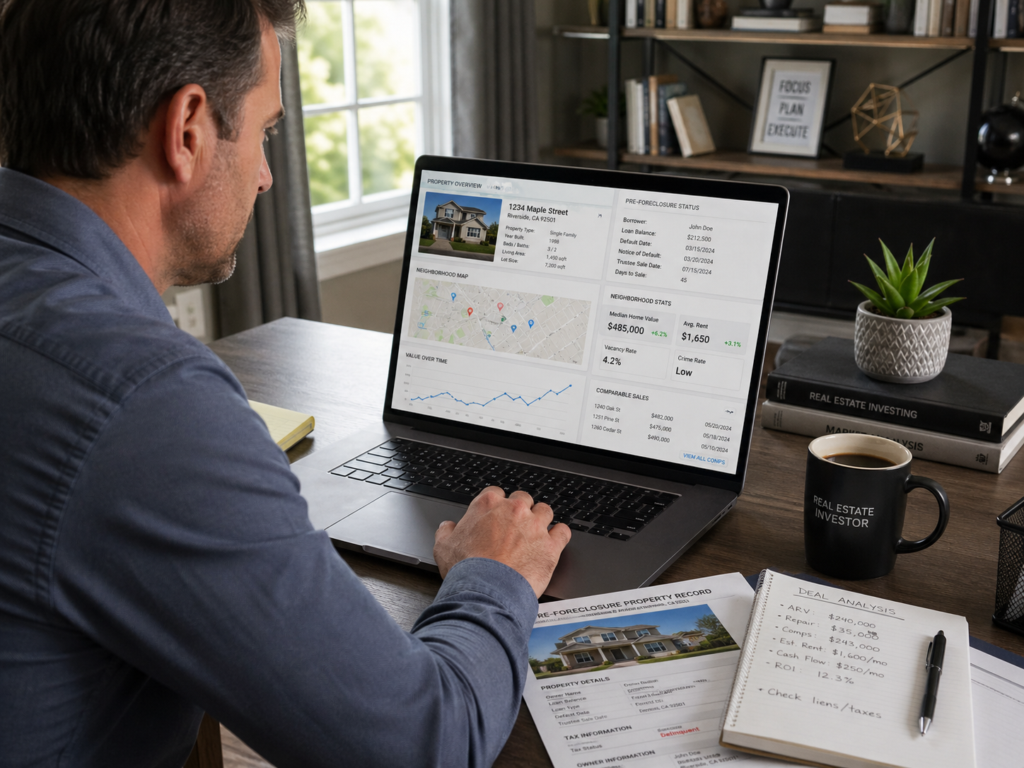
Pre-foreclosure can be one of the most misunderstood stages of distressed real estate investing. Many new investors hear the term and assume it means the property is already being sold by the bank. That is usually not the case. A pre-foreclosure property is typically still owned by the homeowner, but the lender has started or…
Read MorePre-Foreclosure Investing: How to Find, Analyze, and Buy Pre-Foreclosures
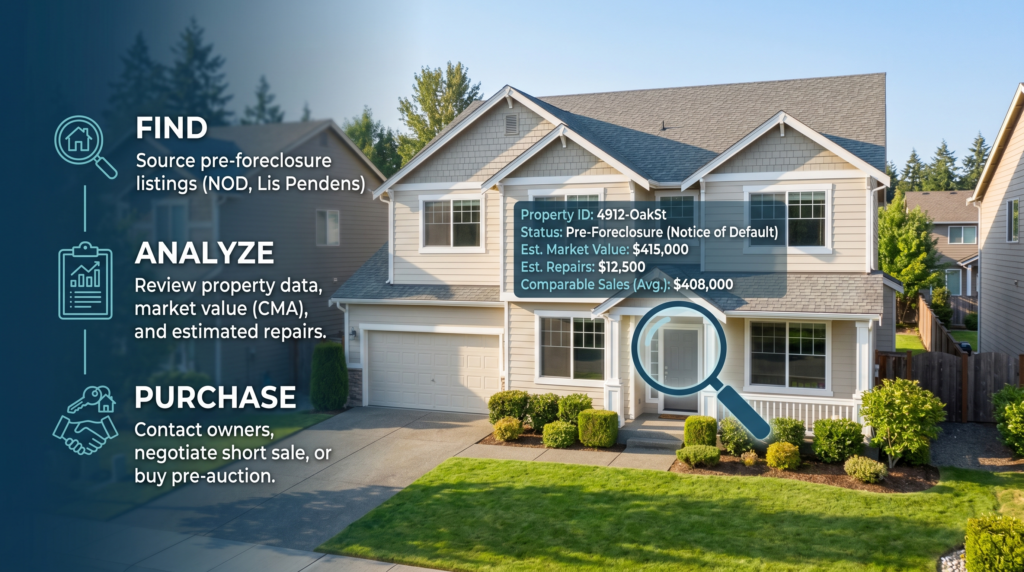
Pre-foreclosure investing is one of the earliest ways to identify distressed real estate opportunities before a property reaches auction, becomes bank-owned, or appears more broadly in foreclosure listings. At this stage, the homeowner is typically behind on mortgage payments and the lender has started some part of the default process. But the property has not…
Read More