
Los Angeles Foreclosure Market 2026
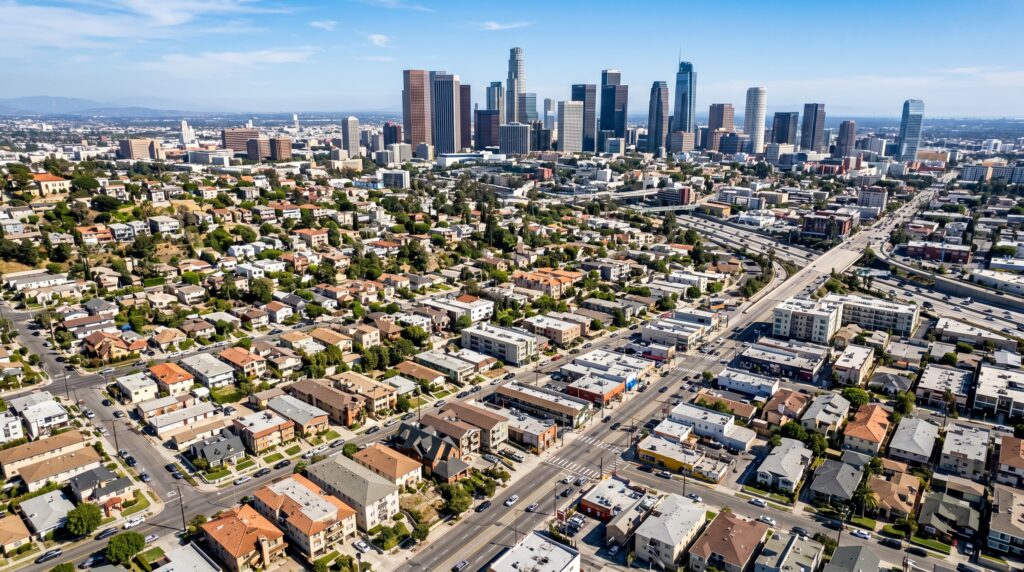
The Los Angeles foreclosure market is a high-basis, high-risk, high-selectivity market. It is not a place where investors should expect easy distressed-property discounts simply because foreclosure activity is rising in California.
The better investment thesis is more specific: Los Angeles can produce foreclosure opportunities when price pressure, owner distress, deferred maintenance, lender ownership, or trustee-sale complexity creates enough basis advantage to compensate for expensive repairs, tenant issues, insurance constraints, title risk, and slower resale execution.
That makes Los Angeles worth researching, but only with tight underwriting. A foreclosure property priced below nearby retail listings is not necessarily a deal.
In this market, the spread must be large enough to survive California’s process rules, Los Angeles carrying costs, local permitting friction, rent-control exposure, wildfire or hillside insurance concerns, and a resale market where buyers are more selective than they were several years ago.
Stay Ahead of the Next Deal
Markets move quickly, and good foreclosure opportunities often require fast analysis. Subscribe to our twice-weekly newsletter for investor-focused tips, tools, and market insights designed to help you make better decisions.
The Current Los Angeles Foreclosure Signal
California remains one of the highest-volume foreclosure states. ATTOM’s Q1 2026 U.S. Foreclosure Market Report reported 118,727 U.S. properties with foreclosure filings during the quarter, up 26% year over year. California recorded 7,985 foreclosure starts in Q1 2026, behind only Texas and Florida.
That statewide signal is important, but it should not be confused with a broad Los Angeles discount cycle. California has meaningful foreclosure pipeline activity, yet Los Angeles remains expensive, fragmented, and highly competitive for assets that have clean title, livable condition, strong resale appeal, or rental upside.
| 2026 Signal | Current Reading | Investor Interpretation |
|---|---|---|
| California foreclosure starts | 7,985 in Q1 2026 | California is one of the country’s largest foreclosure-start states |
| National foreclosure filings | Up 26% year over year in Q1 2026 | Distress pipeline is increasing from prior-year levels |
| National REOs | Up 45% year over year in Q1 2026 | Later-stage lender-owned inventory is becoming more relevant |
| Los Angeles thesis | High basis plus selective distress | Investors need a deeper discount and cleaner exit logic |
| Best-fit investor profile | Experienced, capital-ready, title-focused | Weak underwriting is punished quickly in this market |
ATTOM’s April 2026 foreclosure update reinforced the California signal. California had 2,786 foreclosure starts in April 2026 and 515 completed foreclosures, or REOs, the second-highest REO total among all states that month.
For Los Angeles investors, the useful conclusion is not that distressed inventory is suddenly abundant.
The better conclusion is that the foreclosure pipeline is active enough to monitor, while higher REO activity may create occasional lender-owned opportunities for investors who can solve problems that retail buyers avoid.
Los Angeles Pricing Pressure Changes the Exit Math
Foreclosure investors should start with the exit market. In Los Angeles, the resale environment is still expensive, but it is less forgiving than it was during the strongest seller’s market years.
Realtor.com’s April 2026 Los Angeles housing market data showed a median list price of $1,185,226, down 8.8% year over year. Homes spent a median of 52 days on market, up 13% from a year earlier, while only 12.3% of listings had price cuts.
That combination is useful for investors. Prices are adjusting, market time is longer, and buyers have more negotiating leverage.
But the low price-cut share suggests that many sellers are either pricing more realistically upfront or pulling back rather than chasing the market down. For foreclosure investors, that means you need to model both price sensitivity and limited truly motivated inventory.
| Los Angeles Resale Signal | April 2026 Reading | Investor Use |
|---|---|---|
| Median list price | $1,185,226 | Confirms high-basis acquisition environment |
| Year-over-year list price change | Down 8.8% | Indicates buyer resistance and pricing reset |
| Median days on market | 52 days | Build longer hold periods into flip models |
| Days-on-market change | Up 13% year over year | Liquidity is slower than a year earlier |
| Price-reduced share | 12.3% | Sellers are not universally capitulating |
The broader Los Angeles–Long Beach–Anaheim metro tells a similar story. Realtor.com’s April 2026 metro table showed the region with a $1,098,500 median list price, down 8.1% year over year, with active listings up 6.8% and median days on market up two days.
For investors, the message is direct: Los Angeles is more negotiable than it was, but it is still not cheap. A foreclosure acquisition must work at conservative resale value, not at the top of the comp range.
County and Submarket Research Should Drive the Shortlist

Los Angeles foreclosure research should not begin with the phrase “LA metro.” It should begin with property type, jurisdiction, occupancy, and exit path.
Los Angeles County
Los Angeles County includes very different investor environments: the city of Los Angeles, Long Beach, Inglewood, Compton, Downey, Norwalk, Pasadena, Glendale, Burbank, Torrance, the San Fernando Valley, the San Gabriel Valley, the South Bay, the Gateway Cities, and the Antelope Valley.
The county’s foreclosure process is especially important because California is primarily a nonjudicial foreclosure state.
The Los Angeles County Department of Consumer and Business Affairs explains that foreclosure begins when a lender records a Notice of Default with the Registrar-Recorder, followed by a 90-day period before a Notice of Trustee Sale can be recorded.
The county’s California foreclosure process overview also notes that the Notice of Trustee Sale must be mailed at least 20 days before the sale and posted on the property.
That timeline creates several investor windows. The Notice of Default stage can support pre-foreclosure research. The Notice of Trustee Sale stage can support auction preparation. After sale, the investor still has to deal with title finality, possession, tenant protections, and any required local registration or code compliance.
City of Los Angeles
Inside the City of Los Angeles, investors need to be more cautious with rental property, tenant occupancy, code issues, and foreclosed-property maintenance obligations.
The city’s Foreclosure Registry Program requires certain lenders, beneficiaries, or trustees to register residential properties located in the City of Los Angeles after an active Notice of Default remains in place for more than 30 days. The program exists to reduce blight and ensure maintenance of distressed residential properties.
That is not just a lender compliance detail. It tells investors that the city pays close attention to foreclosed and distressed residential properties.
If you buy into the city, you need to account for habitability, code enforcement, tenant rules, and property-preservation issues before assuming a fast resale or rental conversion.
Long Beach, South Bay, and Gateway Cities
Long Beach, the South Bay, and the Gateway Cities can offer different foreclosure profiles than central Los Angeles.
Long Beach and South Bay assets may retain strong resale appeal, but the acquisition basis can remain high.
Gateway Cities and older working-class submarkets may offer more approachable price points, but investors should be more careful with deferred maintenance, unpermitted work, occupancy, and buyer financing constraints.
In these areas, the best opportunities may come from properties that are functionally repairable but poorly presented, stale, lender-owned, or encumbered by problems that can be solved at a known cost.
San Fernando Valley, San Gabriel Valley, and Antelope Valley
The San Fernando Valley and San Gabriel Valley can provide liquidity, but not necessarily deep discounts. Competition can remain strong for clean single-family homes in functional locations.
The Antelope Valley may offer lower entry prices and more room for rental or value-add strategies, but exit liquidity can vary sharply.
Lancaster and Palmdale properties should be underwritten with careful attention to commute sensitivity, tenant demand, local comparable sales, and days on market.
| Area | Main Investor Use | Primary Risk to Underwrite |
|---|---|---|
| City of Los Angeles | Pre-foreclosures, urban infill, rentals, small multifamily | Tenant rules, code issues, permitting, carrying costs |
| Long Beach / South Bay | Resale-driven opportunities and coastal-adjacent assets | High basis, insurance, buyer selectivity |
| Gateway Cities | Lower-basis flips and rentals | Deferred maintenance, title, occupancy, resale depth |
| San Fernando Valley | Single-family resale and rental demand | Competition and thin discount margins |
| Antelope Valley | Lower-cost rentals and value-add properties | Longer resale timelines and submarket liquidity |
California Trustee Sales Require Different Auction Logic
California foreclosure auctions are not the same as Texas trustee sales or Florida judicial auctions. Investors need to understand the state’s nonjudicial process before bidding.
California Civil Code foreclosure provisions warn potential bidders that a trustee auction may involve bidding on a lien rather than receiving free-and-clear ownership, and that senior liens may remain the buyer’s responsibility.
The state’s Civil Code foreclosure notice language also warns that postponement information may not always be reflected immediately online or by phone.
That matters in Los Angeles because title risk can be expensive. A bidder who misreads lien priority, assumes a junior lien is a first deed of trust, or fails to verify taxes and recorded interests can create a loss before repairs even begin.
California also has post-sale rules that can affect finality. Under Civil Code Section 2924m, certain eligible tenant buyers, prospective owner-occupants, and eligible bidders may have rights to bid after a trustee sale in specified one-to-four-unit residential property situations.
The statute’s post-sale bidding framework can delay finality to 15 or 45 days depending on the facts.
For investors, that means “winning” at the sale may not always mean immediate certainty. Your capital plan, title expectations, and resale timeline should account for California-specific finality rules.
Learn the Strategies Behind Smarter Foreclosure Investing
Get practical foreclosure investing content delivered twice a week, including deal analysis tips, strategy breakdowns, useful tools, and new resources from Foreclosure Flips. Sign up to keep learning and spotting better opportunities.
Acquisition Strategies That Fit Los Angeles
Pre-Foreclosures
Pre-foreclosures can be useful in Los Angeles because many distressed owners may still have equity. The challenge is that high equity does not automatically mean a seller will accept an investor discount.
The better pre-foreclosure opportunities are situations where the owner faces a concrete problem: deferred repairs, probate complexity, tenant issues, divorce, relocation, an unaffordable payment, tax pressure, or a property that cannot easily be listed retail without substantial work.
Investors should verify the Notice of Default, loan balance, lien position, property taxes, occupancy, code issues, tenant status, and realistic as-is value before making contact or writing an offer.
Trustee Sales
Trustee-sale investing in Los Angeles is advanced. The risks include limited inspection access, lien-priority mistakes, sale postponements, post-sale bidding rights, occupancy, title uncertainty, and high dollar exposure.
A proper bid model starts with conservative exit value. From that number, subtract repairs, resale costs, transfer and closing costs, financing, insurance, taxes, permits, tenant or possession costs, holding time, and required profit.
If the result is not comfortably below the expected auction competition, the deal may not be worth pursuing.
REO Properties
REO properties may be more attractive than trustee sales for some Los Angeles investors because the lender has already taken title. That can reduce certain auction-specific risks, though it does not remove condition, pricing, occupancy, or repair issues.
The best REO candidates are often properties that retail buyers avoid because of poor condition, weak presentation, outdated interiors, tenant complications, or repair-heavy scopes. The weakest REO candidates are those priced near retail value while still requiring major capital and long carrying time.
Short Sales and Discounted Owner Sales
Short sales may appear when mortgage debt, selling costs, and property condition leave limited equity, but Los Angeles also creates discounted owner-sale opportunities where the owner still has equity.
These can be more practical than auctions because the investor may be able to inspect, negotiate, complete title work, and close with fewer surprises. The key is not distress alone. The key is whether the seller’s problem can be solved at a price that leaves enough investor margin.
Rentals, BRRRR, and Small Multifamily
Rental and BRRRR strategies in Los Angeles require caution. The acquisition basis is high, local rental rules can be complex, and small multifamily properties may come with tenant protections, deferred maintenance, and habitability obligations.
A rental deal should be tested with conservative rent, vacancy, insurance, taxes, maintenance, management, code compliance, and financing assumptions. If the investment only works with aggressive rent growth or an optimistic refinance, it is not a strong foreclosure acquisition.
Local Risks That Can Break the Deal
Los Angeles foreclosure investors need a larger margin of safety than investors in lower-cost markets. A single missed assumption can become expensive.
| Risk | Why It Matters | Investor Response |
|---|---|---|
| High acquisition basis | Small percentage errors create large dollar losses | Use conservative ARV and larger contingency reserves |
| Tenant and occupancy issues | Possession may be slow, expensive, or restricted | Verify occupancy and applicable local rules before bidding |
| Lien-priority mistakes | Trustee sales may not deliver free-and-clear ownership | Confirm senior liens, taxes, and recorded interests |
| Permitting and code issues | Unpermitted work can delay resale or financing | Check permits, code records, and renovation feasibility |
| Insurance constraints | Wildfire, hillside, and older-property risks can affect coverage | Quote insurance before final bid or offer decisions |
| Resale selectivity | Buyers are more cautious at high price points | Model concessions, longer hold time, and lower ARV |
Insurance deserves special attention in California.
The California FAIR Plan states that it provides basic fire insurance for high-risk properties when traditional insurance is not available, and the California Department of Insurance describes the FAIR Plan as the state’s “last resort” insurance plan.
Investors should not assume that a distressed Los Angeles property will be easily or cheaply insurable, especially in hillside, wildfire-adjacent, or older-property situations.
How to Research Los Angeles Foreclosure Deals
A strong Los Angeles foreclosure research process should begin with the stage of distress.
For pre-foreclosures, search recorded Notices of Default, verify ownership, estimate equity, review mortgage and lien position, check property taxes, confirm occupancy, and assess whether tenant rules or code issues may affect the exit. Then compare realistic as-is value against repaired value, not just asking prices.
For trustee sales, review the Notice of Trustee Sale, trustee information, sale status, postponements, lien priority, unpaid taxes, title history, senior debt, property condition, insurance feasibility, and post-sale finality issues. Do not rely on the sale amount as a valuation signal.
For REO properties, compare the lender’s price to closed comparable sales and active competition. Look for stale inventory, poor marketing, condition problems, tenant issues, and pricing that fails to reflect the true cost of repositioning the property.
For rentals and small multifamily, underwrite tenant status first. Rent, vacancy, habitability, relocation exposure, deferred maintenance, local rules, and financing terms should be reviewed before the purchase price is treated as attractive.
Where Los Angeles Fits in the California Foreclosure Strategy
Los Angeles should be treated as a high-barrier foreclosure market. It may not offer the easiest discounts in California, but it can produce opportunities for investors with capital, title discipline, local market knowledge, and a clear exit strategy.
Compared with Riverside–San Bernardino, Los Angeles usually has higher acquisition costs and more complex tenant, permitting, and insurance issues. Compared with Sacramento, Los Angeles has deeper liquidity but often thinner yield-based rental math. Compared with smaller California markets, it offers more buyer depth but less room for careless pricing.
Investors comparing Los Angeles with other parts of the state should use the broader California foreclosure market page as the statewide reference point. For national context, the hub on states with the most foreclosure opportunities can help compare California against other foreclosure-heavy states.
If you are actively screening inventory, you can compare active foreclosure listings. For rehab-heavy properties, run the numbers carefully before committing capital.
FAQ
Is Los Angeles a good foreclosure market for investors?
Los Angeles is worth researching, but it is not an easy foreclosure market. High prices, tenant issues, insurance constraints, title risk, and repair costs mean investors need larger margins and stronger due diligence.
Is Los Angeles foreclosure activity increasing?
California foreclosure activity is increasing from prior-year levels. ATTOM reported 7,985 California foreclosure starts in Q1 2026 and 2,786 California starts in April 2026. Los Angeles investors should monitor the pipeline, but should not assume every filing creates a bargain.
Are trustee sales risky in Los Angeles?
Yes. Trustee-sale buyers may face lien-priority issues, postponements, post-sale bidding rights, occupancy problems, limited inspection access, and title uncertainty. The bid should be based on a complete exit model, not the sale amount alone.
Are REO properties safer than trustee-sale purchases?
REO properties may reduce some auction-specific risks because the lender has already taken title, but they are not automatically good deals. Pricing, condition, occupancy, repairs, insurance, and resale demand still matter.
What is the biggest underwriting mistake in Los Angeles?
The biggest mistake is underestimating local friction. A foreclosure discount can disappear quickly if the property has tenant complications, unpermitted work, title problems, insurance difficulty, or a resale price that was too optimistic.
Wondering where the savviest investors find their best deals in Los Angeles?
Access the largest database of foreclosure properties nationwide and discover below-market deals before other investors. Start your search today!