
San Antonio Foreclosure Market 2026
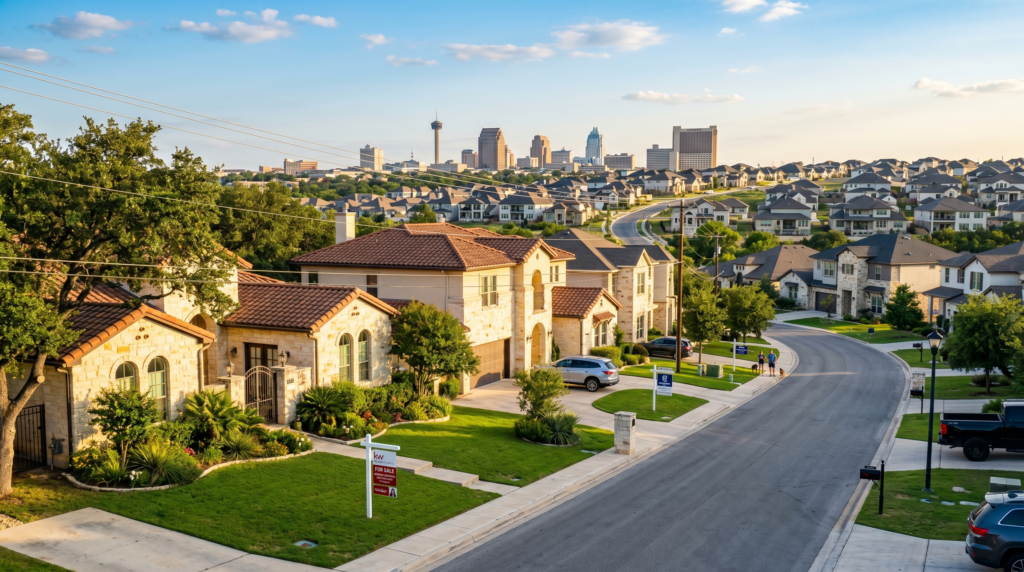
The San Antonio foreclosure market deserves investor attention in 2026 because it offers a different profile from Dallas–Fort Worth and Houston.
It is generally lower priced than those larger Texas metros, has a large owner-occupant and rental base, benefits from military and healthcare employment anchors, and is showing signs of buyer leverage through price reductions and longer market times.
That combination can help investors, but only if they avoid treating affordability as a substitute for margin.
A lower purchase price does not automatically create a better foreclosure deal. Property taxes, insurance, roof condition, foundation movement, deferred maintenance, HOA exposure, title issues, and resale timing can still absorb the apparent discount.
San Antonio is best approached as a basis-sensitive foreclosure market. The deals that deserve deeper review are not simply the cheapest properties or the ones with the largest apparent markdown.
They are the properties where distress, condition, seller pressure, or lender ownership creates enough spread to support a specific exit strategy.
Get Foreclosure Investing Insights Twice a Week
Subscribe to the Foreclosure Flips newsletter for practical ideas on finding deals, analyzing opportunities, and understanding foreclosure-related investing strategies. We send concise updates twice a week so you can stay informed without adding more noise to your inbox.
The Current San Antonio Foreclosure Signal
Texas remains one of the most active foreclosure states in the country. ATTOM’s Q1 2026 U.S. Foreclosure Market Report reported 118,727 U.S. properties with foreclosure filings during the quarter, up 26% from a year earlier. Texas recorded 10,617 foreclosure starts in Q1 2026, the highest total of any state.
That statewide context matters for San Antonio. Texas has meaningful foreclosure pipeline activity, and its faster foreclosure process gives investors less time to react once a sale date is approaching.
ATTOM also reported that Texas had one of the shortest average foreclosure timelines in Q1 2026, at 165 days.
| 2026 Signal | Current Reading | Investor Interpretation |
|---|---|---|
| Texas foreclosure starts | 10,617 in Q1 2026 | Texas led the country in foreclosure-start volume |
| Texas foreclosure rate | 1 in every 1,048 housing units in Q1 2026 | Distress is meaningful, but not as severe as the worst-rate states |
| Texas foreclosure timeline | 165-day average in Q1 2026 | Investors need earlier research and quicker decision-making |
| National REO trend | Bank repossessions up 45% year over year in Q1 | Later-stage foreclosure inventory is becoming more relevant |
| San Antonio thesis | Lower-basis Texas market with buyer leverage | Useful for investors who can control costs and avoid weak exits |
ATTOM’s April 2026 foreclosure update showed that U.S. foreclosure activity remained higher than a year earlier, with filings up 18%, foreclosure starts up 12%, and completed foreclosures up 42%. Texas also had the highest number of completed foreclosures, or REOs, in April.
For San Antonio investors, the signal is not a broad foreclosure crash. It is a more active pipeline in a market where buyers have more choices than they did during the tightest years.
That can create better entry points, but only when the property-level math confirms the discount.
Buyer Leverage Is Improving, But That Cuts Both Ways
San Antonio’s resale market is part of the foreclosure thesis. A foreclosure investor needs to know whether the exit market can absorb the finished product, support a rental plan, or justify a lender-owned purchase.
Realtor.com’s April 2026 San Antonio market data showed a median list price of $289,945, down 3.4% from a year earlier. The same report noted that 23.8% of active listings had taken at least one price cut, well above the national share of 16.7%.
That is useful, but it needs to be read correctly.
Price cuts can help investors negotiate, but they can also reveal weak demand, poor pricing, deferred maintenance, or properties that do not match current buyer expectations. A price reduction is not automatically distress. It may simply be a seller moving from unrealistic pricing toward market value.
| San Antonio Resale Signal | April 2026 Reading | Investor Use |
|---|---|---|
| Median list price | $289,945 | Lower entry-price context than many major metros |
| Median list price change | Down 3.4% year over year | Sellers are facing pricing pressure |
| Price-reduced share | 23.8% of active listings | Buyer leverage is improving |
| National price-reduced share | 16.7% | San Antonio price cuts are elevated versus national conditions |
| Investor implication | More negotiability, but more exit scrutiny | Underwrite resale timing and concessions conservatively |
Local market reporting based on San Antonio Board of Realtors data also points to a more balanced market.
Texas Public Radio reported that April 2026 pricing remained stable overall, with a median price of $307,000, while buyers were benefiting from more options and balanced conditions. The San Antonio housing update also noted that 93% of homes sold close to original list price.
That combination matters. San Antonio is not a collapsing market, but it is also not a market where investors should assume fast appreciation or easy resale. For foreclosure buyers, the margin has to be created at acquisition.
County-Level Research Comes Before the Property Shortlist

San Antonio foreclosure research should begin with county and submarket. Bexar County is the core, but Comal and Guadalupe counties matter for investors evaluating the broader San Antonio–New Braunfels market.
Bexar County
Bexar County is the starting point for most San Antonio foreclosure research. It includes San Antonio, Alamo Heights, Leon Valley, Converse, Kirby, Universal City, Live Oak, Windcrest, Castle Hills, Helotes, and other submarkets with very different price points and buyer pools.
The county’s foreclosure-sale mechanics matter. Bexar County states that foreclosure sales are conducted on the first Tuesday of every month between 10:00 a.m. and 4:00 p.m. on the west side of the Bexar County Courthouse at 100 Dolorosa, unless another location is designated. The county’s foreclosure sale FAQ gives investors a practical starting point for timing and location.
Bexar County is also useful because it provides a public foreclosure notice map displaying mortgage and tax foreclosure notices with property information and, where available, links to documents. That can help investors organize pre-sale research geographically instead of scanning notices in isolation.
For investors, Bexar opportunities should be filtered by neighborhood condition, school demand, military commute patterns, age of housing stock, foundation risk, and resale liquidity. A property that appears cheap on the south or west side may have very different exit characteristics than a property near stronger employment corridors or more owner-occupant demand.
Comal County
Comal County includes New Braunfels, Canyon Lake, Bulverde, Garden Ridge, and growth areas north and northeast of San Antonio. It may be relevant for investors looking at suburban expansion, lifestyle-driven demand, or properties tied to the San Antonio–Austin corridor.
Comal County’s official foreclosure sales page states that foreclosure sale dates are on the first Tuesday of each month and that inquiries should be directed to the trustee designated on each notice.
Comal can offer stronger buyer appeal in certain submarkets, but investors should not assume every growth-corridor property is liquid. Canyon Lake, acreage, older homes, septic systems, private roads, HOA restrictions, and tourism-adjacent assumptions need separate underwriting.
Guadalupe County
Guadalupe County includes Seguin, Schertz, Cibolo, Marion, and areas influenced by both San Antonio and Austin-area growth. It can produce opportunities tied to affordability, suburban expansion, and workforce housing.
Guadalupe County’s foreclosure notices page states that foreclosure sale dates are on the first Tuesday of each month and directs inquiries to the trustee listed on each notice.
For investors, Guadalupe can be attractive when the property has a lower basis and durable rental or resale demand. The risk is overestimating buyer depth in smaller or more location-sensitive submarkets. Commute patterns, school demand, new-construction competition, and property condition should drive the model.
| County | Main Investor Use | Primary Risk to Underwrite |
|---|---|---|
| Bexar | Core San Antonio foreclosures, rentals, flips, pre-sale notices | Older housing stock, title issues, taxes, foundation, repairs |
| Comal | New Braunfels-area growth, lifestyle demand, suburban resale | Entry price, HOA rules, septic/acreage issues, buyer depth |
| Guadalupe | Schertz/Cibolo/Seguin affordability and workforce housing | Commute sensitivity, new-build competition, resale timing |
| Medina/Wilson/outlying areas | Lower-basis rural or exurban opportunities | Thin liquidity, property condition, utilities, title complexity |
Texas Foreclosure Timing Rewards Early Work
Texas foreclosure mechanics are central to the San Antonio strategy. Many mortgage foreclosures in Texas proceed through nonjudicial trustee sales rather than lengthy court-supervised foreclosure proceedings.
The Texas State Law Library’s foreclosure sale guide explains that foreclosure auctions are generally held on the first Tuesday of each month between 10:00 a.m. and 4:00 p.m. at the county courthouse or another designated location. It also notes that sale notice generally must be provided at least 21 days before the sale.
That timing creates a practical constraint. Investors cannot wait until a few days before the auction to begin research. By then, there may not be enough time to review the deed of trust, search title, inspect exterior condition, estimate repairs, verify taxes, check occupancy, evaluate insurance, and line up capital.
In San Antonio, a good foreclosure process should feel more like a monthly underwriting cycle than a last-minute auction search.
Build Your Investing Knowledge One Email at a Time
Foreclosure investing rewards preparation. Join our 2X week newsletter for straightforward guidance on pre-foreclosures, short sales, BRRRR, flipping, and other strategies investors use to evaluate distressed property opportunities.
Acquisition Strategies That Fit San Antonio

Pre-Foreclosures
Pre-foreclosures can be especially relevant in San Antonio because the metro’s lower price points may leave owners with equity even when they are under payment pressure. An owner may be motivated by job relocation, divorce, probate, deferred maintenance, rental underperformance, rising tax escrow, or an unaffordable loan payment.
The best pre-foreclosure leads are properties with enough equity and enough time to solve the problem before the trustee sale. Investors should verify payoff, taxes, liens, title, property condition, occupancy, and realistic resale or rental value before making an offer.
Foreclosure Auctions
San Antonio-area trustee sales can produce opportunities, but the bid has to be built from the exit backward. The opening bid, assessed value, or unpaid loan balance is not enough.
A disciplined bid begins with conservative ARV or rental value. From there, subtract resale costs, repairs, title issues, taxes, insurance, HOA exposure, financing, holding time, possession costs, and required profit. The remainder is the maximum bid.
Because San Antonio has lower average price points than DFW or Austin, investors may be tempted to accept thinner dollar margins. That is dangerous. A $25,000 repair surprise can be manageable in a high-priced flip but can wipe out the economics of a lower-basis deal.
REO Properties
REO properties may become more relevant as completed foreclosures rise nationally and in Texas. They can offer a cleaner acquisition path than trustee-sale purchases because the lender has already taken title.
The better REO opportunities in San Antonio are likely to be properties with poor presentation, stale pricing, outdated interiors, cosmetic-heavy repairs, or limited retail appeal.
The weaker REO opportunities are properties where the bank has already priced close to retail value while still leaving the buyer with major roof, foundation, HVAC, plumbing, or electrical work.
Short Sales and Discounted Owner Sales
Short sales can occur when debt, closing costs, and property condition leave little equity, but San Antonio may also produce discounted owner sales where the seller still has equity.
These situations can be more controllable than auctions. The investor may be able to inspect, negotiate, complete title work, and close with fewer unknowns.
Potential seller motivations include inherited property, military relocation, landlord fatigue, deferred repairs, divorce, or a vacant house that has become expensive to carry.
Rentals and BRRRR
San Antonio can support rentals and BRRRR strategies, but investors need to avoid assuming that affordability automatically means cash flow. Property taxes, insurance, repairs, vacancy, management, and capital reserves still matter.
The strongest rental candidates are usually near durable employment, military, healthcare, education, and service-sector demand.
Joint Base San Antonio is one of the region’s major employment anchors; the Texas Comptroller estimated that the population directly affiliated with JBSA contributed at least $55 billion to the Texas economy in 2023 through the Joint Base San Antonio economic impact.
That employment base supports rental demand in parts of the metro, but it does not make every rental property work. A BRRRR deal should still survive conservative rent, vacancy, refinance, repair, and tax assumptions.
San Antonio Risks That Can Erase the Spread
San Antonio’s affordability can be useful, but it can also make investors complacent. Lower entry price does not remove due diligence risk.
| Risk | Why It Matters | Investor Response |
|---|---|---|
| Property taxes | Texas property taxes can materially reduce cash flow | Underwrite post-purchase taxes, not only the current bill |
| Foundation movement | Soil movement and drainage issues can create expensive repairs | Inspect slab, grading, drainage, and prior repair records |
| Older systems | Roof, HVAC, electrical, and plumbing can overwhelm small spreads | Use line-item repair estimates before setting bid limits |
| Thin submarket liquidity | Some lower-priced areas have slower resale demand | Use neighborhood-level closed comps and days-on-market data |
| HOA and municipal issues | Dues, restrictions, fines, and code violations can affect value | Search HOA balances, city liens, and code records |
| Occupancy | Possession delays increase holding costs | Verify occupancy and budget for legal possession if needed |
The biggest underwriting trap in San Antonio is assuming that a cheaper house is automatically a safer investment. A low purchase price can still be too high if the property needs structural repairs, carries tax issues, has weak resale demand, or cannot support rent after operating costs.
How to Research San Antonio Foreclosure Deals
A strong San Antonio research process should begin with county, sale date, and property type.
For pre-foreclosures, review notices early, verify ownership, estimate equity, search liens, review tax records, check deed information, and compare the property to realistic as-is and renovated sales. Then determine whether the seller has enough time and incentive to close before the sale date.
For trustee sales, prepare before the first Tuesday auction window. Review the notice, trustee information, title status, taxes, HOA exposure, code violations, occupancy, insurance feasibility, repair scope, and exit strategy.
Do not bid from assessed value. Do not bid from opening numbers. Bid from a completed investment model.
For REO properties, compare the lender’s asking price to closed comparable sales and current active competition. Look for stale listings, weak marketing, price reductions, poor condition, or repair problems that retail buyers are avoiding.
For rentals, test the deal against conservative rent, higher taxes, higher insurance, vacancy, management, maintenance, capital expenditures, and refinance assumptions.
If the deal only works with optimistic rent growth, it is not a strong foreclosure acquisition.
Where San Antonio Fits in the Texas Foreclosure Strategy
San Antonio should be treated as a lower-basis, process-sensitive foreclosure market. It may not offer the same foreclosure-start volume as Dallas–Fort Worth or Houston, but it gives investors a different mix of affordability, employment stability, suburban growth, and potential rental demand.
Compared with DFW, San Antonio may offer lower entry prices but less depth in some resale submarkets. Compared with Houston, it avoids some of the same flood and storm complexity but still requires careful foundation, tax, repair, and insurance underwriting. Compared with smaller Texas metros, San Antonio offers more liquidity and employment diversity, but also more investor competition than overlooked rural markets.
Investors comparing San Antonio with other Texas metros should use the broader Texas foreclosure market page as the statewide reference point. For national context, the hub on states with the most foreclosure opportunities can help compare Texas against other foreclosure-heavy states.
If you are actively screening inventory, you can compare active foreclosure listings. For rehab-heavy properties, run the numbers carefully before committing capital.
FAQ
Is San Antonio a relevant foreclosure market for investors?
Yes. San Antonio is relevant because it sits inside the highest foreclosure-start state in Q1 2026 and offers lower entry prices than many major Texas metros. The opportunity depends on basis, repairs, title, taxes, and exit strategy.
Is San Antonio better for rentals or flips?
It can support both, but the property and submarket decide the strategy. Some homes may fit resale after cosmetic or moderate rehab. Others may work better as rentals if taxes, insurance, repairs, and vacancy are underwritten conservatively.
Are San Antonio foreclosure auctions risky?
Yes. Texas trustee sales can move quickly, and buyers may face limited inspection access, title issues, occupancy problems, tax exposure, and repair uncertainty. The maximum bid should be calculated before sale day.
Which San Antonio-area counties should investors research?
Bexar County is the core starting point. Comal and Guadalupe counties are also relevant for investors looking at New Braunfels, Schertz, Cibolo, Seguin, and surrounding growth corridors.
What is the biggest underwriting mistake in San Antonio?
The biggest mistake is treating affordability as margin. A lower-priced foreclosure can still be a poor deal if property taxes, foundation repairs, roof replacement, HVAC, title issues, or slow resale timing absorb the discount.
Looking for deeply discounted properties in San Antonio others don’t know about?
Don’t miss out on the next great investment opportunity! Search millions of foreclosure listings and get daily alerts for new properties in your target market.